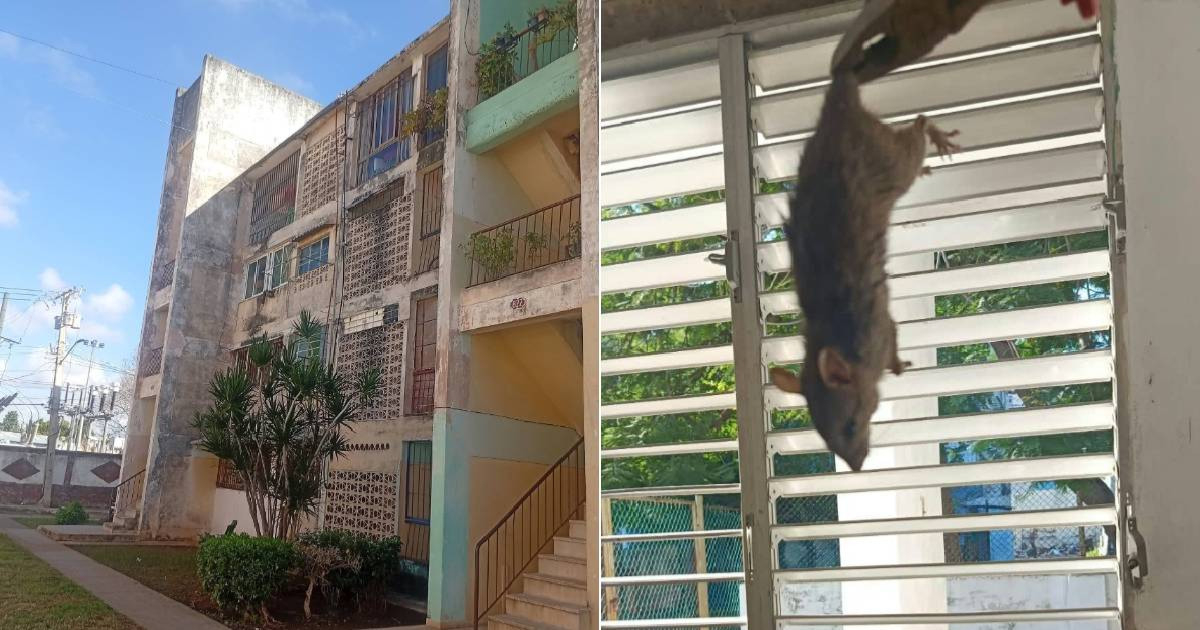
Residents of a building on Sitios Street, between Ayestarán and Infanta in Havana, have raised alarms about a rodent infestation affecting several homes and potentially endangering the sanitation of a nearby food processing facility.
The issue was spotlighted on Facebook by Lizehima Pinos, a resident who voiced concerns on behalf of her neighbors. She backed her claims with photos of dead rodents, some quite large, found within the building.
According to Pinos, the problem stems from two yards located less than ten feet from the building. These areas have become dumping grounds for leaves, cans, banana plant remnants, and other debris, creating breeding grounds for rats and insects.
"For several weeks, these creatures have moved into the building in search of food, invading multiple apartments," Pinos noted in her post.
Efforts by residents to discuss solutions with those responsible for the yards have been met with empty promises. Replies like "I'll tell the owner when he arrives" and "we'll resolve it this weekend" are typical responses.
Of particular concern is the possibility that rodents might infiltrate the food processing center located behind the building, which is a crucial source of supplies for the community.
"Just as they enter our apartments, they could be invading the food center we all rely on. We have no doubt about that," Pinos warned, highlighting the risk of diseases such as leptospirosis, spread by infected animals.
Her post aims to protect the elderly and young children living in the building from potential health hazards.
The situation has sparked outrage and skepticism toward authorities. "The saddest part is that the government couldn't care less," commented one user, while another described the sanitary conditions across the island as "Cuba is a dumpster everywhere."
This incident adds to a series of garbage accumulation and rodent infestation problems amid a waste collection crisis. Official reports from February indicated that only 44 of 106 garbage trucks in the capital were operational.
Rodent problems have also been reported in healthcare facilities. In August, a baby rat was seen in the Perinatology ward of Juan Bruno Zayas hospital in Santiago de Cuba, and in May, images of rodents in the corridors of Havana's Enrique Cabrera hospital circulated widely.
Between 2018 and 2022, leptospirosis led to 105 confirmed deaths in Cuba, according to the National Reference Laboratory, with 26 of these occurring in Havana. These figures underscore the health risks posed by rodent proliferation, especially in residential areas and places associated with food handling.
Addressing the Rodent Infestation Crisis in Havana
What is causing the rodent infestation in Havana?
The infestation is primarily caused by the accumulation of trash and organic waste in nearby yards, creating ideal conditions for rodents to breed and seek food.
How are residents responding to the infestation?
Residents are voicing their concerns on social media and attempting to engage with those responsible for the maintenance of nearby areas, though their efforts have so far been met with unfulfilled promises.
What are the potential health risks associated with the infestation?
There is a significant risk of disease transmission, such as leptospirosis, which is spread through contact with infected animal urine. This poses a threat especially in areas tied to food processing and residential living.