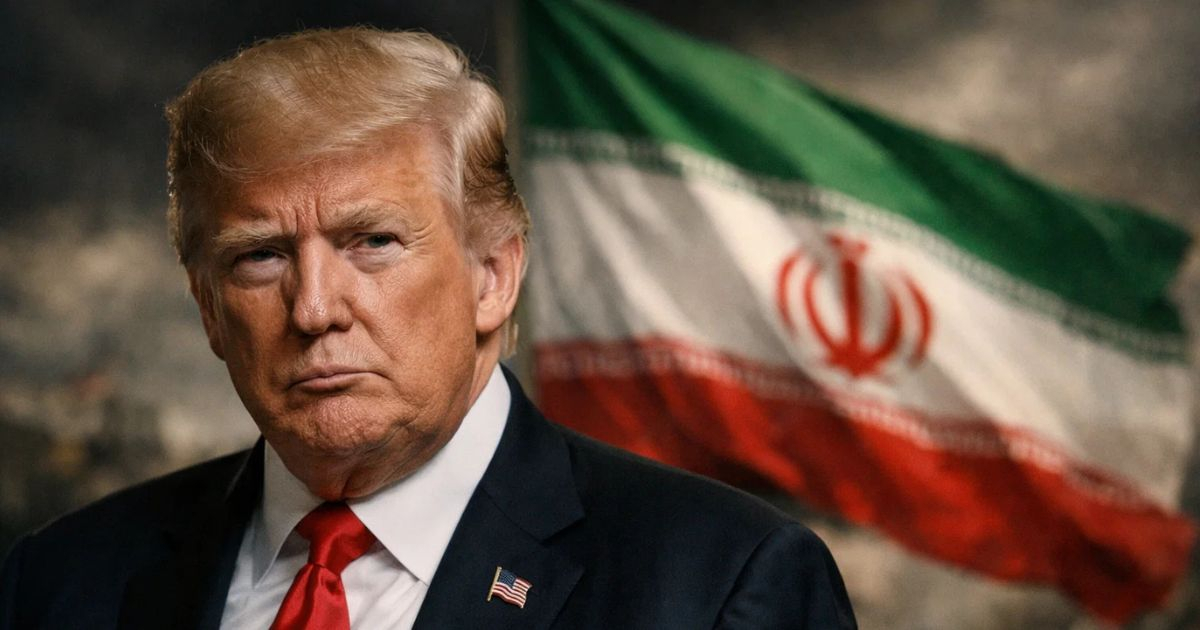
U.S. Secretary of State Marco Rubio stated on Saturday that President Donald Trump has yet to decide whether to resume large-scale military attacks against Iran. The White House, he noted, is leaning towards a diplomatic resolution to the ongoing conflict between the two nations that began in February of this year.
Rubio's comments came at the conclusion of the G20 foreign ministers' meeting in Atlanta, Georgia. He addressed the media following two days of discussions that ended without a joint statement due to deep divisions among participants on issues such as Ukraine, the Middle East, and tariffs.
"I believe what the President is emphasizing is that the United States remains the world's most capable military power. We can achieve any military objectives we set. However, no decision has been made yet," declared the top U.S. diplomat.
Rubio further explained that Washington is not approaching this conflict "lightly," and that Trump "prefers to resolve it through diplomatic means." Still, military options remain on the table, with no fixed deadlines for negotiations.
The backdrop to these statements is intense media speculation about a possible new offensive. Outlets such as The New York Times and Axios have reported that the U.S. and Israel are developing plans for a "short but intense" operation targeting Iranian nuclear facilities, energy infrastructure, and missile arsenals, potentially after the U.S. midterm elections on Tuesday, November 3.
Unidentified officials cited by CNN recently confirmed that Central Command forces are prepared to initiate large-scale operations within 96 hours of a presidential order. The U.S. maintains over 50,000 troops and approximately 20 warships in the region, with the aircraft carrier USS Theodore Roosevelt en route and 4,000 marines aboard the USS Makin Island.
Meanwhile, diplomatic channels remain open. An Iranian delegation traveled to Doha on Saturday to continue mediated talks by Qatar and Pakistan regarding Tehran's conditions for ending the conflict. However, Iran's Foreign Minister, Abbas Araqchi, dismissed immediate plans to meet directly with U.S. representatives, describing media reports of a potential face-to-face meeting as "mere speculation."
Trump himself acknowledged on Friday that dialogue is ongoing: "Conversations are happening; they want to talk and continue talking," although he cautioned that Washington "has time" given Iran's worsening economic situation.
The conflict between the two powers commenced on February 28, 2026, with "Operation Epic Fury," jointly launched by the U.S. and Israel against Iranian nuclear, military, and missile sites. Since then, the standoff has alternated between combat phases and indirect negotiation, with Iran's nuclear program as the primary sticking point. Washington insists it be addressed from the onset of any agreement, while Tehran demands the lifting of blockades and sanctions first.
The diplomatic impasse persists as the electoral clock ticks down: numerous sources indicate Tuesday as the threshold after which a new offensive might occur if diplomatic efforts fail.
Key Questions About U.S.-Iran Tensions
What is the current status of U.S.-Iran negotiations?
Negotiations are ongoing, with both sides engaging in mediated talks. However, no direct meetings between U.S. and Iranian officials are planned as of now.
Is the U.S. planning a military offensive against Iran?
While military options have not been ruled out, no decision has been made. The U.S. is currently favoring a diplomatic approach but remains prepared for military action if necessary.
What are the main issues between the U.S. and Iran?
The primary issue is Iran's nuclear program, with the U.S. demanding it be addressed in any agreement while Iran insists on lifting sanctions first.