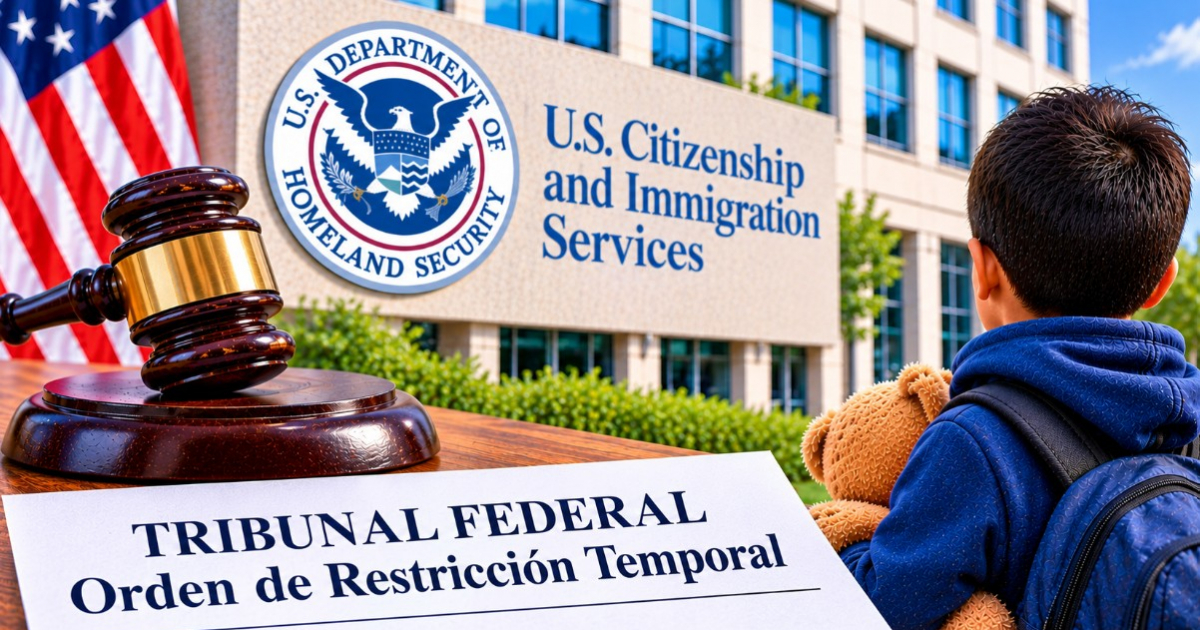
A federal judge has halted the United States Citizenship and Immigration Services (USCIS) policies that, since September 2026, had been notifying unaccompanied minors of their asylum interviews with only a few hours' notice, requiring "exceptional circumstances" for any rescheduling.
On October 30 at noon, Judge Brendan A. Hurson of the Maryland District Court issued a nationwide temporary restraining order mandating that USCIS revert to providing at least 21 days' notice before each interview.
This decision, documented as Doc. 54 in the case The Door et al. v. Edlow et al. (Civil No. 26-4326-BAH), stems from a lawsuit filed in October by six legal aid organizations: The Door, Amica Center for Immigrant Rights, Florence Immigrant and Refugee Rights Project, Galveston-Houston Immigrant Representation Project, Immigrant Defenders Law Center, and Jewish Family and Community Services Pittsburgh.
The organizations highlighted that, starting in September 2026, USCIS began sending notifications with "only a few days' notice—and in some cases less than 24 hours—" whereas the previous policy ensured a minimum of three weeks' notice.
Preparing a minor for their asylum interview can take between 10 and 30 hours per client, according to the case file. This preparation involves gathering evidence, analyzing complex legal issues, and helping the child articulate their traumatic experiences.
Impact on Migrant Policy Landscape
This ruling is part of an ever-evolving immigration landscape. Stay updated on asylum processes, USCIS developments, and immigrant rights in our U.S. Immigration section.
Judge Hurson also put a stop to the USCIS policy announced on August 21, 2026, which restricted interview rescheduling to instances of "exceptional circumstances" only.
The legal organizations documented cases where USCIS denied rescheduling requests, even when a child's attorney had overlapping commitments in different locations or had been involved in a traffic accident.
Implementation Requirements for USCIS
The order imposes two specific obligations on USCIS: first, to provide written notice at least 21 days prior to each scheduled interview, promptly sending it to the applicant and their legal representative. Second, to reinstate the previous policy allowing one automatic rescheduling and a second one for "good cause," factoring in attorney availability, scheduling conflicts, evidence gathering needs, and the minor's ability to attend.
The government has 48 hours from the order to submit a compliance report. This measure is scheduled to expire on November 13, 2026, at noon, unless the court decides otherwise.
The order's nationwide effect stems from its issuance under Section 705 of the Administrative Procedure Act, a mechanism not confined to the litigants. The judge noted that the government did not challenge this scope in their response.
The ruling applies to any minor meeting the legal definition of "unaccompanied minor" as specified in 6 U.S.C. § 279(g)(2): an individual under 18 years old, without legal immigration status in the United States, and without a parent or legal guardian available in the country to assume physical custody. While the litigation does not specify Cuban cases, it could include unaccompanied Cuban minors meeting these conditions.
Judge Hurson firmly emphasized the public interest, stating, "It is difficult to argue that society has an interest in maintaining a chaotic system that could result in vulnerable children being erroneously deported to places where they may face abuse or even death."
Key Details on USCIS and Unaccompanied Minors
What prompted the judge to issue a temporary restraining order against USCIS?
The order was issued because USCIS was notifying unaccompanied minors of their asylum interviews with insufficient notice, often less than 24 hours, and requiring "exceptional circumstances" for rescheduling.
What are the key requirements imposed on USCIS by the court order?
USCIS must provide a written notice at least 21 days before each interview and allow rescheduling for good cause, considering factors such as attorney availability and evidence gathering.
Who is affected by this court ruling?
The ruling affects any minor classified as an "unaccompanied minor" under U.S. law, potentially including unaccompanied Cuban minors who meet the criteria.