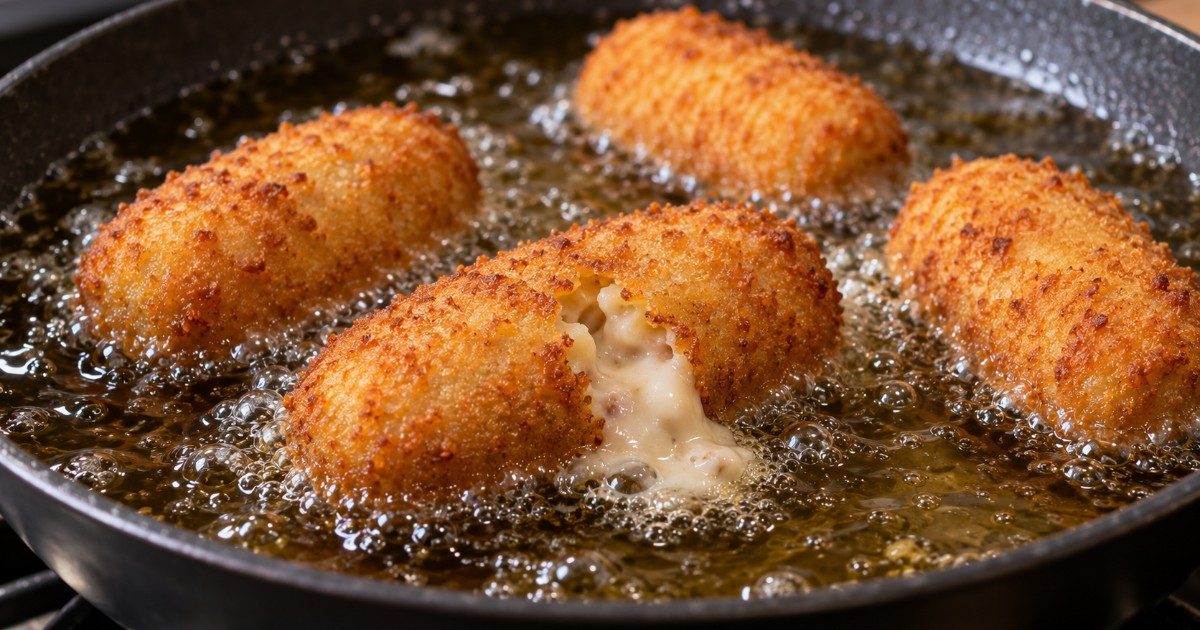
The unfortunate bursting of croquettes during frying can be attributed to several factors: an overly moist filling, incomplete breading coverage, or oil that's not at the right temperature. Additionally, how they are handled plays a significant role. To ensure the filling doesn't spill into the pan, it's essential to pay attention to every step of the process. A dough that's challenging to handle is a warning sign even before it reaches the hot oil.
Check Your Dough's Consistency Before Breading
A dough that's too soft needs adjustment before proceeding to the breading stage. The base should be firm enough to shape croquettes once it's cooled. In CiberCuba's meat croquette recipe, the mixture is cooked while stirring until it becomes compact and detaches from the pan bottom. This stage is more indicative of readiness than merely relying on elapsed time.
Also, consider the liquid content of the filling. A watery sauté can alter the mixture's texture. When preparing fish croquettes, the fish is cooked with spices to a dry or thick sauce consistency before being added to the base, allowing better control of the liquid content.
If it spreads out on a tray and doesn't hold its shape after cooling, revisit the proportions and cooking stage of the recipe. Breading alone can't fix a base that's too watery. Adding more breadcrumbs might conceal the issue during shaping but won't address or fix its cause.
Cool the Dough Before Forming Croquettes
A warm dough might seem softer than it will be after resting. Avoid judging its final consistency straight out of the pot. In his shrimp croquette recipe, Karlos Arguiñano transfers the mixture to a dish, covers it, and refrigerates it until thoroughly chilled.
This method ensures the pieces are formed with a firmer dough. Resting should occur in the refrigerator, not with the tray left out for hours. If shaping proves difficult, first ensure complete cooling before altering flour or liquid amounts.
Ensure Complete Breading Coverage
Inspect the ends, the bottom, and any cracks that might have formed while shaping the croquette. An uncovered spot is a weak point. The croquette guide from Hogarmania suggests passing through flour, beaten egg, and breadcrumbs; other recipes, like CiberCuba's meat version, use egg and breadcrumbs on the formed dough.
Stick to your recipe's method and ensure the coating is continuous. Handle with care to avoid creating cracks during transfer. Create pieces of similar size: mixing very large and small croquettes necessitates different frying times and complicates frying control.
Maintain the Correct Oil Temperature
For frying reference, Ametller Origen recommends oil between 347 and 356 °F (175-180 °C). A kitchen thermometer provides more accuracy than timing the pan on the stove. The initial temperature doesn't guarantee maintenance once food is added.
If the oil is too cool, croquettes may become greasy and take too long to brown. If they brown too quickly, check if the heat is excessive. Arguiñano's advice on preventing bursting includes another tip: use enough oil to cover them, promoting even frying.
Fry in Small Batches and Handle Gently
Overcrowding the pan can ruin a batch that started well. Borges oil manufacturer advises against adding all croquettes at once, as it lowers the temperature. Work in small batches and ensure the oil regains temperature before adding more.
Handle them just enough and with care: excessive movement can damage the breading. Once golden, remove and let excess oil drain on kitchen paper. Don't use pale color as an excuse to keep stirring; first, check the heat.
If one batch bursts, test with a single piece before frying the rest. Look for cracks, overly soft dough, or a temperature drop when loading the pan. Correcting the specific issue allows you to test changes without risking all the remaining croquettes.
Frequently Asked Questions about Frying Croquettes
Why do croquettes burst when fried?
Croquettes can burst due to excessive liquid in the dough, insufficient breading, improper handling, or incorrect oil temperature.
How can I prevent croquettes from bursting?
Ensure the dough is firm, fully coat with breadcrumbs, handle gently, and maintain the correct oil temperature throughout frying.
What is the ideal oil temperature for frying croquettes?
The ideal oil temperature is between 347 and 356 °F (175-180 °C) to ensure even frying without absorbing excess oil.