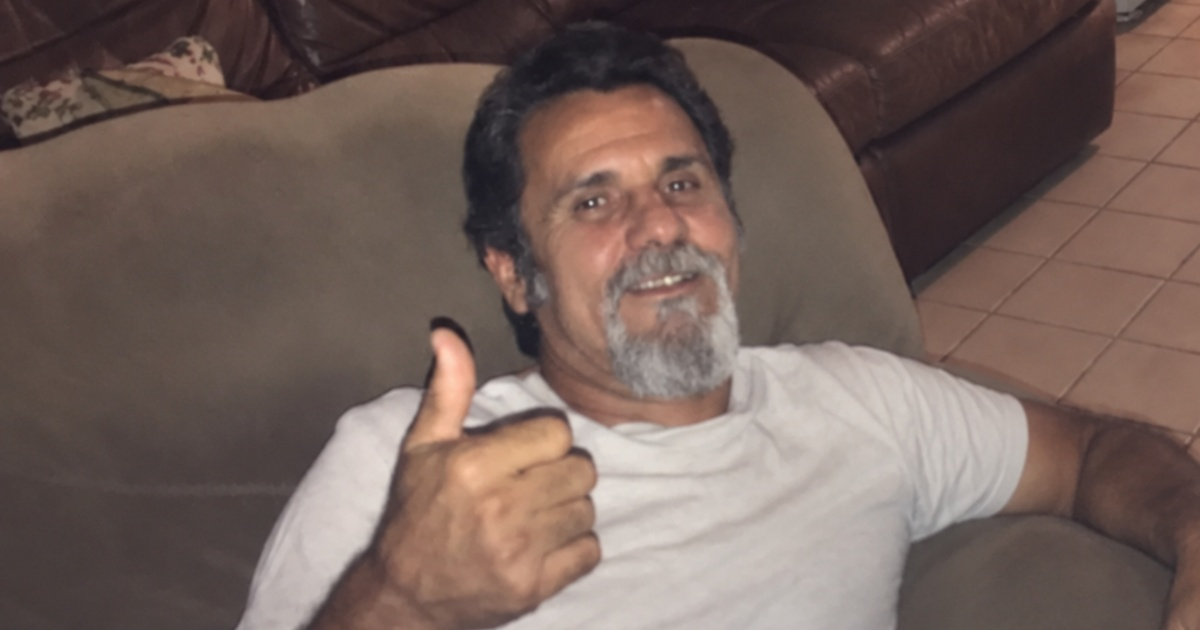
Gustavo Rivero Napoles, a 65-year-old Cuban who spent the majority of his life in Hialeah, passed away on Sunday, October 25, in the intensive care unit of a California hospital. This occurred following nearly five months in immigration custody, according to a Miami Herald investigation that included interviews with his family members.
Rivero's death has yet to be officially recorded by the government because the Immigration and Customs Enforcement agency (ICE) officially released him on October 23—the same day he was moved to the ICU. His family claims he was already unconscious at that time, just 48 hours before he died.
"He died being treated like a dog," said his niece, Angelina Rivero, 33, in a statement to the Miami Herald.
Diagnosed with stage 4 liver cancer prior to his detention, Rivero Napoles was wheelchair-bound due to severe leg swelling caused by the disease. He emigrated from Cuba to the United States around 1970 when he was eight and obtained permanent residency along with other Cuban arrivals of that era.
Struggles for Medical Care and Release
His family had been advocating for his release, arguing he was not receiving proper medication or treatment. "This is Gustavo's story," shared his sister, Carolina Rivero, on Facebook. During the last year of his life, Gustavo violated his parole and was jailed, but a judge granted him humanitarian release in June so he could spend his final months at home.
However, just a day before his release, ICE intercepted and detained him. "He had no deportation order. There was absolutely no legal or logical reason for his detention," Carolina Rivero wrote. "He spent three months in a Florida facility before being moved to California City Immigration Detention Center, where he called daily, crying in pain and begging for medical care."
ICE Policies Under Scrutiny
Rivero Napoles recounted to his family how he would lie on the floor of his cell screaming, and a detention center doctor once told him, "all you illegal immigrants just want drugs" when he asked for his medication. He was admitted to the hospital on October 20, and two days later, his sister contacted ICE officials, who confirmed he was still in custody but refused to provide information about his condition.
When he was transferred to the ICU on October 23, ICE formally released him, marking "refuses to sign" where his signature was required. His family insists he was already unable to comprehend or respond by then. The following day, an agent called his sister, Catalina Rivero, 72, saying Gustavo was in a local health facility without specifying where.
After contacting the provided number, the family learned he wasn't there. Hours later, a California hospital doctor called, urging them to come immediately. Carolina Rivero and her husband drove four and a half hours, while Catalina flew from Miami. Upon arrival, they found his release form among his belongings, stored in a dirty donut box in the hospital closet. He only responded once: shedding tears when he saw his sister and heard, "I'm here."
"He was physically unable to move, much less sign documents. Only after ICE resolved his custody situation was the hospital allowed to give us information," said Carolina Rivero. "They just discarded him, waiting for him to die."
"This is Gustavo's story. He died of cancer, but ICE and California City Immigration Detention Center's medical mistreatment and gross negligence killed him," she concluded in her Facebook post.
A Broader Issue with ICE's Handling of Detainees
Nearly a week after Rivero Napoles' death, an ICE agent called Catalina Rivero to confirm her brother's attendance at a November 23 appointment in Miramar. When she informed them of his passing, they asked where he had died. "ICE killed my brother," she replied.
This case highlights a policy change ICE implemented in June 2026: the agency is no longer required to report and investigate deaths occurring within 30 days post-release, a guideline initially established in 2021 to prevent such incidents. Deborah Fleischaker, who drafted the original policy as ICE's deputy policy director, told the Miami Herald, "In cases like this, where the person was very ill in custody, ICE still held them and then released them on the brink of death. It's hard not to conclude they're avoiding accountability for deaths in custody."
Deaths in immigration custody have reached unprecedented levels: fiscal year 2026 ended with 37 fatalities, the highest number since ICE's creation in 2003.
Frequently Asked Questions About ICE Detention and Medical Care
What led to Gustavo Rivero Napoles' detention by ICE?
Gustavo Rivero Napoles was detained by ICE despite having no deportation order. His family argues there were no legal or logical grounds for his detention, especially given his severe medical condition.
What changes in ICE policy affected reporting of detainee deaths?
In June 2026, ICE stopped being required to report and investigate deaths occurring within 30 days of a detainee's release, reversing a 2021 policy designed to prevent such situations.
How did the family of Gustavo Rivero Napoles react to his detention and treatment?
The family of Gustavo Rivero Napoles was devastated by his detention and the lack of appropriate medical care. They consistently advocated for his release, highlighting the negligence and mistreatment he faced under ICE custody.