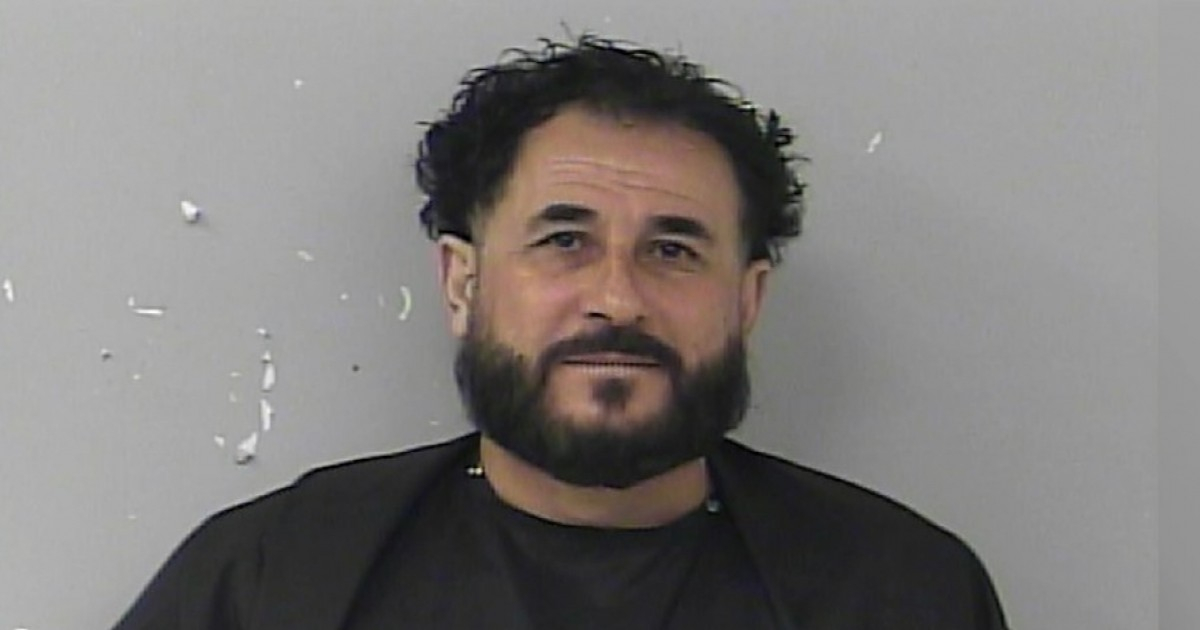
Anwar Jouda, a 51-year-old, was arrested on Thursday in St. Lucie County, Florida, on charges of allegedly misappropriating $862,394.95 from the federal SNAP food assistance program. This was done through an elaborate identity theft scheme in Miami-Dade, as reported by the state's Chief Financial Officer, Blaise Ingoglia.
Authorities have alleged that Jouda stole the identity of a victim and their business, which was authorized to accept SNAP payments. The business was identified as a Kwik Stop store in Miami, and the theft occurred without the knowledge or consent of its owners.
With these stolen identities, Jouda allegedly submitted fraudulent merchant account applications, forged documents, and altered banking information to redirect electronic deposits from the program into his own personal and business accounts.
A portion of the misappropriated funds was transferred overseas. Investigators discovered that Jouda purportedly sent some of the money through bank transfers to Ramallah, the de facto capital of the Palestinian Authority in the West Bank.
The Florida Department of Financial Services' Division of Investigative and Forensic Services is collaborating with federal law enforcement partners to share this information.
Miami-Dade State Attorney Katherine Fernandez-Rundle described the scheme as "well-organized, well-planned, and well-executed," warning that it "literally took food out of the mouths of needy families and children."
"The alleged transfer of a portion of these stolen SNAP funds out of the country is an even greater insult to those who legitimately need this assistance," she emphasized.
Jouda is facing three charges: first-degree grand theft, organized scheme to defraud, and criminal use of personal identification information. A judge has set his bail at $20,000.
"If you try to steal from taxpayers, rest assured that the law will catch up to you and you will face the consequences of your actions," warned CFO Ingoglia. "Public assistance fraud will not be tolerated in Florida, and that's why my investigators are pursuing these scammers every day."
This type of fraud is particularly challenging to detect because it does not directly impact the program's beneficiaries but rather the authorized business.
The perpetrator creates parallel merchant accounts using the legitimate establishment's information, diverting SNAP deposits without the owner's knowledge. The victimized business may remain unaware of the theft for months, while its authorization with the federal Department of Agriculture becomes compromised.
This mechanism differs from EBT card theft, which impacts beneficiaries, posing a direct threat to owners of bodegas, markets, and grocery stores operating as authorized merchants.
In Miami-Dade, many such businesses are owned by Cubans, who also form a substantial portion of the program's beneficiaries. Those classified as "Cuban/Haitian Entrants" can access SNAP without the five-year waiting period applicable to other permanent residents.
This case is part of CFO Ingoglia's ongoing crackdown on public assistance fraud in Florida. In May, he announced the arrest of Abbas Rehman for a SNAP fraud scheme involving nearly $2.9 million, also through the identity theft of authorized businesses.
Months later, a federal grand jury indicted four individuals for a SNAP fraud scheme exceeding $19 million in Miami-Dade and Broward, which allegedly operated for nearly seven years.
Understanding SNAP Fraud in Miami-Dade
What is SNAP?
SNAP, or the Supplemental Nutrition Assistance Program, is a federal initiative aimed at providing food-purchasing assistance for low- and no-income people living in the United States.
How was the fraud in Miami-Dade carried out?
The fraud involved a sophisticated identity theft scheme where the accused redirected SNAP funds meant for authorized businesses into personal accounts by creating fraudulent merchant accounts.
Why is this type of fraud difficult to detect?
This fraud is hard to detect because it affects the authorized business, not the beneficiaries directly, allowing the scam to go unnoticed for months until the business realizes its authorization has been compromised.