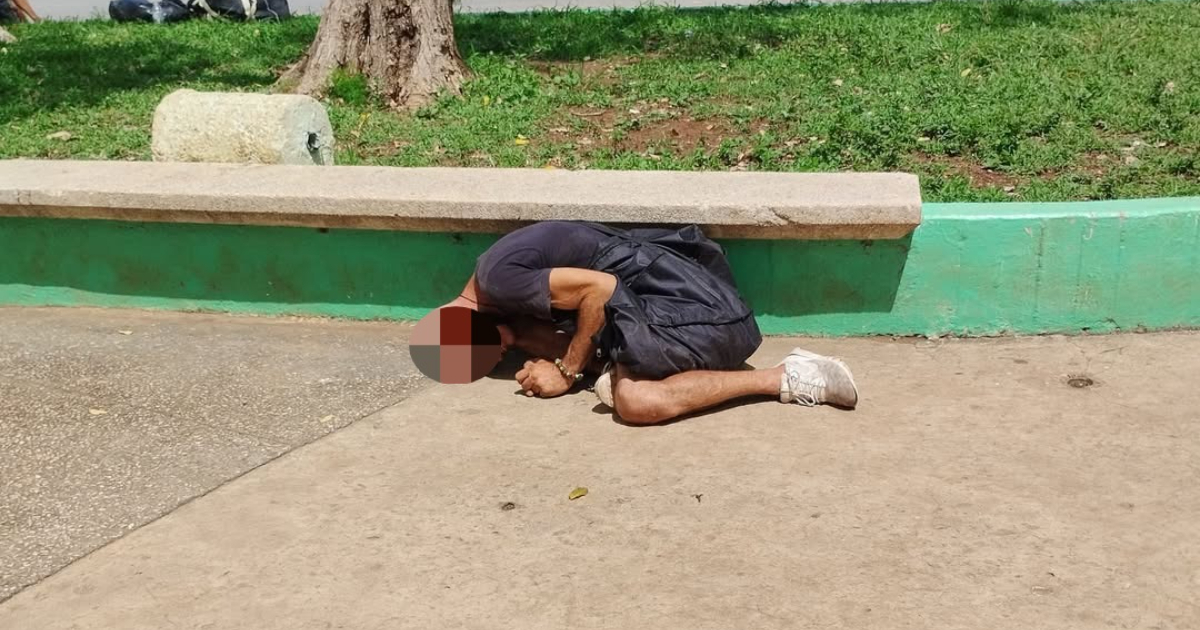
Colonel Juan Carlos Poey Guerra, head of the Anti-Drug Operations Unit at the Cuban Ministry of the Interior (MININT), has formally acknowledged that drug-related issues have permeated the entire island, no longer confined to specific regions.
As reported by the state-run Granma, the official stated, "The phenomenon is evident in every province, with substances like methamphetamine and synthetic cannabinoids being the most prevalent."
This acknowledgment was made during a meeting of the Task Force for the Prevention and Combat of Crime, Illegality, and Social Indiscipline, chaired by Vice President Salvador Valdés Mesa and Deputy Prime Minister Eduardo Martínez Díaz.
Poey Guerra's admission marks a significant shift in the government's narrative, which had previously portrayed the issue as geographically isolated or primarily linked to international drug trafficking routes.
Synthetic Cannabinoids: A Growing Concern
Synthetic cannabinoids, colloquially known in Cuba as "el químico," "kimiko," or "papelito," have emerged as the most consumed drug within the country. These substances are absorbed onto paper strips and smoked, with a dose costing between 150 and 250 Cuban pesos (less than a dollar), making them accessible even to teenagers amid a harsh economic crisis.
The severity of the situation is underscored by healthcare statistics: emergency cases in Havana related to synthetic cannabinoids increased from 467 in 2024 to 886 in 2025, nearly doubling, according to official figures cited by the Associated Press.
Health Risks and Origins of Synthetic Drugs
Cuban authorities have identified at least 40 different variants of these substances circulating within the nation, some of which are tainted with fentanyl, formaldehyde, benzodiazepines, and veterinary anesthetics, significantly heightening the risk of severe intoxication, seizures, and psychosis.
Regarding the origin of the "químico," Poey Guerra previously indicated that the synthetic drug predominantly enters the country from abroad, especially from the United States, via air, sea, and mail.
Efforts to Combat Drug Trafficking
During the same meeting, William Pérez González, First Deputy Chief of the General Customs of the Republic, emphasized that borders must act as a "permanent and rigorous combat system against the drug issue."
Poey Guerra highlighted that MININT's strategies focus on "enhancing levels of prevention and addressing drug-related crimes, as well as ensuring a permanent working system that halts their progression, with indicators and evaluations to determine how the issue has been addressed, and how many consumers have been reintegrated and rehabilitated."
Regional Impact and Legal Measures
Las Tunas, one of the hardest-hit provinces, reported an 81.4% increase in consumption cases from 2024 to 2025, with the most affected age group between 14 and 25 years, including documented cases as young as eight. In June 2026, the province opened the country's first Provincial Drug Observatory, identifying synthetic cannabinoids as the most widespread substance.
Vice President Valdés Mesa called for "stricter measures against criminal phenomena in various institutions and organizations" and for "permanent and stable control, as well as strengthening response plans to achieve better results."
Moreover, the legal framework has been tightened: in August 2025, the Supreme People's Court approved Ruling 476, which includes penalties ranging from one to three years in prison or fines for drug possession and use.
Understanding Cuba's Drug Crisis
What substances are most prevalent in Cuba's drug crisis?
The most prevalent substances are methamphetamine and synthetic cannabinoids, with the latter being the most consumed drug internally.
How are synthetic cannabinoids commonly consumed in Cuba?
Synthetic cannabinoids are usually absorbed onto strips of paper and smoked. They are known locally as "el químico," "kimiko," or "papelito."
What legal measures has Cuba implemented to combat drug use and possession?
In August 2025, Cuba's Supreme People's Court approved Ruling 476, which imposes penalties ranging from one to three years in prison or fines for drug possession and consumption.