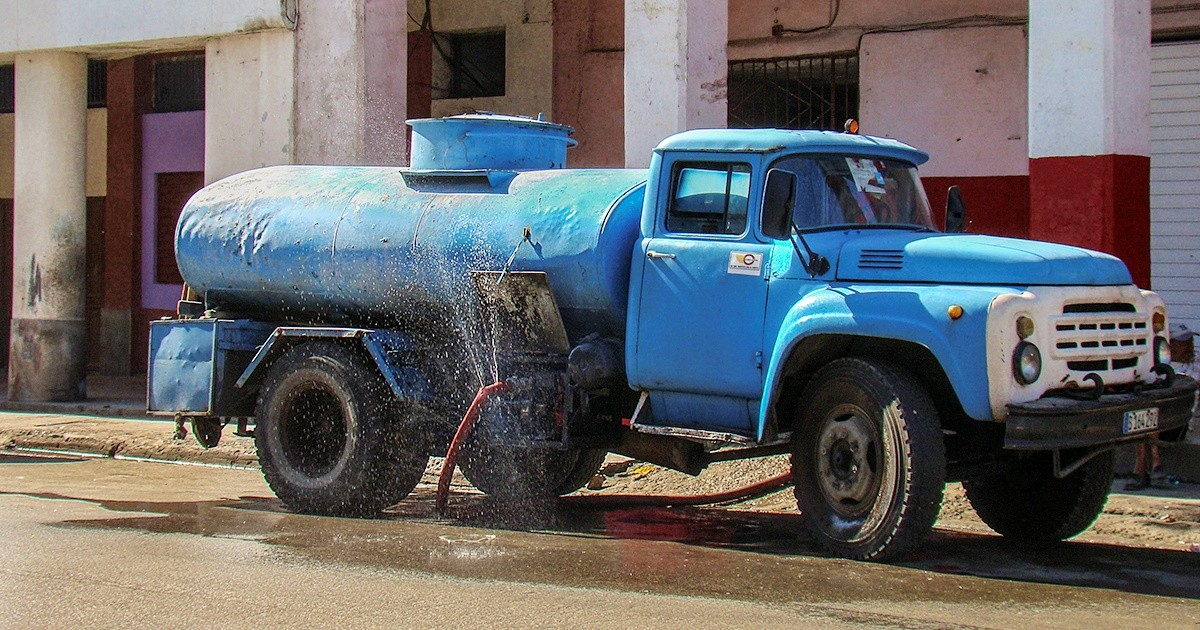
Yosvany Rubí Bazail, the general director of Aguas de La Habana, provided an explanation on Thursday regarding the recent water supply disruptions affecting Cuba’s capital. He cited significant breakdowns in major pipelines like Cuenca Sur, failures in pumping equipment awaiting imported parts, and adjustments to power lines where generators are being installed.
These remarks were made during an inspection visit to the Benigno well field, located south of Cotorro, as reported by the state-run newspaper Granma.
The Benigno facility, situated in Cotorro municipality, plays a crucial role in supporting the eastern system of the capital, supplying water to around 58,000 residents in the San Miguel del Padrón municipality.
Rubí Bazail noted that the civil infrastructure projects at Benigno have been completed, and currently, a leak suppression program is in progress alongside the finalization of the pumping equipment setup.
Energy Backup Efforts Underway
Regarding energy support, Rubí Bazail outlined that the first phase of the Comprehensive Program involves installing large generator units at the pumping stations. "We are currently installing all the large generator units that supply these pumping stations, and a series of tests are being conducted, which are yielding satisfactory results," he stated.
Nevertheless, he acknowledged ongoing issues, stating, "There are still disruptions due to the current energy contingency we are experiencing."
Persistent Challenges in Water Supply
The Cuenca Sur pipeline, identified as one of the primary causes of the recent interruptions, has a history of failures dating back to 2026. In August, a severe breakdown left six municipalities without water, and on October 22, a failure in 110 kV power lines caused a complete halt in pumping and another rupture at two points of that same infrastructure, impacting five central municipalities.
The stated objective of the program is to equip major water sources with their own energy protection, allowing for a gradual restoration of distribution systems. However, no specific timeline for service normalization has been provided by the regime.
Long-Term Solutions and Structural Issues
Havana's water crisis is attributed to structural issues exacerbated by deteriorating infrastructure—pipes that have been in use for 60 to 70 years—and the water system's reliance on the national electrical grid, which frequently experiences outages.
According to the National Institute of Hydraulic Resources, as of October 29, more than 2.14 million Cubans had their water service fully or partially disrupted, with power outages and equipment failures accounting for about 88% of the incidents.
The long-term plan involves installing 200 megawatts of photovoltaic solar energy to detach the pumping system from the National Electroenergetic System. However, this phase is not scheduled to begin until early 2027.
Vice Prime Minister Inés María Chapman Waugh, Energy and Mines Minister Vicente de la O Levy, National Institute of Hydraulic Resources President Antonio Rodríguez Rodríguez, and top Party and Government officials in Havana were present during the visit to Benigno.
Understanding Havana's Water Supply Challenges
What are the main causes of Havana's recent water supply interruptions?
The primary causes include major breakdowns in pipelines such as Cuenca Sur, failures in pumping equipment awaiting imported parts, and adjustments to power lines due to the installation of generators.
How does the energy situation affect Havana's water supply?
The water supply system in Havana is heavily dependent on the national electrical grid, which frequently suffers outages, leading to disruptions in the pumping and distribution of water.
What long-term solutions are proposed to address the water crisis in Havana?
The long-term strategy includes the installation of 200 megawatts of photovoltaic solar energy to make the water pumping system independent from the National Electroenergetic System.