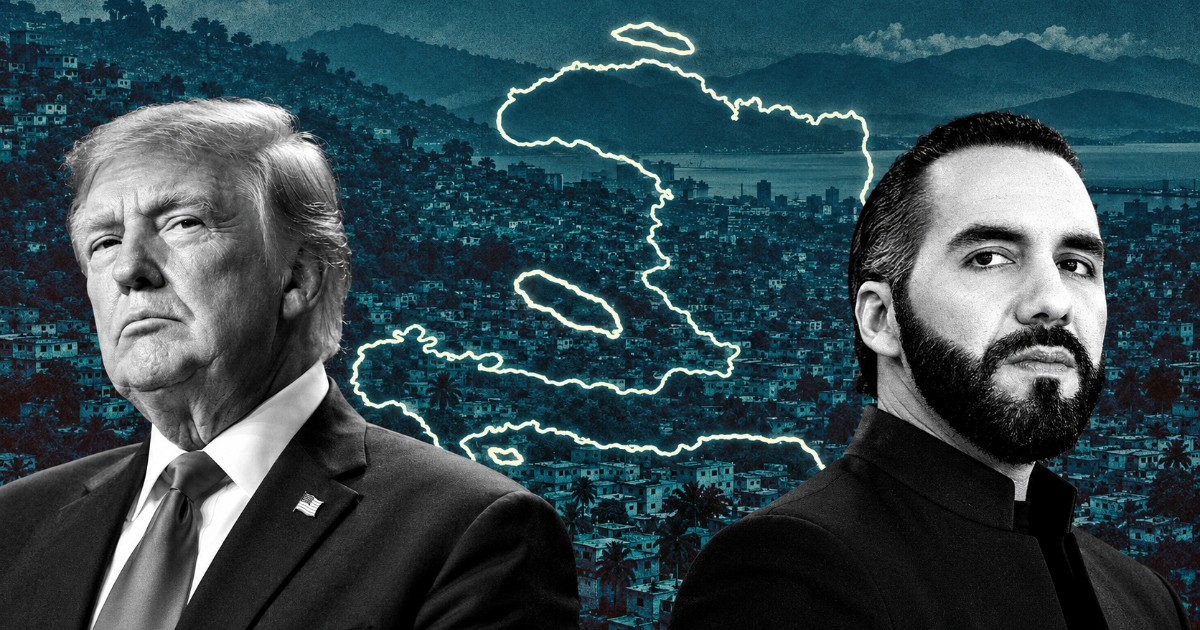
In a recent disclosure by Axios, it's reported that President Donald Trump privately endorsed the expansion of Nayib Bukele's military deployment in Haiti. During a phone conversation on Tuesday, October 27, Trump allegedly advised his Salvadoran counterpart, "Do what you must," according to individuals familiar with the exchange.
Bukele reached out to Trump to ensure that Washington had no opposition to the operation, which was conducted with the approval of Haitian authorities. Axios highlights that this was a verbal endorsement, lacking any formal U.S. military authorization or commitment to send American troops.
A White House official conveyed to the media that Trump extended his solidarity to Bukele over the disappearance of four Salvadoran military personnel. A source privy to the call mentioned that Bukele expressed confidence in accomplishing his mission, though he acknowledged potential challenges.
Search for Missing Military Personnel
On October 18, four Salvadoran aviation technicians went missing after their vehicle was attacked in Croix-des-Bouquets, near Port-au-Prince. In response, El Salvador intensified its security operations in Haiti, announcing the deployment of additional forces.
The Salvadoran government has detailed an operation involving over 2,000 troops. Axios suggests that this contingent might significantly increase, although there is no official statement confirming further expansion.
El Salvador's Role in International Security
El Salvador was already a participant in the Gang Suppression Force (GSF), an international mission supported by the United Nations. According to Axios, the new intervention is also backed by a bilateral agreement with Haiti, approved last Wednesday.
Concerns from Marco Rubio
The report indicates Bukele had proposed that his country take on security responsibilities in Haiti as an indirect force for the United States. However, a source knowledgeable about these discussions claimed that Secretary of State Marco Rubio had reservations about this idea. The report does not suggest that these reservations amount to opposition to the current deployment.
Another source mentioned to Axios that Washington officially denied a Salvadoran request for equipment, including drones and transport planes. The possibility of Colombia providing indirect support with supplies is noted, though not confirmed.
Bukele's Assurance Against Invasion
On Thursday, President Bukele assured the Haitian people that the operation "is not an invasion." He clarified that its purpose is to locate the four technicians and combat armed groups impacting the Caribbean nation's population.
Bukele also engaged with Haiti's Prime Minister, Alix Didier Fils-Aimé, to coordinate security efforts and the search for the missing personnel. As of the Axios report, the four military members had not been officially located.
Understanding the Implications of Bukele's Military Actions in Haiti
What was the main reason for Nayib Bukele's military deployment in Haiti?
The primary reason for Bukele's military deployment in Haiti was to locate four missing Salvadoran military technicians and to address the activities of armed groups affecting the local population.
Did the United States formally authorize military support for El Salvador's actions in Haiti?
No, the United States did not formally authorize military support for El Salvador's actions in Haiti. President Trump provided a verbal endorsement, but it did not include a commitment to send U.S. troops or formal military authorization.
How has the international community been involved in El Salvador's mission in Haiti?
El Salvador is part of the Gang Suppression Force, an international mission supported by the United Nations. The recent intervention in Haiti also involves a bilateral agreement with the Haitian government.