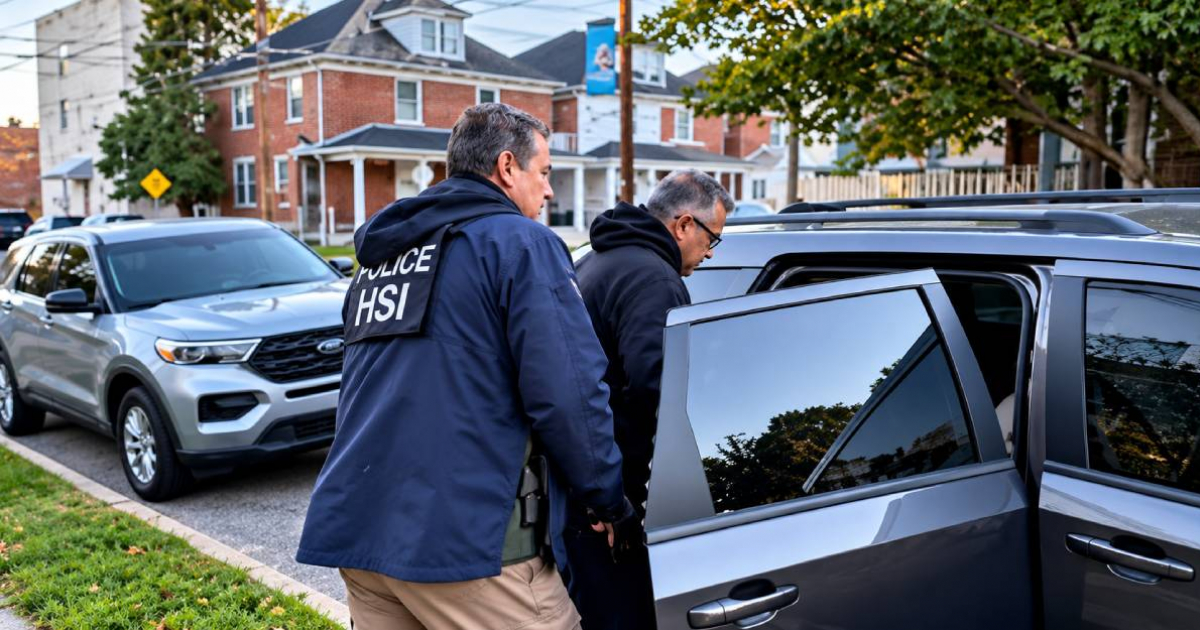
On October 23, agents from Homeland Security Investigations (HSI), a division of the U.S. Immigration and Customs Enforcement (ICE), apprehended 70-year-old Cuban national Osmal Sánchez Loy in Pennsylvania. He stands accused of unlawfully voting in the 2024 general elections.
ICE reports that Sánchez Loy had a final deportation order issued by an immigration judge back in April 2009, yet he remained in the United States, failing to adjust his status to that of a legal permanent resident.
The investigation was spearheaded by HSI’s office in Allentown, and the U.S. Attorney's Office for the Eastern District of Pennsylvania has taken the case for prosecution.
Living in Fountain Hill, Pennsylvania, Sánchez Loy also carries a criminal history, with convictions for possession of dangerous drugs in 1987 and receiving stolen property in 1991.
The Broader Context of U.S. Immigration Challenges
This incident underscores the intricacies within the American immigration system. For more updates on arrests, deportations, and legal proceedings, explore our U.S. Immigration section.
Nathan Abel, HSI Special Agent in Charge, emphasized the importance of electoral integrity: "Safeguarding our elections remains a top priority. We will continue collaborating with partners to hold violators accountable."
Political Implications Amidst Upcoming Elections
The arrest occurs just days before the November 3, 2026, midterm elections, with Pennsylvania being a fiercely contested swing state, amplifying the political ramifications of the case.
This arrest is part of a nationwide crackdown initiated by the Trump administration in October against non-citizen voting. The Department of Homeland Security disclosed numerous additional arrests across the nation for electoral fraud.
Among those charged are four Cubans out of a group of 48 foreign nationals prosecuted in five states. Besides Sánchez Loy, the list includes fellow Cuban Alfredo Santiesteban (73) in Pennsylvania, Jamie Orlando Sosa Sardina (60), and Luis Manuel Pérez (72) in Florida.
Discrepancies and Legal Consequences
The U.S. Department of Justice noted that three of the four Cubans were legal permanent residents. However, a discrepancy arises in Sánchez Loy's case: while the Department of Justice labels him a permanent resident, ICE claims he never achieved such status and had a deportation order since April 2009.
This is a critical issue, as federal law is clear: the green card does not confer the right to vote in federal elections. Any non-citizen who votes in presidential or congressional elections can face up to a year in prison, and falsely claiming citizenship for registration purposes can lead to a five-year penalty.
Beyond criminal charges, illegal voting can result in deportation and permanent inadmissibility, even for those with residency.
Sánchez Loy’s situation also highlights the structural issue faced by Cubans with deportation orders, as Cuba has historically refused to accept them back, leaving many in a migratory limbo for years.
The Trump administration, in 2025 and 2026, reinitiated enforcement of these old orders, sometimes deporting Cubans to third countries when Havana refused to accept them.
All charges against Sánchez Loy are allegations, and he is presumed innocent until proven guilty.
Key Questions on Immigration and Deportation Cases
What are the consequences for non-citizens voting in U.S. elections?
Non-citizens who vote in U.S. federal elections can face up to a year in prison. Additionally, falsely claiming citizenship to register can result in a five-year sentence. These actions may also lead to deportation and permanent inadmissibility.
Why has Cuba refused to readmit its nationals with deportation orders?
Cuba has historically resisted accepting back its nationals with deportation orders, often due to political and diplomatic tensions with the United States, leaving many in a state of legal uncertainty.
How does the green card status affect voting rights?
Holding a green card, or legal permanent residency, does not grant the right to vote in federal elections. Voting is reserved for U.S. citizens only.