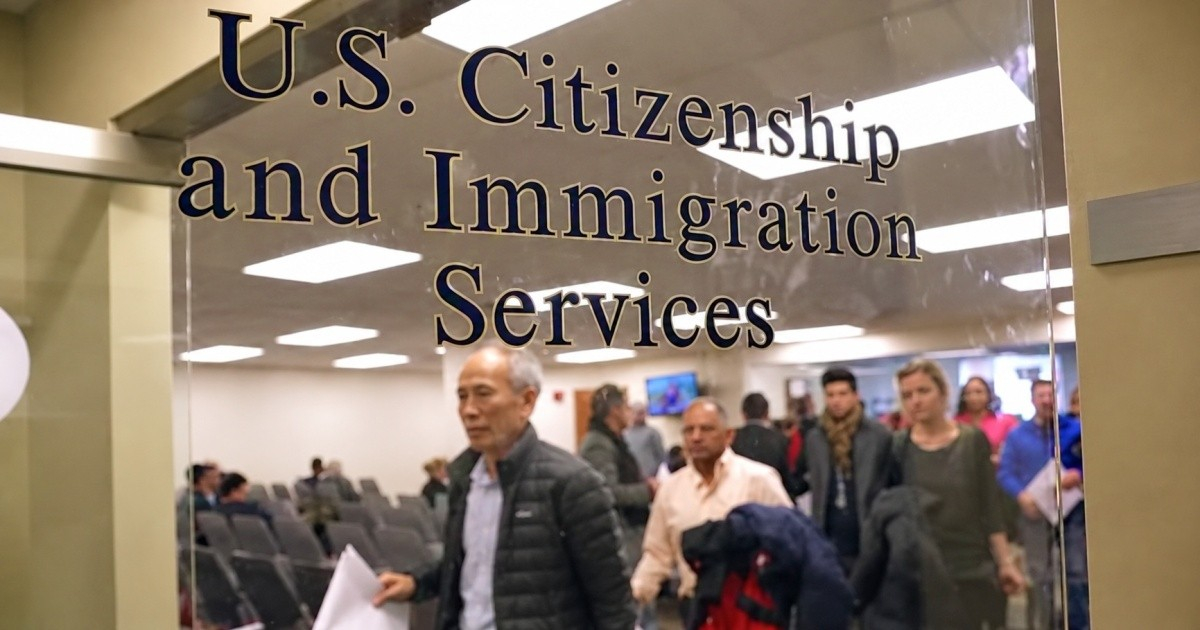
The U.S. Citizenship and Immigration Services (USCIS) has announced plans to introduce a new form, I-936, named "Request for Waiver of Electronic Filing Requirement." This form, outlined in a notice published in the Federal Register on Friday, will allow applicants for immigration benefits to request permission to continue submitting their paperwork in physical form when online filing poses undue hardship.
The notice, identified as FR Doc. 2026-22139 (file USCIS-2026-0463), initiates a 30-day period for public comments under the Paperwork Reduction Act. The deadline for these comments is November 30. Until the Office of Management and Budget (OMB) approves the form, it will not be available to the public.
The introduction of Form I-936 is a significant development in the digital transformation USCIS began in August 2026, which mandated electronic filing. This shift received minimal feedback, with only five comments during its 60-day comment period.
Impact on Cuban Immigrants
This new form could significantly impact thousands of Cuban nationals handling their immigration processes in the U.S. For extensive information on visas, USCIS, and immigration procedures, refer to our U.S. Immigration section.
USCIS will use Form I-936 to discretionarily decide whether an applicant or beneficiary can submit their immigration paperwork in paper format. According to the official notice, "USCIS will consider all relevant evidence provided by the applicant, such as geographic location, socioeconomic conditions, and the availability of public technology resources."
Nevertheless, the document warns that unfamiliarity with USCIS's online system or the lack of an existing online account "will generally not suffice to demonstrate eligibility for a waiver." Applicants without personal internet access must also justify why they cannot connect through alternatives like public libraries, community centers, friends, or family.
Challenges for Older Cuban Immigrants
This requirement is particularly crucial for many Cubans residing in South Florida. The average age of Cuban immigrants in the United States is 55, compared to 47 for other groups, according to the Migration Policy Institute. In Miami, 32.2% of households lack an internet subscription, while in Miami-Dade County, that figure is approximately 20.5%.
Many of these Cubans are filing forms such as the I-485 (permanent residence), I-765 (work permit), or I-131 (travel document) without a computer, stable connection, or online account.
Important Details to Consider
It's essential to understand the practicalities involved. The I-936 must be filed and approved before submitting the primary paper application; it cannot be sent retroactively with the benefit request. Each paper filing request requires a separate form, and one form is needed per applicant. Approval is valid for 30 days from issuance.
USCIS projects that approximately 248,905 individuals will file the I-936 annually, with each application taking about 30 minutes to complete, resulting in a total annual cost of $6,094,493.
Until the form receives approval, a practical recommendation is to create an account on myUSCIS and seek guidance from accredited organizations like Catholic Legal Services, Church World Service Florida, or the pro bono project of the Cuban American Bar Association (CABA).
It's crucial to avoid unlicensed intermediaries. The digitization initiative coincides with new USCIS fees effective from October 16, raising the parole fee to $1,050 and the initial work permit fee to $570, with no option for exemption. Individuals needing guidance on immigration forms are encouraged to explore online resources before making any decisions.
Understanding USCIS Form I-936
What is USCIS Form I-936?
Form I-936 is a request for a waiver of the electronic filing requirement, allowing applicants to submit immigration paperwork in paper form if online submission is challenging.
Who can benefit from Form I-936?
Individuals facing difficulties with online filing, such as lack of technology access, can benefit from this form by requesting to submit their paperwork in physical form.
What are the requirements for using Form I-936?
Applicants must provide evidence of geographic, socioeconomic, or technological barriers to online filing. Lack of familiarity with the online system is generally insufficient for a waiver.