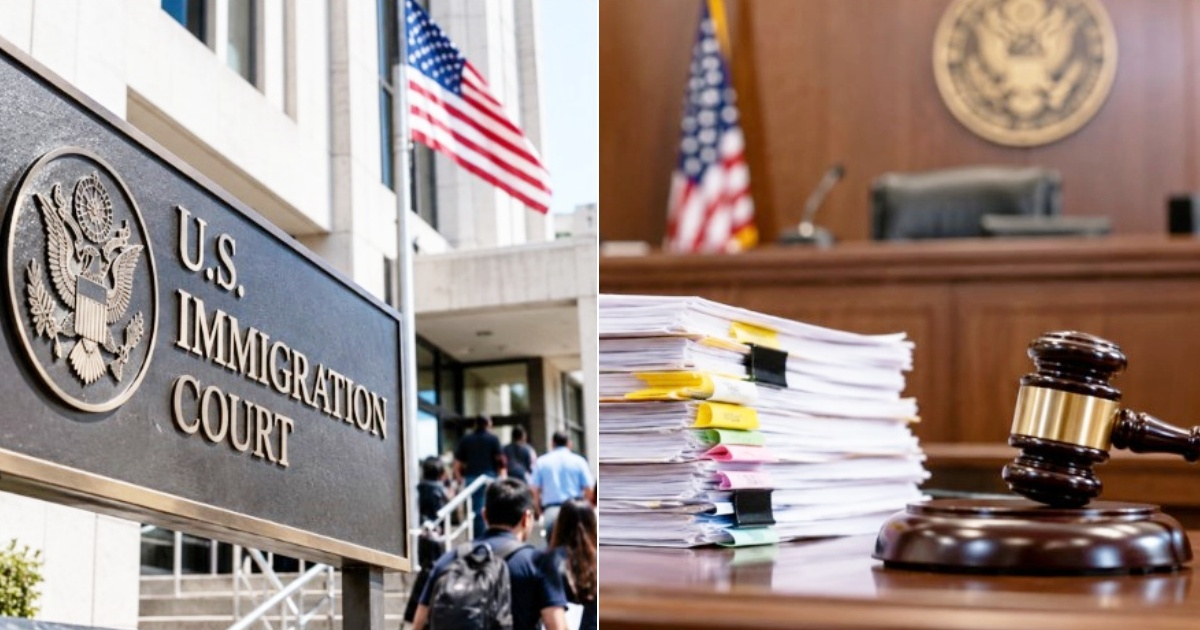
The backlog of pending immigration appeals in the United States surged by 61% during the fiscal year 2026, even though immigration courts at the initial level set a record for cases resolved. These figures come from the Executive Office for Immigration Review (EOIR), a branch of the Department of Justice.
By the end of the fiscal period, the Board of Immigration Appeals (BIA) had 325,774 pending appeals. Meanwhile, immigration courts completed nearly 974,000 cases, marking the highest number ever recorded by the agency.
Record Number of Cases Resolved at Initial Level
According to an official EOIR statement released on October 29, 973,669 cases were concluded during the fiscal year 2026, spanning from October 1, 2025, to September 30, 2026. The agency also brought on board over 300 permanent immigration judges during this time, setting another institutional record. They reported a reduction in the backlog by more than 678,000 cases since January 2025.
Despite the impressive number of resolutions, the backlog of cases wasn't completely cleared. As of October 22, first-instance courts had 3,300,793 pending cases. The completed cases refer to procedures resolved before immigration judges and do not necessarily equate to the number of deportations or individuals involved, as one person might have multiple cases.
Pending Appeals Rise by 61%
The first-instance courts and the BIA operate as separate layers within the immigration review system, each maintaining distinct inventories of cases. Immigration judges conduct hearings and make initial rulings on deportation proceedings and protection requests. The BIA reviews appealed decisions, typically through written submissions without holding new hearings.
In fiscal year 2026, the BIA completed 46,374 appeals, the highest in two decades. However, it received 169,538 new appeals, more than three and a half times the number it resolved. By the fiscal year's end on September 30, pending appeals totaled 325,774, a jump from the 202,819 at the end of 2025, representing an increase of 122,955 cases or 60.6%.
Impact on Cuban Immigrants
This rise in pending appeals is particularly significant for Cuban immigrants contesting decisions before the BIA, though the agency’s general statistics do not specify the number of Cuban nationals involved. As of August 2026, Miami's immigration court had 137,373 cases pending, the highest among the nation's immigration courts.
Additionally, over 1,600 Cubans received deportation orders in June 2026, with 68% issued in their absence. Generally, those wishing to appeal an immigration judge’s decision must file the EOIR-26 form within 30 calendar days of the decision.
Timely appeals often automatically stay the execution of deportation orders while under review, though there are exceptions to this rule. Immigration attorneys estimate that an appeal process may take two to three years. However, EOIR statistics do not provide specific timelines for individual case resolutions.
Moreover, the average wait time for pending cases in initial immigration courts reached 940 days in July 2026, compared to 571 days in July 2024, according to data from Syracuse University's TRAC analysis center. This metric pertains to procedures before immigration judges, not the duration of appeals before the BIA.
Understanding the U.S. Immigration Backlog
What led to the 61% increase in pending immigration appeals?
The significant rise in pending appeals is attributed to a surge in new appeal submissions, which outpaced the number resolved by the Board of Immigration Appeals, despite a record number of cases being completed.
How does the backlog impact Cuban immigrants specifically?
Cuban immigrants are notably affected by the backlog as it may delay their appeal processes, with Miami's court having the highest number of pending cases, and a significant number of Cubans receiving deportation orders, many in absentia.
What is the average wait time for cases in immigration courts?
As of July 2026, the average wait time for pending cases in initial immigration courts was 940 days, up from 571 days in July 2024.