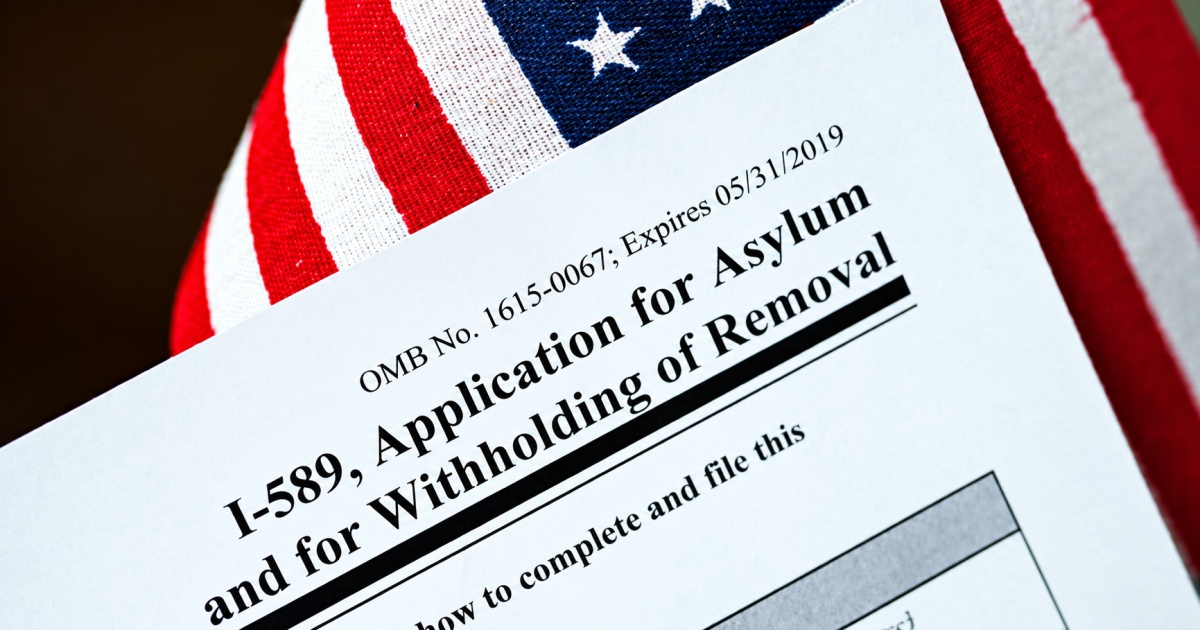
The United States Board of Immigration Appeals (BIA) has established a binding precedent regarding the credibility of asylum seekers who significantly alter their initial accounts without providing a satisfactory explanation.
This landmark decision, known as Matter of S-N-K-C-, 30 I&N Dec. 207, was issued on September 9, 2026, and officially designated as precedent by the Attorney General on October 27, through Order 7273-2026.
The case concerns a Turkish national who applied for asylum in March 2025, initially claiming he had never been detained, arrested, or imprisoned outside the United States. However, just days before his hearing on August 18 of that year, he submitted a revised statement asserting he had been detained five times in Turkey since 2016.
He further claimed to have suffered physical assaults and recounted a personal confrontation with the Turkish president, after which, according to his testimony, he was pursued and mistreated under orders from the authorities.
Credibility Impact of Altered Statements
The BIA determined that the discrepancies between the initial application and subsequent statements were not mere extensions of information but rather constituted a fundamental transformation of the facts underlying the request for protection.
The court concluded that the immigration judge had made a clear error in deeming the applicant credible.
This ruling does not prohibit asylum applications from being corrected or expanded; what it does establish is that significant omissions and contradictions can justify a negative credibility determination when, after examining all circumstances, no adequate explanation is provided.
The Onus of Reviewing Signed Statements
One of the most crucial aspects of the decision is how it addresses errors attributed to legal representation.
The initial judge had blamed the attorney for failing to include essential information in the original application. The BIA dismissed this explanation, pointing out that the applicant had signed both the initial form and subsequent modifications, declaring the contents to be true.
The court emphasized that signing an immigration application creates a strong presumption that the individual is aware of and agrees with the information presented, as per the precedent set in Matter of A.J. Valdez and Z. Valdez, 27 I&N Dec. 496 (BIA 2018).
Moreover, the BIA found insufficient evidence to support the applicant's claim that all details had been communicated to his attorney from the outset.
Evidence Shortcomings Influence Decision
The BIA also raised concerns about the lack of independent evidence regarding the political activities and persecution alleged by the applicant.
While the applicant submitted letters from family and friends, the court noted that much of their content relied on information provided by the applicant himself. Additionally, these individuals were not available for questioning during the proceedings.
Furthermore, the applicant failed to provide independent evidence of his social media activity in Turkey, even though he claimed that authorities had removed his previous accounts.
Given the contradictions and insufficient corroboration, the BIA annulled the asylum grant, denied withholding of removal and protection under the Convention Against Torture, and ordered his removal to Turkey.
Implications for Cuban Asylum Seekers
This precedent is also significant for Cuban asylum seekers in the United States, especially when they need to amend prior statements or include important facts not initially present in their I-589 form.
The decision does not imply that every modification of an application will lead to rejection. The evaluation should consider the specific circumstances of the case, the nature of the changes, the explanations provided, and the available evidence.
However, it underscores the importance of meticulously reviewing information before signing, explaining substantial omissions, and gathering documentation to support the claimed facts.
For those preparing a protection application, obtaining appropriate legal advice during the asylum process can help identify inconsistencies and avoid omissions that might later prove challenging to justify before an immigration court.
Key Questions About Asylum Application Changes
What did the BIA decide in Matter of S-N-K-C-?
The BIA established that significant changes in an asylum application must be accompanied by a satisfactory explanation, or it could lead to a negative credibility determination.
How can altering an asylum application affect credibility?
Altering an application without adequate explanation can result in a negative assessment of the applicant’s credibility, as it may be viewed as a fundamental transformation of the facts.
Why is it important to review an asylum application before signing?
Reviewing an application is crucial because signing it implies agreement with the information, and any discrepancies may later affect credibility assessments.