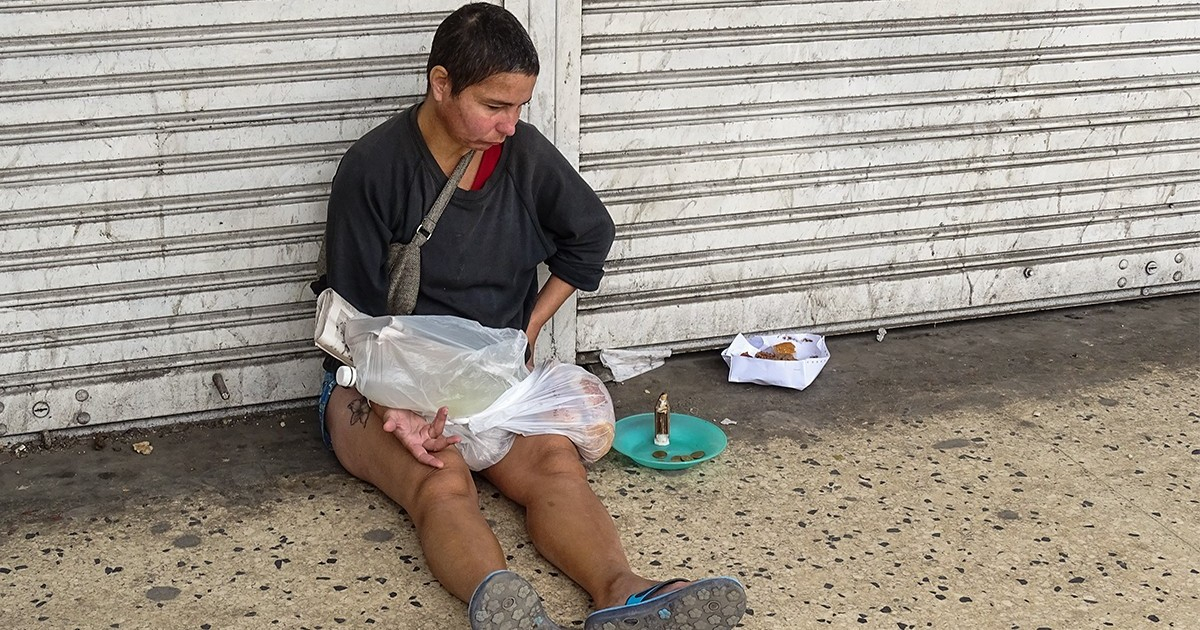
A Cuban citizen named Darel Rochiel Robinson took to Facebook this Thursday to challenge the official narrative of "victory" against the stark reality of poverty in Cuba.
"More than 30 years have passed, and I never imagined I'd be cooking with charcoal, searching for plastic bags, or feeling my arm ache trying to light it," Rochiel expressed.
He recounts witnessing firsthand individuals rummaging through trash for food, crowds begging—including children—and elderly people nearly fainting while waiting in bank lines.
"I never thought I'd witness such crime, such social degradation, such shamelessness and opportunism," Robinson wrote.
He questioned the leaders, "Why do you say we are winning? Are we really victorious? When you use those words, that political and ideological product, what do you mean? What does 'victory' and 'we are winning' mean amidst such misery?"
This questioning comes at a time when the regime has often resorted to this rhetoric. Last July, Miguel Díaz-Canel described the actions of Foreign Minister Bruno Rodríguez at the UN as a "resounding victory." Users online sarcastically commented, "Let's eat victory," linking the supposed success to hunger and power outages.
Reactions to Robinson's post echoed this fatigue. One user shared a story of a young woman with a baby asking for food, despite appearing well-dressed and alert. The user bought her two pizzas, juice for the baby, a bag of rice, a can of sardines, and gave her 1,000 pesos. "She started crying, and I cried with her... My God, Cuba hurts so much," she confessed.
Others compared the current situation to the Special Period of the 1990s. "I lived through the Special Period and never cooked with wood or charcoal like now," one person remarked.
Criticism of the official rhetoric was blunt. "I don't know what victory they speak of—it must be the victory of keeping us mired in poverty while they live like kings," commented another user. Someone else added, "Every time someone calls this 'living with dignity,' I'm left speechless."
The Cuban Observatory for Human Rights estimated last August that 94% of the population lives in extreme poverty. Even Díaz-Canel acknowledged on October 7 during the radio program Criterio Compartido the presence of people "on the streets, in the trash, begging for alms, money, and food" following a listener's complaint. The government recognized more than 883,000 people as vulnerable.
Understanding Cuba's Current Crisis
What are the main challenges faced by Cubans today?
Cubans are currently facing severe shortages of food and basic necessities, widespread poverty, and frequent power outages. The economic crisis has led many to beg for food and other essentials.
How has the government responded to the crisis?
The government has recognized the existence of vulnerable populations and has used rhetoric to claim victories on international stages. However, these claims are often seen as disconnected from the reality experienced by ordinary Cubans.
What historical period is the current situation being compared to?
The current crisis is often compared to the Special Period of the 1990s, a time of economic hardship following the collapse of the Soviet Union, which was Cuba's primary ally and economic supporter.