Despite the passing of a full year since Hurricane Melissa wreaked havoc in Santiago de Cuba, more than 70,000 families are still waiting to have their homes restored. This grim acknowledgment came from the provincial government during the disaster's first anniversary.
The hurricane made landfall in the early hours of October 29, 2025, at El Francés beach in Guamá municipality, unleashing sustained winds of 195 km/h and classified as a Category 3 storm on the Saffir-Simpson scale.
The destruction was severe: over 106,000 homes were damaged, more than 22,000 experienced total collapse, 851 educational institutions were affected, and crops over 40,000 hectares were lost. In addition, the electrical and telecommunications infrastructure faced significant destruction.
Initial Recovery Efforts and Sudden Halt
Recovery efforts initially moved at a brisk pace. Yasmín Tortoza Sánchez, the Provincial Government's program coordinator, mentioned that "between November and December, we received over 100,000 tiles and other materials that allowed us to restore a significant portion of those homes," with nearly 20,000 homes rehabilitated by early 2026.
However, progress came to an abrupt halt. Ángel Hechavarría Hechavarría, one of the countless individuals still awaiting repairs, eloquently describes the situation: "Since the country stopped receiving oil and other resources, everything that was progressing swiftly has virtually stopped."
The Ongoing Crisis and Government Response
Ángel's testimony encapsulates the plight of tens of thousands of families. By January 2026, there was hope that the partial collapse of his roof would be resolved soon, but everything changed by February. Five months post-hurricane, only 17% of the damaged homes had been repaired, as of April 2026, indicating that the standstill was not temporary.
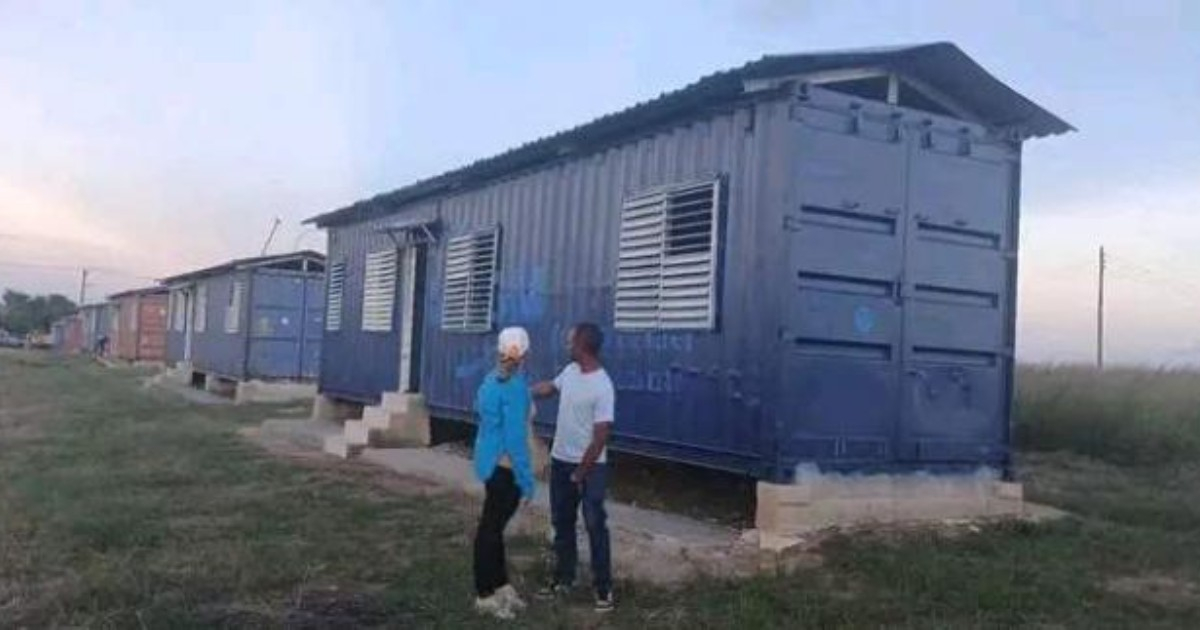
The lack of fuel prevents the transportation of materials to rural and mountainous municipalities, with donations remaining undistributed for the same reasons, the provincial government admitted. As alternatives, the regime is promoting the adaptation of metal containers, construction of Type IV housing, and local production of bricks, pipes, and lime across the province's nine municipalities.
International Aid and Structural Challenges
International aid, although significant, has fallen short of addressing the extensive damage. The UNDP mobilized $2.6 million and distributed over 6,400 metal roofing modules and 26,000 tarps for temporary coverings. Meanwhile, the Cuban Red Cross and the International Federation assisted over 35,000 vulnerable individuals and installed 14 photovoltaic systems in eastern clinics to ensure medical care during blackouts.
The UN, on the other hand, requested $74.2 million to aid nearly a million affected individuals and stated this week that "recovery continues" in Cuba, while acknowledging the deep scars left by the hurricane.
The island's energy crisis—characterized by prolonged blackouts, a critical fuel shortage, and a deteriorating electrical system—is the primary structural barrier to reconstruction, as highlighted by the Red Cross on the hurricane's first anniversary. This crisis is not a result of the storm but stems from decades of poor management by the Cuban dictatorship, leaving the nation unprepared for a disaster of this magnitude.
A year later, the most striking image of Santiago de Cuba is not of a region in recovery, but of over 70,000 families still living under shattered roofs or temporary solutions, waiting for materials that never arrive.
Frequently Asked Questions About the Hurricane Melissa Aftermath in Santiago de Cuba
What caused the delay in the recovery process after Hurricane Melissa?
The delay in recovery is primarily due to a shortage of fuel and resources in Cuba, which has halted the transportation of materials to affected areas.
How many homes were affected by Hurricane Melissa in Santiago de Cuba?
Hurricane Melissa damaged over 106,000 homes, with more than 22,000 experiencing total collapse in Santiago de Cuba.
What role did international aid play in the recovery efforts?
International aid provided significant support, including funds, temporary roofing materials, and photovoltaic systems, but was insufficient to completely address the extensive damage.