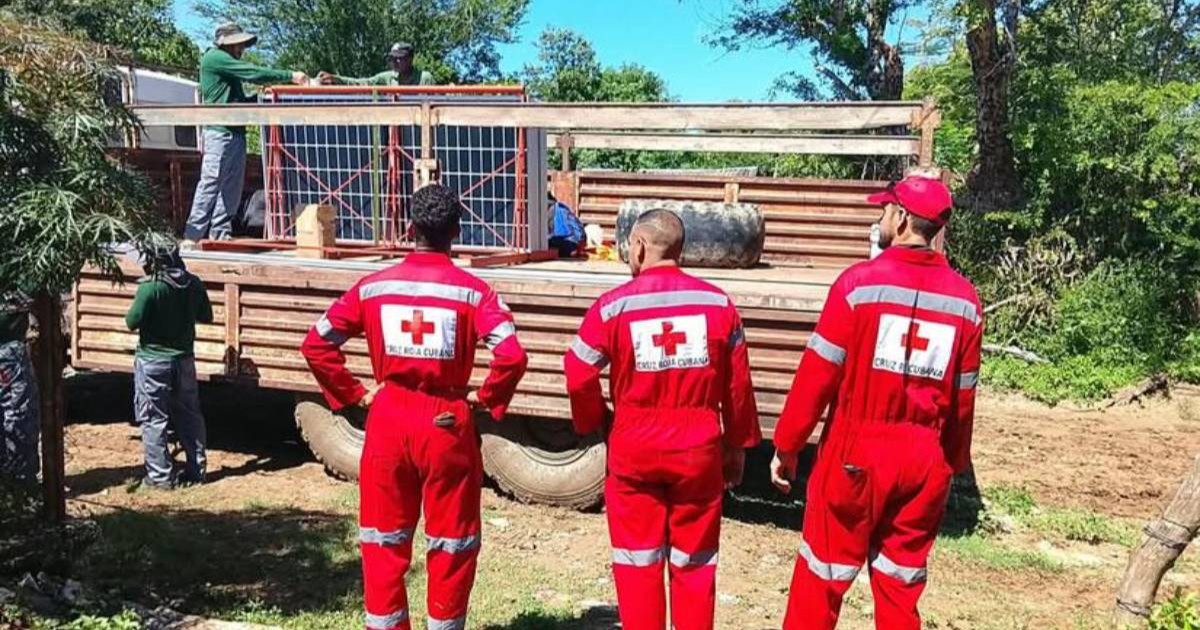
In the wake of Hurricane Melissa's devastation in eastern Cuba, the Cuban Red Cross, in collaboration with the International Federation of Red Cross and Red Crescent Societies (IFRC), announced on Thursday the successful installation of 14 solar power systems in clinics and health centers across the region. This humanitarian effort marks one year since the hurricane's impact.
Hurricane Melissa made landfall as a Category 3 storm on October 29, 2025, in Santiago de Cuba, sweeping through Granma and Holguín. The hurricane affected approximately 2.2 million individuals, damaged over 215,000 homes, and left 642 healthcare facilities in dire conditions across five provinces.
In the past year, the solar panels have enabled over 4,100 people to access essential medical services in clinics and hospitals, even during the frequent power outages plaguing Cuba, which experiences a daily electricity generation shortfall of around 1,900-2,000 MW, according to the involved organizations.
Dr. Carlos Pérez Díaz, the executive president of the Cuban Red Cross, emphasized the critical need for these energy solutions: "Without power, clinics cannot keep vaccines cold, pumps cannot supply water to neighborhoods, and our volunteers cannot reach families in need."
Every solar panel and every liter of fuel we secure keeps services running for individuals contending with the hurricane's aftermath, dengue and chikungunya outbreaks, and profound uncertainty," he added.
Broader Humanitarian Efforts Beyond Solar Power
In addition to solar energy, the organization provided medications to over 35,000 individuals in coordination with the Ministry of Public Health since the disaster struck.
Water tanks installed across 11 communities supplied 3.3 million liters, meeting the minimum needs of 30,000 people for a week.
Vector control campaigns reached 7,494 individuals in schools and communities to combat dengue and other mosquito-borne diseases, while 3,517 people across 54 communities received psychosocial support to manage anxiety, grief, and sleep disorders.
Challenges in Recovery and Future Plans
The recovery process remains slow and precarious. Prolonged blackouts strain critical services such as maternal, neonatal, intensive care, dialysis, and radiotherapy. Crop losses and transportation challenges exacerbate food insecurity, forcing many families to resort to cooking with charcoal and wood, posing additional health risks.
Looking ahead, the IFRC and Cuban Red Cross plan to install additional solar systems in health centers in Guantánamo, Matanzas, and Ciego de Ávila, focusing on maternal and pediatric hospitals, maternity homes, and provincial hospitals. Plans also include distributing 1,600 roof repair kits in Santiago, Granma, and Holguín, though these initiatives depend on available energy and fuel.
Funding Gaps Hinder Expanded Response
A significant barrier to expanding these efforts is the lack of funding. The IFRC's emergency appeal, launched in October 2025 for 18 million Swiss francs, has only secured 38.6% of the needed funds, leaving a shortfall of approximately 11 million Swiss francs as the hurricane's first anniversary approaches.
"The Cuban Red Cross has shown the potential of local action supported by a global network: volunteers familiar with every community, practical solutions like solar energy to keep essential services running, and partners worldwide backing them. It's a formula that works and can grow. With more resources, we could enhance the lives of many more still recovering from Melissa," stated Loyce Pace, IFRC's regional director for the Americas.
Key Questions on Solar Energy Solutions in Cuba
How many health centers received solar power systems?
A total of 14 health centers received solar power systems as part of the humanitarian operation.
What challenges are faced by the Cuban Red Cross in expanding their efforts?
The primary challenge is the lack of funding, as the IFRC's emergency appeal has only reached 38.6% of its target, leaving a significant financial gap.
What other support has been provided besides solar energy?
In addition to solar energy, the organization distributed medications, installed water tanks, conducted vector control campaigns, and provided psychosocial support to communities.