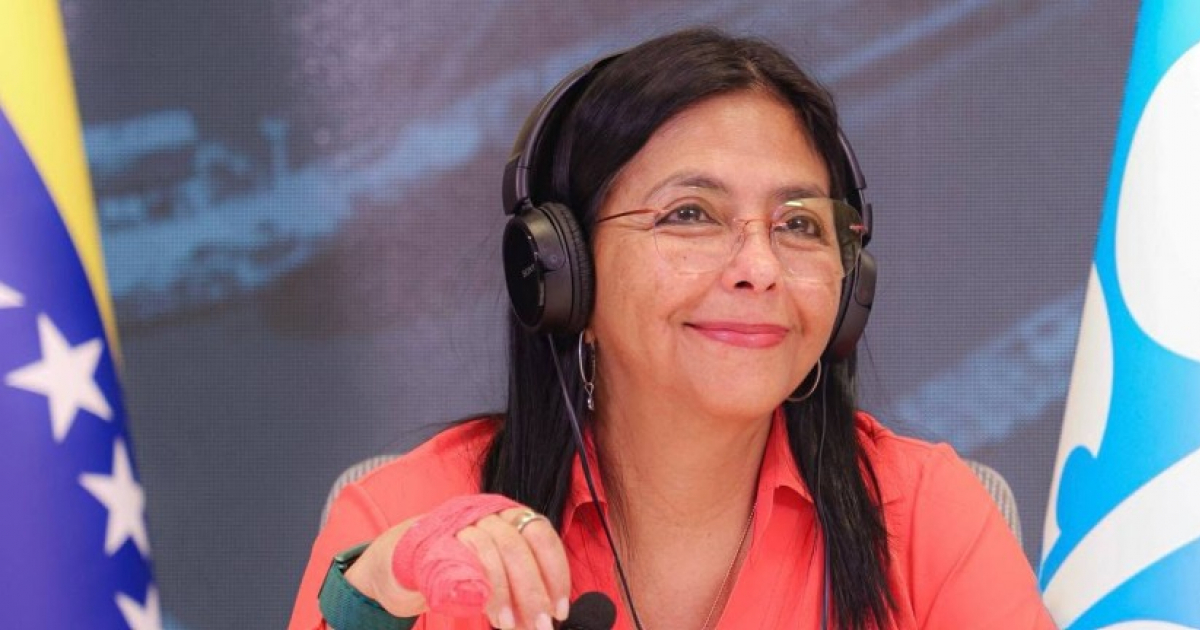
Interim President of Venezuela, Delcy Rodríguez, assured on Thursday that elections will be held in the country under the organization of a reformed electoral body. However, she did not specify any timeline or concrete mechanisms to bring this promise to fruition.
In a broadcast on the state-run Venezolana de Televisión, Rodríguez stated, "Many are curious about the election schedule. I have said it; there will be elections, all those mandated by our Constitution, arranged by a renewed electoral authority and witnessed by the world."
Her announcement lacked specific dates or deadlines and provided no details on how the National Electoral Council (CNE) would undergo renewal. This body’s composition and operations have been challenged by the opposition and Washington as prerequisites for recognizing any electoral process.
Rodríguez also sought to quell political tensions surrounding the elections: "The election should not be a problem or push us back to times of confrontation that no one desires anymore."
Concluding her address, she reached out to those with opposing views, urging a mix of openness and conditions: "I’m not asking you to change your opinion; I’m asking you to judge by actions and come to the table with equal rules for everyone."
Her remarks, delivered from the Palacio de Miraflores, coincided with the first press conference held by opposition leader María Corina Machado since her return to Venezuela on October 25, following nearly ten months in exile. This timing suggests the Chavista regime aimed to establish its narrative before the opposition leader spoke publicly.
Meanwhile, Machado has expressed a willingness to meet with Rodríguez, although her Vente Venezuela movement is not part of the formal negotiation table backed by Washington, where the opposition delegation is led by Dinorah Figuera, president of the National Assembly elected in 2015.
This is not the first instance where Rodríguez has pledged elections without tangible support. In September, addressing the United Nations General Assembly, the interim president declared that Venezuela would hold elections "on equal terms for everyone," again failing to set any specific or verifiable conditions.
The announcement comes amid mounting pressure from the Trump administration. Secretary of State Marco Rubio recently warned that Venezuela's electoral infrastructure was crafted to rig elections and must be replaced before any valid voting can occur. He emphasized that the Chavismo regime should not delay the process until 2029.
Washington's roadmap includes three steps: renewing the Supreme Court of Justice by the end of 2026 — the Judicial Nominations Committee was sworn in on October 22 and must submit a list of 32 magistrates to the National Assembly by December 11 — reforming the CNE shortly after, and having Rodríguez declare the presidency permanently vacant, which would open a constitutional window to call for elections in 2027.
Frequently Asked Questions about Venezuela's Electoral Process
What did Delcy Rodríguez promise regarding elections in Venezuela?
Delcy Rodríguez promised that Venezuela would hold elections organized by a renewed electoral authority, although she did not provide a specific timeline or mechanism.
What is the stance of the Trump administration on Venezuela's elections?
The Trump administration, specifically through Secretary of State Marco Rubio, has emphasized that Venezuela's current electoral infrastructure is designed to rig elections and must be replaced for any valid voting to occur.
How does Washington plan to address the electoral situation in Venezuela?
Washington's plan involves renewing the Supreme Court of Justice by 2026, reforming the National Electoral Council, and having Rodríguez declare the presidency vacant to open a window for elections in 2027.