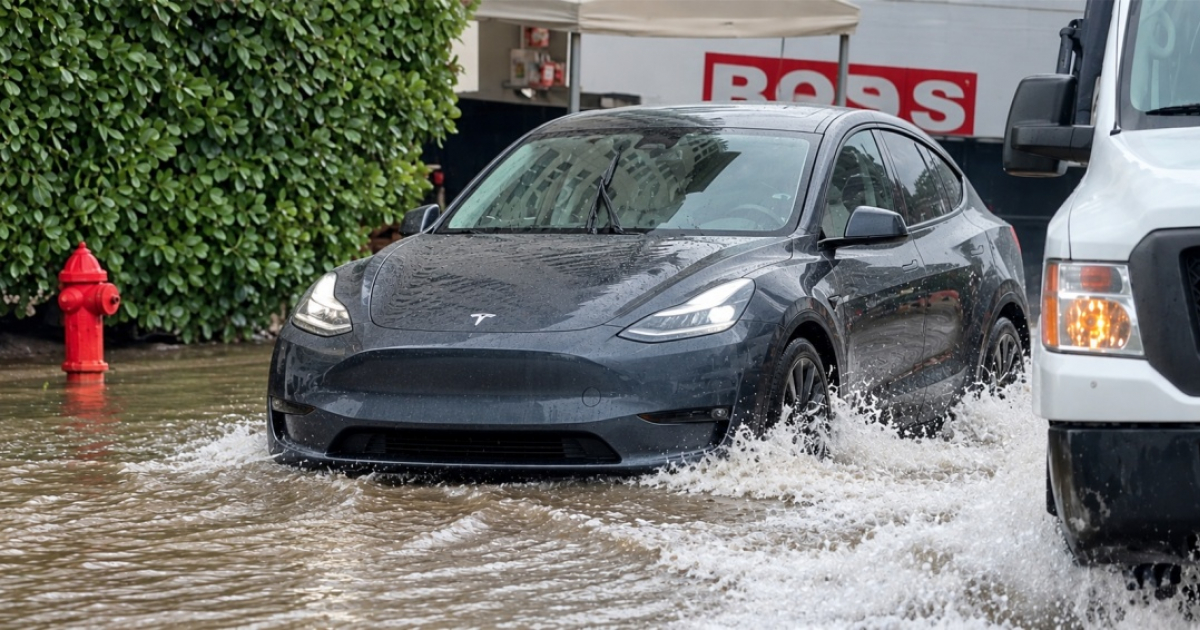
The recent high tides in South Florida have revealed a long-standing hazard: electric vehicles exposed to saltwater pose a fire risk long after the floods have receded. The damage to their batteries can ignite fires days, weeks, or even months later.
The National Fire Protection Association (NFPA) in the United States warns that an electric car submerged in saltwater isn't necessarily safe just because the floodwaters are gone. Outwardly, the vehicle might seem unaffected, yet it could have hidden internal damage.
Telemundo 51 reports that owners of these vehicles should refrain from turning them on, driving them, or attempting to charge them post-flood until they have been evaluated by trained professionals.
How Saltwater Leads to Electric Car Fires
The danger arises when saltwater infiltrates the high-voltage battery pack. Salt is a conductor that can create connections between internal components, causing short circuits and speeding up corrosion.
Under certain conditions, this damage can trigger what's known as thermal runaway, where the battery cells heat uncontrollably. This process can emit flammable and toxic gases, spark fires, and in severe cases, cause explosions.
The U.S. Fire Administration (USFA) also notes that lithium-ion batteries can reignite after a fire appears to be out, complicating emergency responses.
The Lingering Threat of Saltwater Damage
One of the most troubling aspects of saltwater damage is its delayed effects. The NFPA states that there isn't a defined timeline for a compromised battery to undergo thermal reaction. Issues might arise hours, days, or even weeks after exposure.
This warning was reiterated on October 28 by authorities in Huntington Beach, California, who cautioned that flood-damaged batteries might overheat, emit toxic gases, catch fire, or explode even months following a storm.
The Huntington Beach notice, also covered by Telemundo 52, emphasizes that a battery can remain hazardous even after it has dried out completely.
Steps to Take if Your Electric Car Was Flooded
If an electric vehicle was submerged during a flood, the NFPA suggests treating it as if it was involved in an accident. Key safety measures include:
- Do not enter or start the vehicle. It may have unseen electrical damage.
- Avoid driving the vehicle. It should be inspected before use.
- Refrain from charging the battery. Connecting a flood-exposed vehicle to a charging station can heighten risks.
- Request towing services and inform the operator about the water exposure to take the necessary precautions.
- Keep the car away from buildings and flammable materials, maintaining at least a 50-foot distance (approximately 15 meters).
- Do not store it in a garage or enclosed space; it should be in a safe area as directed by professionals.
The U.S. Fire Administration advises maintaining a minimum 50-foot distance between flood-affected vehicles, batteries, and combustible structures, and recommends notifying the fire department if there's suspicion that a lithium-ion battery was exposed to water.
Alert Signs: When to Call Emergency Services
A compromised battery may exhibit audible or visible warning signs before a fire. The NFPA and Huntington Beach authorities identify indicators such as:
- Hissing, popping, or crackling sounds.
- Bubbling or gurgling noises.
- Unusual chemical odors.
- Excessive heat.
- Smoke or gas emissions.
- Battery swelling or deformation.
- Liquid leaks.
If these signs appear, distance yourself from the vehicle and do not attempt to inspect or handle the battery. In the presence of smoke, sparks, or fire, evacuate the area immediately and call 911.
If there's suspicion of flood damage to the vehicle, even without visible signs, consult the fire department and professionals to determine the next steps.
Lessons from Hurricane Ian's Impact on Electric Cars
The fire risk associated with saltwater was well-documented after Hurricane Ian struck Florida in September 2022. According to the National Highway Traffic Safety Administration (NHTSA), as cited by the NFPA and Telemundo 51, between 3,000 and 5,000 electric vehicles were affected by saltwater immersion during the hurricane.
Of these, around 600 were deemed total losses, and 36 fires were reported. The NFPA notes that fewer than 1% of the electric vehicles estimated to have been affected by saltwater during Ian resulted in fires. However, the fires that did occur posed significant challenges and risks.
Preventive Measures Before Flooding
To mitigate risk, keep vehicles away from floodwaters. If high tides are expected and it's safe to move, the NFPA recommends relocating electric vehicles to elevated areas, clear of water.
Authorities also advise against driving through flooded roads, regardless of whether the vehicle is electric or combustion-powered.
Huntington Beach officials extended these precautions to other devices using lithium-ion batteries, such as electric bicycles, scooters, and power tools. Store them in dry, elevated places, avoid charging if exposed to water, and do not place damaged batteries in closed spaces.
Damaged lithium-ion batteries shouldn't be disposed of in regular trash or recycling bins. Their removal requires following local hazardous waste management guidelines.
Understanding Insurance Coverage for Flood Damage
In Florida, flood damage coverage depends on the insurance policy type. Generally, comprehensive coverage includes flood damage, while liability-only policies do not cover vehicle damage.
Vehicle owners should verify which insurances cover flood damage in Florida and review their policy terms before filing a claim.
If your electric vehicle was exposed to saltwater, notify your insurer and request guidance on safe evaluation and transport. Do not attempt to operate the vehicle to check its functionality.
The message from authorities is clear: retreating water doesn't eliminate danger. An electric vehicle that's been flooded should remain out of use until specialists determine a safe course of action.
FAQs: Electric Vehicles and Saltwater Damage
What should I do if my electric car was submerged in saltwater?
Treat the vehicle as if it has been in an accident. Avoid starting or driving it, refrain from charging, and have it towed for professional evaluation.
Why is saltwater dangerous for electric vehicles?
Saltwater can create electrical connections within the battery, leading to short circuits and corrosion, potentially causing fires or explosions.
How can I prevent my electric car from flood damage?
Keep the vehicle away from floodwaters. If possible, relocate it to higher ground before floods and avoid driving through flooded areas.
Does insurance cover flood damage to electric vehicles?
Coverage depends on your insurance policy. Comprehensive coverage usually includes flood damage, while liability-only policies do not.