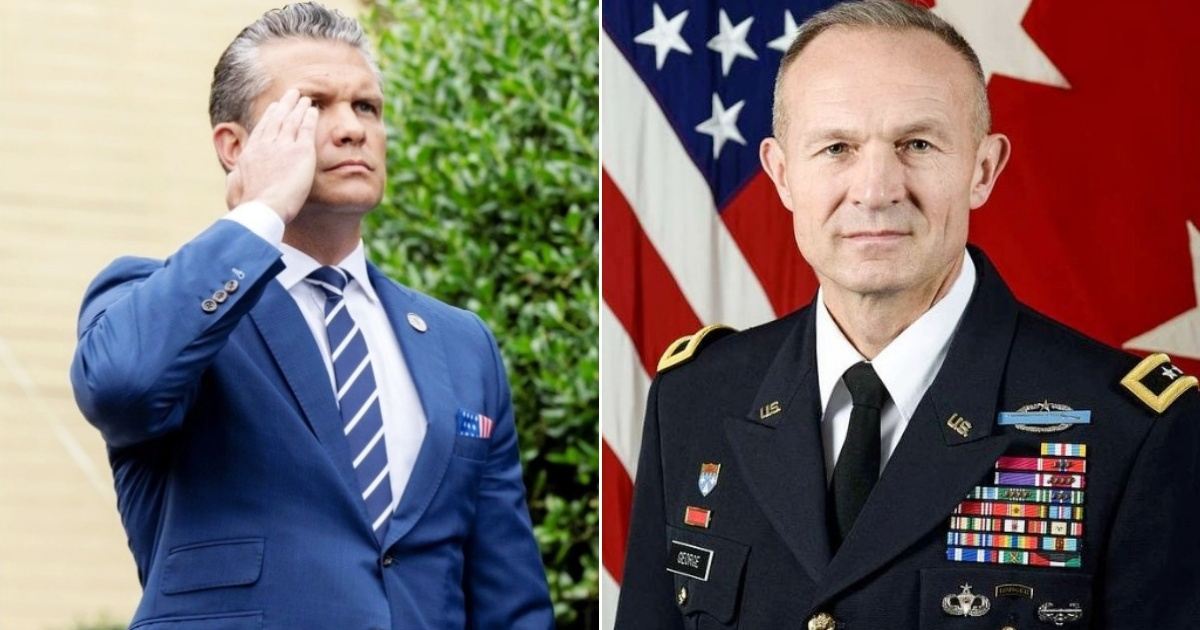
In a surprising move, U.S. Secretary of Defense Pete Hegseth has removed Lieutenant General Brett Sylvia from his role as Director of Strategy, Plans, and Policy of the Joint Chiefs of Staff, a position often referred to as the "J5" in military circles. This decision, verified by sources within the Department of Defense to The Atlantic, leaves the position vacant without an immediate replacement.
The timing of Sylvia's removal is particularly notable as President Donald Trump considers launching new military operations against Iran, following the upcoming midterm elections on November 3. The absence of a strategic leader at such a crucial moment raises questions about the Pentagon's readiness.
Strategic Planning in Disarray
The J5 plays a crucial role in crafting military strategies and coordinating plans with the Chairman of the Joint Chiefs and the President. The abrupt dismissal of Sylvia has left many observers concerned about the Pentagon's strategic capabilities during this critical period.
According to CNN, two U.S. officials have confirmed that forces in the Middle East are prepared to initiate operations against Iran within "96 hours" of receiving a presidential directive. "It will be a significant effort," one official stated.
Meanwhile, an additional aircraft carrier and thousands of troops are en route to the region. The U.S. has also warned several Middle Eastern countries and regional allies to brace for a potential large-scale campaign, as well as possible Iranian retaliation.
Trump's Stance on Iran
President Trump has vowed to "finish the job" in Iran, and recently hinted at further military actions, saying, "We might have another little 'Epic Fury,'" referencing the February 28, 2026, Operation Epic Fury, which escalated the conflict eight months ago.
Second Strategic Leader Ousted
Sylvia is the second J5 leader to be removed since Hegseth took over as Secretary of Defense in January 2025. His predecessor, Lieutenant General Joseph McGee, was forced to retire in October 2025 after frequent disagreements with Hegseth and Chairman of the Joint Chiefs General Dan Caine on issues ranging from Russia and Ukraine to Caribbean military operations.
Sylvia, nominated by former Defense Secretary Lloyd Austin near the end of the Biden administration, previously led the 101st Airborne Division at Fort Campbell, Kentucky. By Wednesday evening, his official biography had been removed from the Joint Chiefs' website.
A spokesperson issued a formal farewell: "The Chairman of the Joint Chiefs, the Joint Staff, and the Joint Force extend their deepest gratitude to Lieutenant General Brett Sylvia and his family for 32 years of distinguished service to our nation."
Widespread Military Leadership Shakeup
The removal of Sylvia is part of an unprecedented overhaul of the military hierarchy under Hegseth's leadership. American media reports indicate that by the end of this month, at least 26 generals, admirals, and senior officers have been dismissed, forced to retire, or have left their positions.
Notably, General Randy George was removed as Army Chief of Staff amid the ongoing conflict with Iran in April, and Army Secretary Dan Driscoll resigned in September after months of tensions, leaving the Army without a confirmed Chief of Staff or civilian Secretary.
On September 30, Hegseth announced a 20% reduction in the Pentagon's approximately 800 general and admiral positions by January 1, 2027. "I call it accountability, and it's something that should have been done a long time ago," he declared at the Marine Corps Base in Quantico.
Legislative Concerns Over Military Leadership Changes
Several lawmakers have voiced concerns over what they describe as a deliberate dismantling of military leadership. Democratic Senator Mark Kelly of Arizona, a former Navy combat pilot, expressed his alarm: "He has a deeply ingrained resentment against military leadership."
"He's purging a generation of great leaders from the armed forces, and it will take a generation to recover from this," Kelly warned, echoing the sentiment that the Pentagon remains without its chief strategic planner while U.S. forces in the Middle East stand ready for potential military operations that, according to officials, could occur at any moment before year's end.
Frequently Asked Questions on Pentagon Shakeup and Middle East Tensions
Why was Lieutenant General Brett Sylvia removed from his position?
The reasons for Lieutenant General Brett Sylvia's removal have not been publicly disclosed by the Department of Defense.
What role does the J5 play in military operations?
The J5 is critical in developing military strategies and coordinating plans with the Joint Chiefs and the President, especially during potential military engagements.
What are the implications of the Pentagon's leadership changes?
The leadership changes at the Pentagon could impact strategic planning and military readiness, particularly amid tensions with Iran.