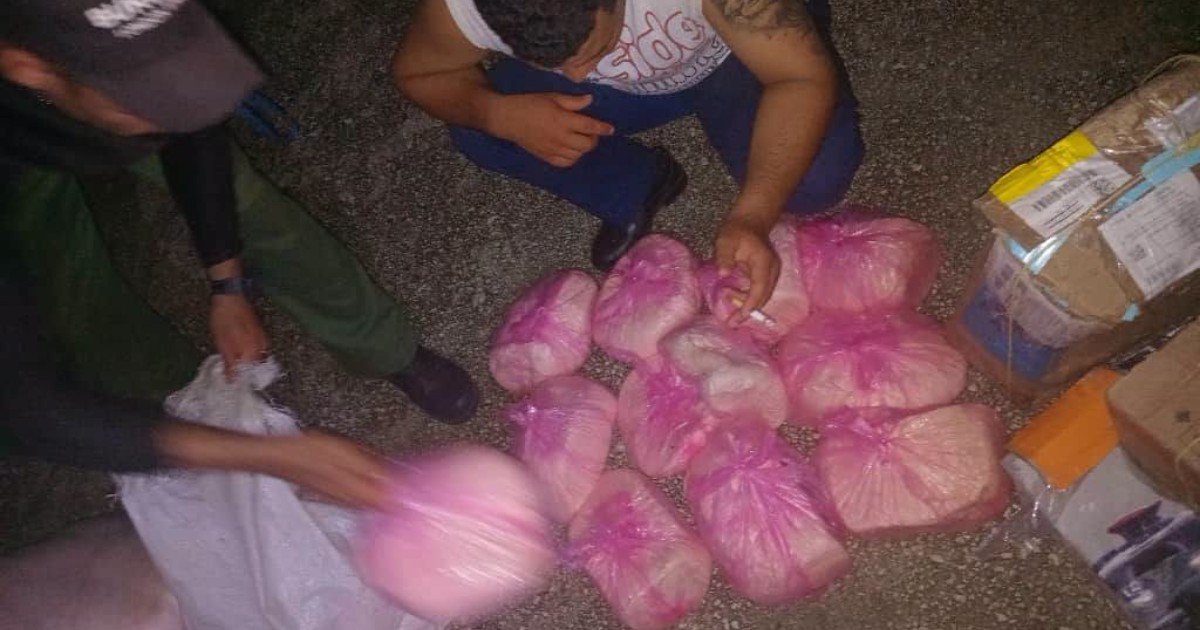
Social media erupted with indignation this Wednesday following reports that the Revolutionary National Police (PNR) halted a bus in Chambas, a municipality in the province of Ciego de Ávila, and confiscated a significant quantity of homemade cheese en route to Havana.
The information was disseminated via a Facebook post that portrayed the operation as a success in combating "crime, hoarding, and illegal transportation of goods." According to the post, the cheese and those carrying it were taken to a PNR station "until the situation is clarified and its legality determined."
The response from Cubans in the comments was swift and overwhelmingly critical.
"What's the crime here?" questioned an early commenter, a sentiment echoed throughout the discussion.
Another individual offered a more detailed defense of those transporting the cheese: "A Cuban uses their money to buy a product to resell and make a little extra cash, especially when we all know salaries are insufficient. They're not stealing from anyone; they're just creatively surviving."
Some Cubans made jokes about the confiscated cheese's fate: "The police: now we have cheese, just need someone with coffee and we can have a night in," one wrote. Others inquired directly: "And where does the cheese end up?"
"The real harm comes from the murderous robbers roaming this province. You can't even go out on mopeds, tricycles, or motorbikes without fear of being killed for them," wrote a resident, criticizing the PNR's quick action against food transportation while pervasive insecurity in Ciego de Ávila remains unaddressed.
Another commenter expressed this contradiction more calmly: "I'm not saying it's not illegal, as everything in Cuba is, but my question is why this same effort isn't applied to serious crimes, like the assaults that happen daily in Ciego de Ávila."
Frequent thefts have occurred in the Quesada crossroads, and home robberies were reported throughout 2026.
Some comments also defended local producers. "Let the farmers make some money, since the state can take up to five months to pay them for milk," one person wrote. According to a Cuban, a relative has been delivering milk to two state-owned stores for nine months and is barely paid 38 pesos per liter, with constant delays.
In March 2024, the PNR seized over 1,600 pounds of cheese being transported from Villa Clara to Havana, with 13 individuals detained. The pattern—homemade cheese, bus, route to the capital—repeats with striking regularity.
Amid this is a looming food crisis that the regime itself cannot hide: Cuba imports about 80% of its food, and from 2018 to 2023, domestic milk production fell by 58%, according to official data compiled by the World Food Programme.
"With another seizure like this, we've solved all of Cuba's problems," one commenter concluded sarcastically, encapsulating the feelings of those who see these operations not as solutions but as persecution of those trying to survive.
Key Questions About the Cheese Seizure in Ciego de Ávila
What prompted the confiscation of cheese in Ciego de Ávila?
The Revolutionary National Police (PNR) seized the cheese as part of an operation aimed at combating illegal transportation and hoarding of goods.
How did the public react to the cheese seizure?
The public reaction was mostly critical, with many questioning the prioritization of such operations over more serious crimes.
What is the broader context behind these types of seizures?
The seizures occur against a backdrop of a severe food crisis in Cuba, where the country imports around 80% of its food and domestic production is insufficient.