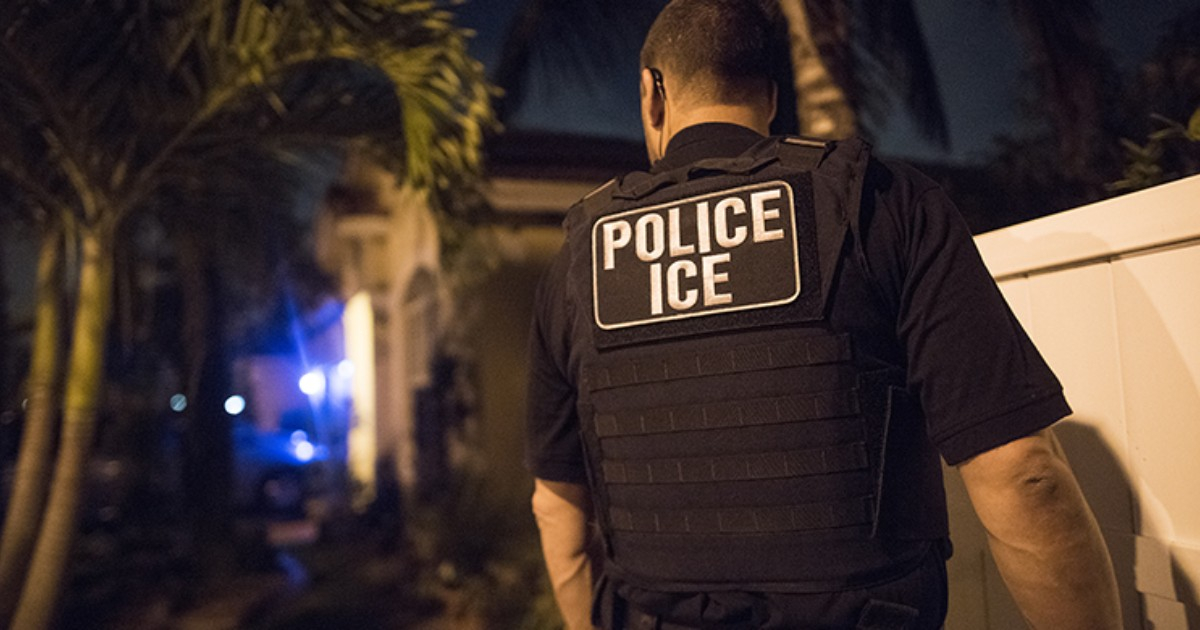
A recent report highlights that more than 29,000 state and local law enforcement officers have been authorized by U.S. Immigration and Customs Enforcement (ICE) to perform immigration-related duties between January 2025 and October 2026. This figure has doubled in just eight months and far surpasses the 11,600 deportation officers directly employed by the federal agency.
The findings were released on Wednesday by FWD.us, a U.S. nonprofit focused on immigration reform and criminal justice, utilizing public records from ICE and data from the Deportation Data Project, a collaborative academic effort from UC Berkeley and UCLA.
The Department of Homeland Security defends the program as an essential tool in combating crime and illegal immigration.
The driving force behind this significant increase is the 287(g) program, which grants local police departments and sheriff’s offices the authority to conduct immigration-related arrests.
Currently, over 1,850 agencies in 30 states are engaged in its most aggressive form, operating in jurisdictions where at least one in three individuals in the nation resides.
Florida and Texas at the Forefront
Felicity Rose, Vice President of Research at FWD.us, described the Trump administration’s strategic shift: “These state and local officers are pivotal in the quieter enforcement approach. Instead of high-profile operations in cities like Chicago and Minneapolis, they now conduct routine traffic stops under the 287(g) program.”
Florida and Texas account for nearly half of the more than 47,000 immigration arrests under 287(g) nationwide from January 2025 to August 6, 2026.
Florida has tallied approximately 29,000 total ICE arrests so far in 2026, ranking second only to Texas, which has exceeded 63,000 during the same timeframe.
Impact on the Cuban Community
In the summer months, Florida averaged over 200 daily arrests—almost double the rate earlier in the year—and more than half of those detained had no criminal charges or convictions.
Independent analyses by the Cato Institute and the New York Times reveal that only 5% to 7% of those arrested by ICE had convictions for violent crimes.
The ramifications are particularly severe for the Cuban community in South Florida. ICE arrests of Cubans surged by 463% from the end of 2024 to early 2026, according to Cato Institute data.
More than 42,000 Cubans face active final deportation orders, and those holding Form I-220A, expired parole, or pending cases are especially at risk: a simple traffic stop can lead to ICE custody, as Florida law mandates all 67 county sheriffs to sign 287(g) agreements.
The Miami Police Department leads 287(g) arrests in Miami-Dade with 451 detentions between August 2025 and August 2026, 131 of which—29%—involved Cubans. WUSF has documented numerous incidents where immigrants were initially detained for traffic violations and subsequently transferred to ICE.
Financial Incentives Driving Expansion
Financial incentives are fueling this growth. The Department of Justice offered $3 billion in grants this summer to agencies joining the program, while Florida manages a state fund of up to $250 million to reimburse participants; by June 30, approximately $148 million had been approved.
Joseph Nohava, an organizer with the Tampa Immigrants Rights Committee, emphasized the structural reliance created: “It would be impossible for ICE to operate without local law enforcement assistance.” He added that in any recent community walk, there’s always a story of someone’s “friend, coworker, or family member” being detained by ICE.
Rose predicts that the expansion will continue: the promise of funding, she asserts, will keep attracting more agencies. For Cubans with uncertain immigration status in Florida, this means the threat of unexpected detention will only intensify.
Understanding the 287(g) Program and Its Impact
What is the 287(g) program?
The 287(g) program is a collaboration between local law enforcement agencies and ICE, allowing trained officers to perform immigration enforcement duties, such as identifying and detaining undocumented immigrants.
How does the 287(g) program affect immigrant communities?
The program has led to a significant increase in immigration arrests, often from routine traffic stops, affecting communities with large immigrant populations, particularly in states like Florida and Texas.
Why is there controversy surrounding the 287(g) program?
Critics argue that the program leads to racial profiling, strains community relationships with police, and disproportionately impacts non-criminal immigrants, while supporters claim it helps reduce crime and illegal immigration.