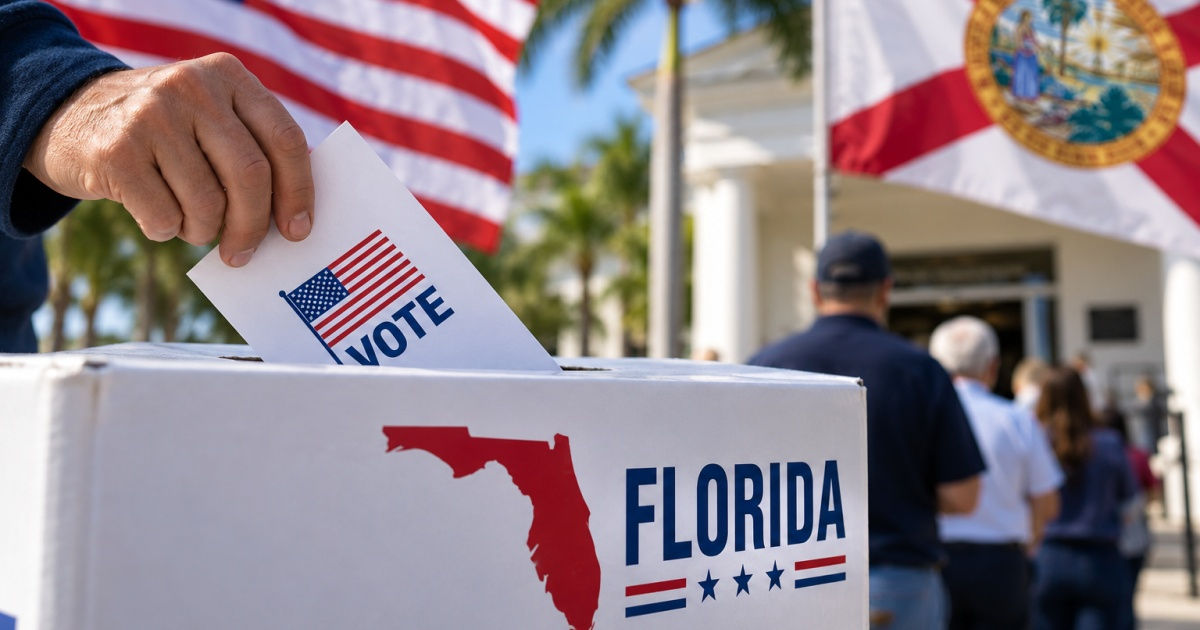
On Tuesday, November 3, Florida voters will encounter three significant constitutional amendments on their ballots. These involve changes to the state’s budget reserve, agricultural tax exemptions, and property tax regulations. Each amendment requires at least 60% approval from voters to be enacted.
Budget Reserve Amendment: Expanding State Emergency Funds
The first amendment proposes increasing Florida’s budget stabilization fund cap from 10% to 25% of general revenue. It also mandates annual deposits into this reserve, up to $750 million or the amount needed to reach the 25% cap, with certain exceptions.
This reserve is designed to address emergencies, revenue shortfalls, and other critical state needs as outlined in the Constitution. A YES vote would enable a larger reserve and establish new funding obligations, while a NO vote would retain the current 10% cap and existing rules.
The amendment also allows the Legislature to suspend transfers or utilize the fund for critical needs, subject to specific approval requirements. In the fiscal year 2024-2025, the fund was 9.3% of general revenue. The proposal garnered significant legislative support: 100 votes in favor and one against in the House of Representatives, and 29 in favor versus four in the Senate.
Agricultural Tax Relief: Easing the Burden on Farmers
The second amendment seeks to exempt certain tangible personal property, such as machinery and equipment, located on agricultural land and used for farming or agrotourism, from property taxes.
To qualify for the exemption, the property must belong to the owner or lessee of the agricultural land. If passed, the measure would take effect for fiscal years beginning January 1, 2027.
A YES vote would reduce tax burdens for eligible farmers and agrotourism operators, while a NO vote would maintain the current tax treatment. However, this tax reduction could lead to decreased revenue for local governments and school districts, potentially impacting rural community budgets.
Property Tax Changes in Miami-Dade: A Contentious Proposal
The third amendment has sparked intense debate among Miami-Dade officials due to its potential impact on homeowners, tenants, and public services.
Set to take effect on January 1, 2027, if approved, the amendment includes several changes:
- Increased Homestead Exemption: Raising the exemption on the primary residence’s value for non-school taxes to $150,000 in 2027 and $250,000 in 2028, with future adjustments for inflation.
- Reduced Assessment Growth: Lowering the annual cap on assessed value increases for non-homestead properties, such as second homes, rentals, and commercial spaces, from 10% to 5%.
- New Conditions for Residents: Non-Florida residents as of December 31, 2026, could receive the existing homestead exemption upon meeting eligibility but would have to wait until the fifth year to benefit from the expansion, if aligned with the U.S. Constitution.
- Local Exemptions: Establishing a uniform procedure for counties and municipalities to expand exemptions up to the full assessed value of homes, subject to voter approval.
- Tax Revenue Restrictions: Directing property tax revenue to categories like public safety, education, infrastructure, natural resources, debt payments, employee retirement benefits, and administrative operations, with provisions for other expenditures unless legally prohibited.
A YES vote would approve these changes, potentially lowering tax bills for certain primary homeowners. Estimates suggest a Miami-Dade homeowner with a homestead exemption could save around $1,500 annually, though savings depend on assessed home value and applicable taxes.
Miami-Dade Property Appraiser Tomás Regalado illustrated that a home with a current tax bill of $6,000 could see a reduction to approximately $4,300 in the first year and $3,000 in the second.
A NO vote would uphold current constitutional provisions and prevent the projected revenue reductions from the amendment.
Miami-Dade faces potential annual revenue losses estimated between $359 million and $445 million. These figures are projections, not actual losses yet incurred.
Mayor Daniella Levine Cava has cautioned about the potential impacts of reduced revenue on public safety, emergency response, roads, parks, and libraries.
For tenants, the outlook differs. The Tax Foundation projects that apartment building taxes could rise by about $406 annually in 2028, while rental home taxes may increase by up to $1,081. Some of these costs might be passed on to renters, although there is no direct link between tax hikes and rent prices.
An important note for recent Cuban arrivals: Non-Florida residents as of December 31, 2026, who later purchase a primary residence may qualify for the standard homestead exemption after meeting requirements, but must wait until the fifth year to enjoy the expanded benefits, provided it's compatible with federal law.
The debate has also divided Republican legislators. Florida Senate President Ben Albritton plans to vote against Amendment 3, despite previously supporting its placement on the ballot.
In addition to the state constitutional amendments, Miami-Dade voters will consider seven local referendums.
Voters planning to head to the polls can also refer to the guide on required identification documents for November 3.
Understanding Florida's Constitutional Amendments
What is the purpose of the Budget Reserve Amendment?
The amendment aims to increase Florida’s budget stabilization fund cap from 10% to 25% of general revenue, ensuring funds are available for emergencies and critical state needs.
How would the Agricultural Tax Relief Amendment affect farmers?
It would exempt certain farm machinery and equipment from property taxes, reducing the financial burden on farmers and agrotourism operators who meet the criteria.
What changes does the Property Tax Amendment propose for Miami-Dade?
It proposes increasing homestead exemptions, reducing assessment growth rates for non-homestead properties, and setting conditions for new residents, among other changes.
What are the potential impacts of Amendment 3 in Miami-Dade?
Potential impacts include significant revenue losses for the county, which could affect public services like safety, road maintenance, and libraries, while also altering tax bills for homeowners and renters.