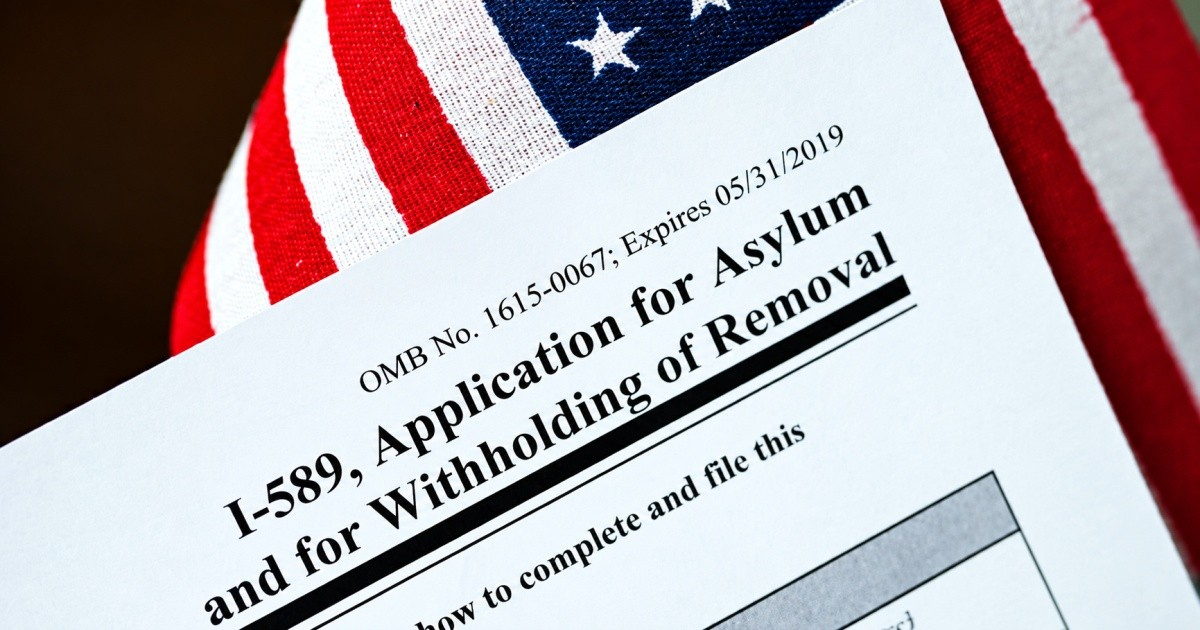
A federal judge has temporarily halted a Trump-era policy that shortened the time refugees have to respond to a notice of termination of their immigration status from 30 days to just 10.
Judge Julia E. Kobick of the Massachusetts District Court issued the order, putting a stop to the enforcement of this rule until November 6, 2026.
This decision follows a class-action lawsuit filed just a day earlier by six refugee advocacy organizations and four individuals, in the case known as PANA et al. v. Edlow et al. (Civil Action No. 26-14817-MJJ).
Judge Kobick justified the suspension as necessary to maintain the status quo and prevent irreparable harm to the plaintiffs while the district judge considers a longer-lasting injunction.
The suspended rule, published by the U.S. Citizenship and Immigration Services (USCIS) on October 14 and signed by Secretary of Homeland Security Markwayne Mullin, altered the federal regulation 8 CFR § 207.9. It reduced the response time to a Notice of Intent to Terminate (NOIT) to ten calendar days, rolling back a procedural protection that had been in place for approximately 45 years.
Immigration status for refugees in the U.S. remains a constantly evolving topic. Stay updated with the latest U.S. Immigration coverage to keep abreast of new judicial decisions and rules impacting the community.
The court's order has two immediate and significant effects.
Firstly, it prohibits the Department of Homeland Security, USCIS, and its director Joseph B. Edlow from enforcing the 10-day rule during the suspension period.
Secondly, and crucially for those who have already received notices, the judge ordered that NOITs issued between October 14 and 27 requiring a response in less than 30 days are suspended, meaning recipients are not obligated to respond during this period, and the government cannot revoke their refugee status for failing to do so.
In her own words, Kobick stated that the defendants are "prohibited from terminating the refugee status of those individuals for not responding to any Notice of Intent to Terminate issued during that period."
The institutional plaintiffs include the Partnership for the Advancement of New Americans (PANA), HIAS, Refugee Council USA, African Communities Together, Jewish Family Service of Western Massachusetts, and the International Institute of New England.
The four individual plaintiffs are refugees from Afghanistan, Ethiopia, Colombia, and Iraq, represented by Democracy Forward and the International Refugee Assistance Project (IRAP).
In a joint statement, the plaintiffs and their lawyers asserted, "No one should face the threat of losing their legal status and being sent back to danger without a meaningful chance to defend themselves."
For Cubans, the direct impact of this order is limited but significant for a specific subgroup: those who entered the U.S. as refugees under the Refugee Admissions Program (USRAP), retain that status, and received a NOIT between October 14 and 27.
In fiscal year 2024, 258 Cubans were resettled under USRAP out of a total of 100,060 refugees admitted to the country. In fiscal year 2025, that number dropped to 128. The vast majority of Cubans in the U.S. arrived through other means—humanitarian parole, asylum, I-220A, or the Cuban Adjustment Act—that are not directly affected by this rule or the court order.
The DHS estimated that around 186,000 cases of admitted refugees from fiscal years 2015 to 2025 that have not yet adjusted their status constitute the maximum universe potentially subject to the challenged rule.
Revocation of refugee status also results in the immediate loss of employment authorization and can lead to removal proceedings.
It's crucial to note that the order does not equate to a definitive annulment of the rule, does not suspend all deportations, and does not automatically extend to parole, asylum, or other immigration categories.
Judge Kobick herself cautioned that the suspension "is subject to modification, amendment, extension, dissolution, or any other appropriate action by the district judge assigned to the case."
The public comment period on the rule remains open until November 13, 2026, through the USCIS-2026-0397 docket on Regulations.gov, which will also determine if the court decides to extend, modify, or lift the suspension before it expires.
Understanding Changes in Refugee Immigration Policy
What was the original response time for refugees to a Notice of Intent to Terminate?
Originally, refugees had 30 days to respond to a Notice of Intent to Terminate their status.
How does Judge Kobick's order impact current NOITs issued?
NOITs issued between October 14 and 27 that required a response in less than 30 days are on hold, and recipients are not required to respond during the suspension period.
Who are the plaintiffs challenging the rule?
The plaintiffs include six refugee advocacy organizations and four individuals from Afghanistan, Ethiopia, Colombia, and Iraq.