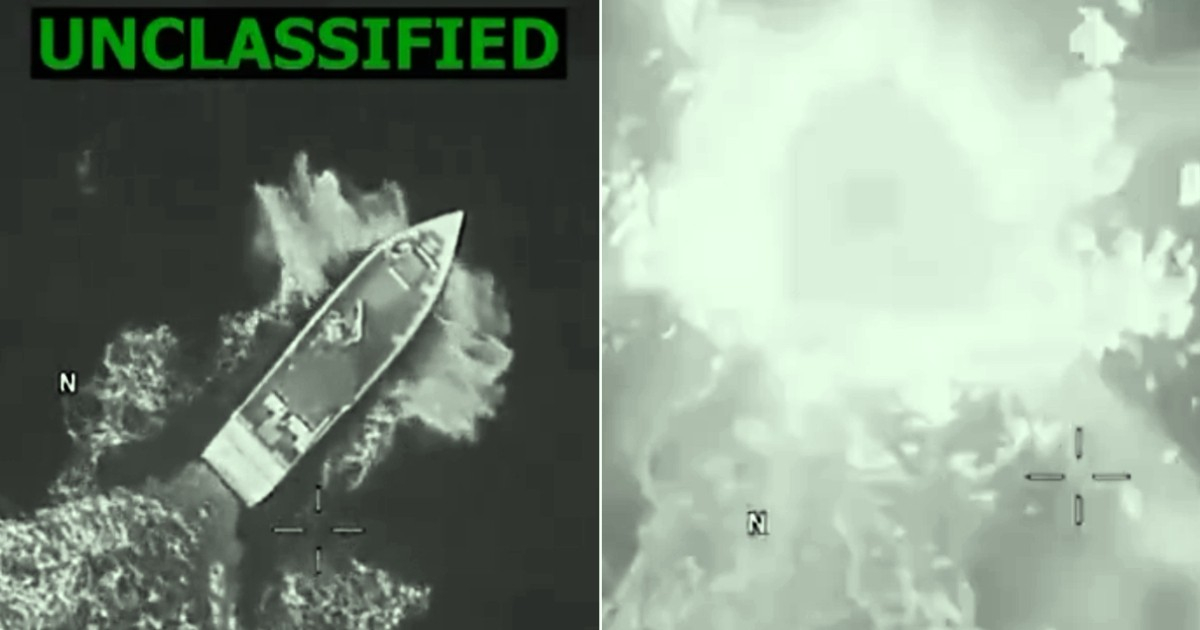
A federal judge in the United States has ordered the Trump administration to discreetly disclose the identities of individuals who reviewed a legal memorandum justifying military strikes on vessels suspected of drug trafficking in the Caribbean and Pacific, including the timing and purpose of such consultations.
The directive, issued by Judge Paul Engelmayer of the Southern District of New York, is part of ongoing litigation aimed at declassifying a memorandum prepared by the Department of Justice's Office of Legal Counsel (OLC) in September 2025.
According to the court's ruling, "the Government must confidentially provide the court with the identities of those who accessed the document, along with the dates and purposes of their consultations."
The administration has a 14-day deadline to adhere to this requirement.
The memorandum under scrutiny assesses the president's legal authority to order lethal strikes, potentially involving drones, on vessels allegedly linked to drug trafficking.
This case was initiated by the American Civil Liberties Union (ACLU), the NYCLU, and the Center for Constitutional Rights (CCR). These organizations requested the memorandum under the Freedom of Information Act in October 2025 and subsequently filed a lawsuit in December when the government failed to respond.
This is not the first time Judge Engelmayer has pressured the administration regarding this issue. In late September 2026, he issued a 66-page ruling mandating the government to submit the memorandum for private judicial review, dismissing the Department of Justice's arguments to keep it completely under wraps.
The court pointed out that the Department of Defense and the Southern Command (SOUTHCOM) had adopted the memorandum's reasoning as the operational "legal framework" for the campaign, weakening the claim that it was merely an internal advisory document.
The military campaign, known as Operation Southern Spear, was launched between August and September 2025 under a presidential directive authorizing lethal force against foreign criminal groups involved in drug trafficking.
Since the first documented strike on September 1, 2025—targeting a Venezuelan vessel with alleged members of the Tren de Aragua—the campaign has sparked significant legal and human rights controversy.
Marking a year since the operation's inception, the EFE agency reported at least 227 deaths, 68 vessels destroyed, and only three documented survivors.
According to InSight Crime, the death toll has now reached at least 238 across 79 operations, with the government yet to present public evidence that all victims were drug traffickers.
The Trump administration has labeled the occupants of the targeted vessels as "narco-terrorists," while the plaintiff organizations argue that the OLC memorandum must be disclosed for the public to assess whether these strikes have adequate legal justification.
Judge Engelmayer's latest order seeks to determine whether the administration can continue to invoke any legal privilege over the document or if its extensive operational use mandates its release.
The case also carries diplomatic implications: In February 2026, a Florida-registered vessel was intercepted by Cuban border guards near Cayo Falcones in Villa Clara, resulting in four deaths and six injuries, sparking a diplomatic crisis between Havana and Washington.
Key Legal and Diplomatic Questions Surrounding Military Strikes
What is the purpose of Judge Engelmayer's order?
Judge Engelmayer's order aims to uncover who accessed the legal memorandum justifying military strikes, as well as the timing and purpose, to assess whether the government can continue to claim legal privilege over the document.
Why is the OLC memorandum significant?
The OLC memorandum is significant because it outlines the legal basis for lethal military actions against drug trafficking vessels, raising questions about its legality and the broader implications for human rights and international relations.
What are the diplomatic repercussions of the military campaign?
The campaign has diplomatic repercussions, as evidenced by the incident involving a Florida-registered vessel intercepted by Cuban guards, which led to fatalities and strained relations between the United States and Cuba.