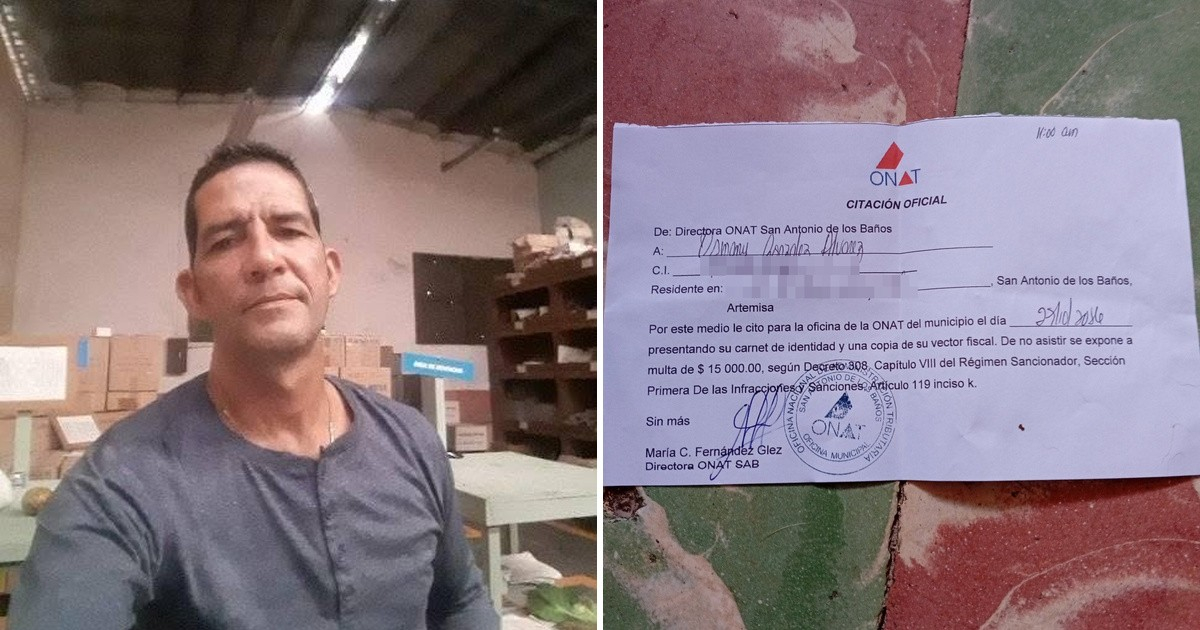
A resident from San Antonio de los Baños in Artemisa province found himself entangled in bureaucratic red tape when the National Office of Tax Administration (ONAT) threatened him with a 15,000 peso fine. This perplexing situation arose more than a year after he had officially closed his bakery and confectionery business and completed the necessary paperwork. The issue, highlighted on Facebook by Osmany González Álvarez, was eventually resolved after a joint review exposed a glitch in the institution's computer system.
González Álvarez recounted his ordeal, noting that after shutting down his business, he filed for closure with the Ministry of Labor. Since then, he had to visit the ONAT six times and the Ministry of Labor twice, in addition to enduring two home inspections by tax officials.
Despite these efforts, the ONAT in San Antonio de los Baños issued him an official summons signed by Director María C. Fernández Glez. The notice required his appearance on October 27 and warned that failing to comply could result in a 15,000 peso fine, as stated in Decree 308, Chapter VIII of the Sanctioning Regime, Article 119, section k.
Frustrated by the ongoing bureaucratic hurdles, González Álvarez questioned, “Who do we penalize for their shoddy work? Who compensates for my lost time?” However, the fine was merely a threat for noncompliance, not an actual penalty imposed or collected.
On Tuesday, González Álvarez provided an update, sharing that the matter had been resolved following discussions with the directors of both institutions. “They reviewed all the documents, and everything was in order. There was an inconsistency in the system, and it has now been rectified,” he explained.
While he appreciated the humane treatment he received during these meetings, he also acknowledged the rarity of securing an audience with a director in Cuba. He concluded his message with advice for other Cubans navigating similar bureaucratic processes: “Always keep every document you receive, and request to photograph those you don’t. Stay engaged with your process and ask questions, as it costs nothing.”
This incident underscores a recognized issue within the ONAT: when digital communication regarding business closures fails or isn't updated, taxpayers may remain listed as active, accruing tax liabilities despite having all physical records in order.
The Facebook post's comments section revealed similar stories from other Cubans. A resident from Palmira, Cienfuegos, shared that he faced a 40,000 peso fine threat five years after closing his business and ultimately paid to resolve the issue. Another commenter detailed how their son, after applying for closure and emigrating, was summoned three years later to explain unpaid taxes.
The scrutiny of self-employed workers in Cuba has tightened. In October, the regime warned of potential bank account seizures for tax debts, and during the Fourth National Fiscal Control Exercise in February 2026, 249 million pesos in tax debts were identified, along with 174 fines exceeding six million pesos.
Understanding Cuba's Tax Penalties and Bureaucratic Challenges
What prompted the 15,000 peso fine for González Álvarez?
The fine was a threat for failing to appear at an official summons, despite having closed his business over a year ago and completed the necessary paperwork.
How was the issue with ONAT resolved?
The problem was resolved after a joint review with institution directors revealed a glitch in the computer system, ensuring all documents were in order.
What advice did González Álvarez offer to others facing similar issues?
He advised keeping all documents and asking questions throughout the process, as well as photographing documents when necessary.