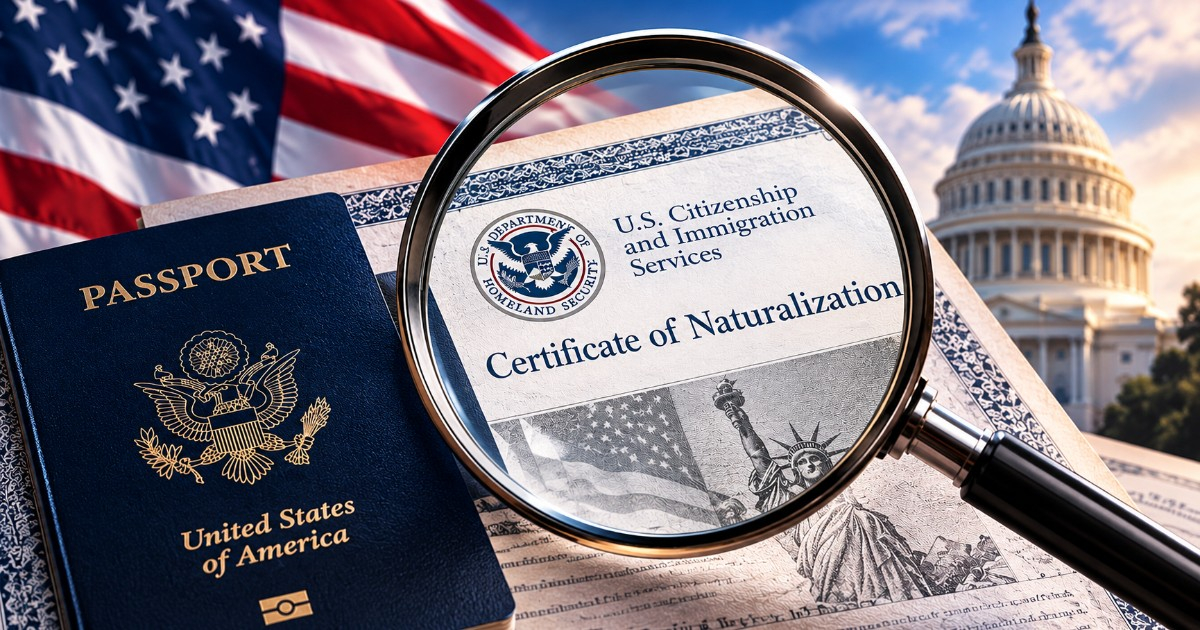
Republican Congressman Randy Fine from Florida has introduced a provocative idea to reassess all U.S. citizenships obtained through naturalization dating back to 1990. If this proposal were to be implemented, it could potentially affect hundreds of thousands of Cubans who have become American citizens over the past few decades.
This controversial suggestion was made on Monday during an interview with journalist Nichole Berlie on NewsNation, and was subsequently reported by the American media outlet Mediaite.
Fine expressed, "I think we should go back to 1990 and reevaluate everyone who has become a naturalized citizen," advocating for a review of the processes through which millions of immigrants have acquired U.S. nationality.
This sweeping proposal would cover 36 years of naturalizations and would not be confined to any specific nationality or immigrant community.
Among those who could be affected by such an extensive review are numerous Cubans residing in Florida and other states.
The congressman justified his stance by referring to alleged immigration irregularities linked to Democratic Representative Ilhan Omar of Minnesota, whose citizenship he has publicly questioned.
Fine called for an investigation into potential fraud in naturalization applications, citing Omar as one of the first individuals whose records should be scrutinized.
During the interview, Berlie questioned Fine whether the same criteria would be applied to other well-known figures who also obtained U.S. citizenship through naturalization, such as First Lady Melania Trump and entrepreneur Elon Musk.
Fine replied that he was unaware of the specific circumstances of their immigration processes and had no knowledge of allegations against them.
However, he emphasized that the same principle should apply to anyone who provided false information to secure citizenship.
"I believe anyone who lied on their paperwork to become a citizen should lose their naturalized citizenship and be deported," Fine declared.
This response suggested that the review could even extend to individuals close to the Trump administration, although Fine did not assert that Melania Trump or Elon Musk were involved in any wrongdoing.
For the Cuban-American community, this proposal holds particular significance due to the large number of immigrants from the island who have been naturalized over recent decades.
Florida is home to one of the largest Cuban-American communities in the U.S., comprised of various generations of immigrants who have gained citizenship through established legal procedures.
Nonetheless, being born in Cuba, being naturalized after 1990, or holding a U.S. passport does not inherently constitute grounds for losing citizenship.
While Fine expressed his political viewpoint during the interview, he did not announce any specific legislative proposal, administrative procedure, or government measure to carry out such a broad review.
U.S. law allows for the revocation of citizenship obtained through naturalization if it was acquired illegally, by concealing relevant facts, or through deliberate false statements. This is outlined in Section 1451 of Title 8 of the United States Code, which governs the denaturalization process.
In civil proceedings, the government must go to a federal court and provide evidence justifying the revocation of citizenship. Mere suspicion of fraud or the initiation of an investigation does not automatically result in the loss of citizenship.
Furthermore, not every mistake on an immigration form is sufficient to void a naturalization. In cases involving false statements or concealment, the legal relevance of such actions must be established in relation to obtaining citizenship.
If a court ultimately revokes a naturalization, the individual may face additional immigration consequences, including possible deportation, depending on their circumstances. However, losing citizenship and being deported are separate legal processes.
Concerns have been raised because Fine's comments align with a recent initiative by the Department of Justice to identify and pursue cases where authorities believe citizenship was obtained through fraud or concealment of significant information.
On October 5, the Department of Justice announced lawsuits to revoke the citizenship of 40 naturalized individuals, including two Cubans.
These actions were filed in federal courts between August 21 and October 2, 2026, due to alleged irregularities that, according to authorities, would have prevented the defendants from legally obtaining nationality.
The two Cuban-born individuals involved in these proceedings are Javier Marrero Pando, residing in Georgia, and Lázaro Eduardo Trujillo Vitón, whose case was filed in the District of Columbia.
In both cases, the government alleges that the accused concealed criminal behavior or provided false information during their respective naturalization processes.
The Department of Justice has officially confirmed the filing of the 40 lawsuits, but the allegations within them still need to be evaluated by the relevant courts.
Understanding the Proposal to Reevaluate Naturalizations
What is the main proposal made by Congressman Randy Fine?
Congressman Randy Fine proposed reviewing all U.S. citizenships granted through naturalization since 1990 to uncover potential fraud or irregularities in the process.
Who could be affected by this proposal?
The proposal could impact hundreds of thousands of naturalized citizens, including a significant number of Cuban-Americans who became citizens after 1990.
What legal grounds exist for revoking naturalized citizenship?
Under U.S. law, citizenship can be revoked if it was obtained illegally, through concealment of relevant facts, or deliberate false statements, as outlined in Section 1451 of Title 8 of the United States Code.
What recent actions has the Department of Justice taken regarding naturalization fraud?
The Department of Justice recently announced lawsuits to revoke the citizenship of 40 individuals, including two Cuban-born citizens, due to alleged irregularities in their naturalization processes.