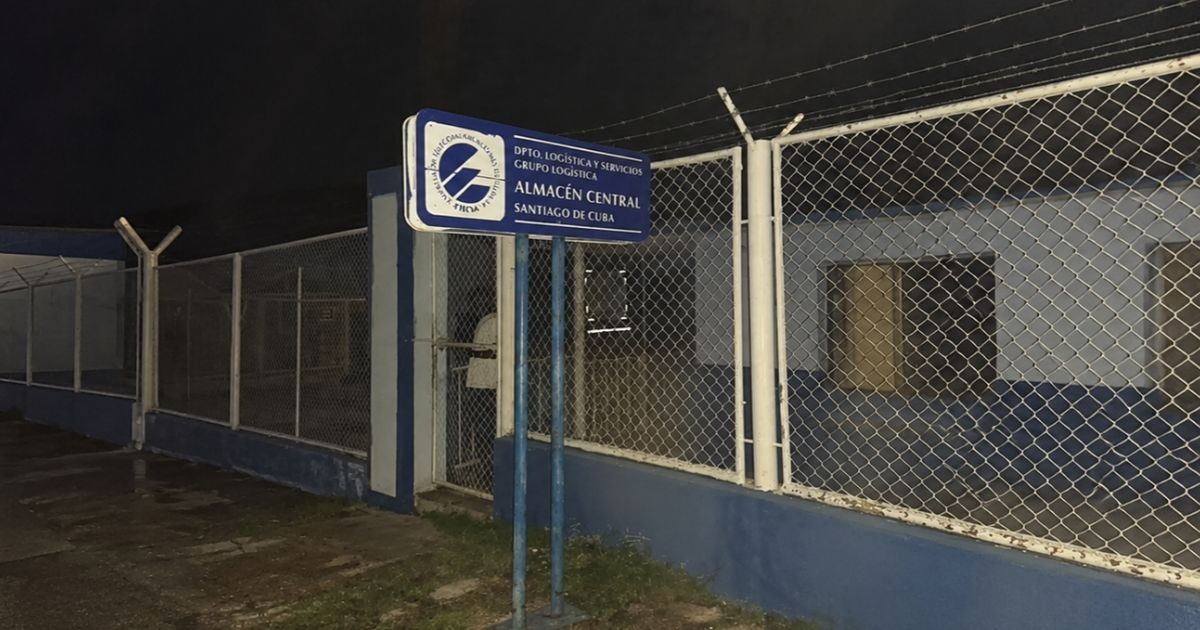
In Santiago de Cuba, local authorities have resorted to enlisting community members for night watch duties in an effort to curb thefts targeting public facilities, which are crucial for delivering essential services to the population. This initiative arises as the once-prominent Committees for the Defense of the Revolution (CDR), traditionally responsible for organizing neighborhood watch activities, have seen a decline in their role.
This measure underscores the growing concern over crimes against infrastructure in a city that has recently reported numerous thefts of electrical and telecommunications equipment. Yaneydis Batista Hechavarría, president of the Municipal Assembly of People's Power in Santiago de Cuba, shared on Facebook that these community surveillance efforts will continue.
"As part of the participatory movement #MiBarrioPorLaPatria in the municipality #SantiagoDeCuba, nighttime surveillance activities are ongoing to prevent and deter criminal acts against infrastructure affecting public services," Hechavarría stated.
Her message ended with a phrase echoing the authorities' stance: "Facing this is everyone's responsibility," a rhetoric often employed by the regime to rally citizens. However, the announcement leaves several questions unanswered, such as which facilities are under protection, the entities coordinating these patrols, and whether participation is voluntary. The specifics of schedules or safety measures for those involved are also unclear.
This initiative raises critical questions about the extent to which safeguarding public facilities now relies on the mobilization of local residents, due to shortcomings in conventional security mechanisms. While citizen collaboration can aid in crime prevention and suspect identification, it cannot replace the surveillance, investigation, and response duties that should be fulfilled by state agencies.
The call to action follows a spate of criminal incidents against public facilities in Santiago de Cuba, particularly targeting the electrical supply and telecommunications sector. A notable case occurred in August when several solar lights installed on major avenues were stolen shortly after their installation. These lights were part of a public illumination project aimed at keeping streets lit during frequent blackouts. Avenues like Las Américas, Céspedes, Garzón, and Ferreiro, as well as the area around Plaza de Marte, were among those affected.
The theft of these lights once again left parts of the city in darkness, sparking criticism from residents about the lack of proper security. One resident reported that workers from the Universidad de Oriente called the police during a theft, but officers never arrived at the scene, according to social media accounts. Another citizen questioned how equipment could be stolen from in front of state institutions with security personnel present.
The thefts have also directly impacted ETECSA’s infrastructure, affecting telephone and internet services for hundreds of users. In May, four solar panels were stolen from a telecommunications cabinet in the Flores neighborhood, which provided backup power during outages. This was reported by Luis Enrique Torres Almarales, an engineer at the state company, who appealed for public help in recovering the equipment.
In September, more solar panels at ETECSA were vandalized in the same neighborhood, damaging facilities in the courtyard of the School of Arts and Crafts. This incident highlighted that the damage extended beyond theft for resale, involving acts of vandalism that rendered essential service facilities inoperative.
Another incident on September 20 involved the theft of two solar panels from a phone cabinet in the Santa Bárbara neighborhood, leaving nearly 900 users without backup power. The affected system was located on 5th Street, between Enramadas and Escario, next to the Miguel Ángel Cano primary school. The disappearance of these panels exacerbated the communication difficulties for affected customers during power cuts.
Electrical substations have also been targeted. On September 2, two individuals were arrested and two others fled during an attempted theft of dielectric oil at the "La Redonda" substation in Sevilla. The Electric Company of Santiago de Cuba reported that local residents and police operational guards caught the suspects trying to extract oil from a transformer. The company thanked the community for their assistance and urged ongoing vigilance to prevent similar incidents.
Understanding the Community's Role in Santiago de Cuba's Security
What prompted Santiago de Cuba to employ community watch for security?
The initiative was prompted by a series of thefts and vandalism targeting public infrastructure, including electrical and telecommunications equipment, which disrupted essential services.
How does community participation in night surveillance work?
Community members are enlisted to participate in nighttime patrols to monitor and protect public facilities. However, details on coordination, voluntariness, and safety measures remain vague.
Why are public facilities in Santiago de Cuba vulnerable to theft?
Public facilities are vulnerable due to inadequate conventional security mechanisms and the economic appeal of reselling stolen equipment, compounded by acts of vandalism.