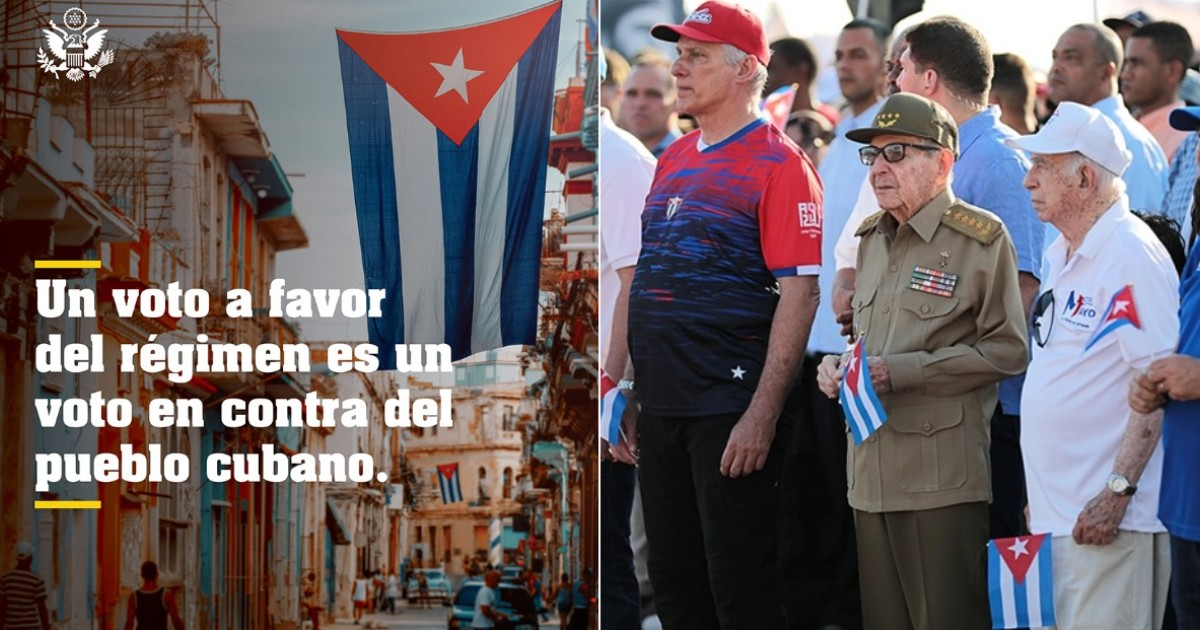
Just as the United Nations General Assembly prepared to debate the U.S. embargo on Cuba, the Trump Administration delivered a clear message on Tuesday: without meaningful reforms, Cuba will struggle to become an appealing destination for investors and fail to nurture a genuine private sector.
Juan Pablo Segura, the Deputy Assistant Secretary of State for Western Hemisphere Affairs, took to his official account to emphasize the need for substantial changes. The message, bearing the State Department's seal, stated, "Only significant reform will make Cuba an attractive place for investment, stimulate private sector growth, and offer Cubans freedom, dignity, and opportunities."
The statement also featured the motto, "A vote for the regime is a vote against the Cuban people," prominently displayed under a banner urging opposition to Cuba's resolution at the UN.
This message is part of an extensive diplomatic campaign throughout October, described as the most vigorous effort by Washington ahead of the annual vote.
On Monday, Segura highlighted that U.S. legislation has always allowed food and medicine exports to Cuba, noting shipments that exceeded $810 million in 2025. He also detailed that following Hurricane Melissa, the Trump Administration allocated $9 million in direct aid through the Catholic Church and an additional $100 million via Catholic Relief Services and Samaritan's Purse.
Earlier, on October 23, Segura had already sent a strong message saying, "It's time for reforms, not more talk," pointing out the continued detention of hundreds of political prisoners on the island. On October 21, he warned that voting in favor of the Cuban resolution equates to supporting state-sponsored human trafficking and elite corruption.
Secretary of State Marco Rubio endorsed this stance on Monday, declaring that Cuba "needs a very drastic change" and distinguishing it from the situation in Venezuela, though he did not outline specific measures.
Meanwhile, from Havana, Foreign Minister Bruno Rodríguez Parrilla confirmed Cuba's participation in the debate and accused Washington of exerting "crude and cynical pressure" on UN member states. "We know that once again, there will be a majority demand for an end to this criminal policy and the energy blockade," he wrote.
Washington's central narrative is that the embargo is not the source of Cuba's crisis; rather, it is the island's political-economic model. Supporting the annual resolution allows Havana to dodge the reforms its people desperately need.
The resolution, which Cuba has been presenting to the UN since 1992, is not legally binding — only the U.S. Congress can lift the embargo. However, it acts as a barometer of international support for Washington's policy. In the 2025 vote, Cuba secured 165 votes in favor, down from the 187 it received in 2024, marking the most unfavorable outcome for Havana in over three decades, partly due to the Trump Administration's diplomatic pressure. This year's vote is scheduled for Wednesday.
Understanding the U.S. Policy on Cuba
Why does the Trump Administration demand reforms in Cuba?
The Trump Administration believes that without significant reforms, Cuba cannot become attractive for investment or develop a genuine private sector, which would provide freedom, dignity, and opportunities to its citizens.
What actions has the U.S. taken in response to the situation in Cuba?
The U.S. has continued to allow food and medicine exports to Cuba, with substantial shipments recorded. It also provided significant aid following natural disasters, demonstrating its stance on humanitarian assistance.
How has Cuba responded to the U.S. demands?
Cuba has accused the U.S. of exerting undue pressure on UN member states and maintains that there is widespread international support for ending the embargo.