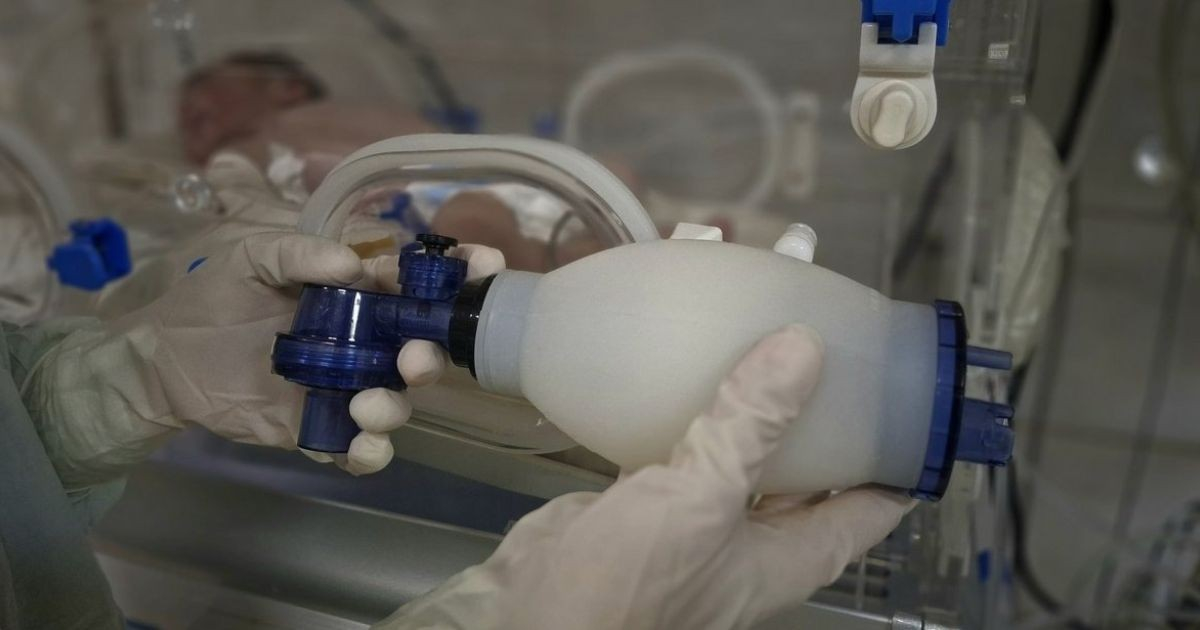
At the Neonatal Surgery Regional Center in Holguín, nurses are forced to use their own hands to help newborns breathe when mechanical ventilators cease to function due to power outages.
As they fight to save these infants, they rely on emergency electrical systems that are not always reliable, highlighting the decline in hospital conditions that Cuban authorities have yet to address effectively.
This alarming situation was detailed in the report "Saving in Darkness," published by the official newspaper Juventud Rebelde on Saturday. The article documents the challenges faced by staff at the Octavio de la Concepción y de la Pedraja Pediatric Hospital in Holguín, where babies dependent on electric equipment for survival are at risk.
A vivid scene illustrates the severity of the issue: nurses Diana Rodríguez and Liliannis Carballo monitor newborns in their incubators when suddenly, the power goes out. In the ensuing darkness, one turns on a rechargeable lamp while the other grabs a manual resuscitator, known as an Ambu bag, to assist young Leonardo, whose mechanical ventilator has stopped.
This device operates by manually compressing a bag to force air into the patient's lungs, serving as an emergency measure to maintain ventilation until the electric systems are restored. Nurses are left uncertain about how long they will have to continue these manual efforts, as power could return in seconds or take several minutes if backup systems fail.
The scene is both a testament to the dedication of healthcare workers and a heartbreaking reflection of the dire conditions under which newborns receive medical care in Cuba. In a ward where some patients are premature or have severe medical conditions, each power interruption introduces unnecessary risks.
Diana Rodríguez, 28, has been working at the center for eight years and recalls with anxiety her first experience during a power outage while attending to a critical patient. "I was newly graduated," she recounted to the state-run newspaper. "I was working with another nurse who had left the cubicle for a moment when the power went out. I remember there were chairs in the way, and somehow I leaped over one."
This episode left her trembling and sweating, a natural reaction to the responsibility of caring for a baby reliant on a mechanical ventilator. "There's no university class that prepares you for these situations. Experience is the teacher. I'll never forget that moment; it's etched in my memory forever," she shared.
Power Outages: A Recurring Threat
What should be an exceptional situation has become a recurring risk for workers who should focus solely on their patients, not on anticipating the next power cut. Liliannis Carballo, 32, a specialist in neonatology, also recounted a particularly challenging interruption that required transferring a patient to another part of the hospital with power.
"There was a time when the power was out for over an hour, and we had to move one of the patients to another area of the hospital with electricity," she explained. In such emergencies, the medical team must set aside standard neonatal care precautions to focus on keeping the patient alive. "Saving a life becomes the priority, without any alternative procedures," she stated.
Her words sum up the dramatic reality of medical care in Cuba, where resource shortages and deteriorating facilities force healthcare workers to operate under conditions more akin to a wartime field hospital than a modern healthcare center.
Power outages don't just affect mechanical ventilators. Incubators require electricity to maintain appropriate temperatures, crucial for premature babies who cannot regulate their body heat. It also complicates delicate procedures like administering fluids and medications via IV catheters.
The Fragility of Cuba's Health Infrastructure
The report highlights that prolonged interruptions can lead to issues with these accesses, forcing specialists to repeat complex procedures on critically ill newborns. One of the most troubling aspects of the investigation is the state of the electrical systems that should protect the hospital from outages.
The facility receives power through two channels and has backup equipment. One of these systems is designed to automatically restore electricity about 30 seconds after an outage. However, the report admits that the age and technical deterioration of these systems often lead to failures.
When the automatic system fails, service restoration depends on an operator detecting the issue, reaching the location, and taking the necessary actions. That task falls to Néstor Vélez Sinta, a technician with four decades of experience in the electrical sector, who has been operating the hospital's generators since 2023. The distance between the two power stations he manages spans 175 steps, a route he sometimes must sprint while trying to restore power, seconds stretching into hours.
When the national electrical system fails or the hospital's supply entrances are interrupted simultaneously, Néstor may need to shuttle multiple times between both facilities. During this time of indescribable anxiety, healthcare workers continue manually caring for patients needing ventilation.
The precariousness reaches an extreme where the technician had to create a makeshift alarm using salvaged radio parts to quickly learn of power cuts. This device allows him to detect interruptions and act faster but does not repair the deteriorating equipment or ensure an immediate power return.
While the technician's ingenuity is commendable for its emergency utility, it underscores the lack of adequate technical solutions in an institution where essential equipment ensures patient survival. The fact that a pediatric hospital partially relies on an improvised alarm to detect electrical system failures raises questions about the maintenance of its facilities, equipment renewal, and the resources allocated for essential services.
Cuban authorities are responsible for managing the public health system, setting budget priorities, maintaining hospital facilities, and organizing available resources to ensure essential services. Difficulties in importing fuel or components may exacerbate the problem, but they do not eliminate the need to examine equipment age, maintenance performed, and investment decisions made over the years.
The fragility of hospital electrical systems is not an isolated issue in Holguín. In August 2025, authorities acknowledged the collapse of emergency power plants in Santiago de Cuba hospitals due to prolonged use of equipment not designed for continuous operation. This acknowledgment highlighted that even prioritized healthcare facilities could lose response capabilities during outages.
In September of the same year, the Ministry of Public Health admitted that a widespread blackout forced the suspension of scheduled surgeries and other medical procedures while hospitals tried to concentrate resources on emergencies. Vice Minister Carilda Peña García explained that contingency protocols were activated, including controls over generators, oxygen banks, and water supply systems.
The following day, new interruptions were reported in hospitals during the national blackout, including failures of backup equipment that hindered care. In May, the Holguín Electric Company admitted to cutting power to entire municipalities to prioritize certain circuits, including those supplying hospitals, government facilities, and Communist Party headquarters. However, the report on the Neonatal Surgery Regional Center demonstrates that having priority in electric distribution does not guarantee uninterrupted care when emergency systems also fail.
Key Questions About Cuba's Hospital Power Outages
What challenges do Cuban hospitals face during power outages?
Cuban hospitals struggle with manual ventilation for newborns during outages, unreliable backup systems, and deteriorating facilities, risking patient safety.
How do nurses manage newborn care during power cuts?
Nurses use manual resuscitators to help newborns breathe and rely on emergency lamps, often improvising due to unreliable backup systems.
Why are Cuban hospitals' electrical systems failing?
Aging infrastructure, lack of maintenance, and resource shortages lead to frequent failures in the hospital's electrical systems.