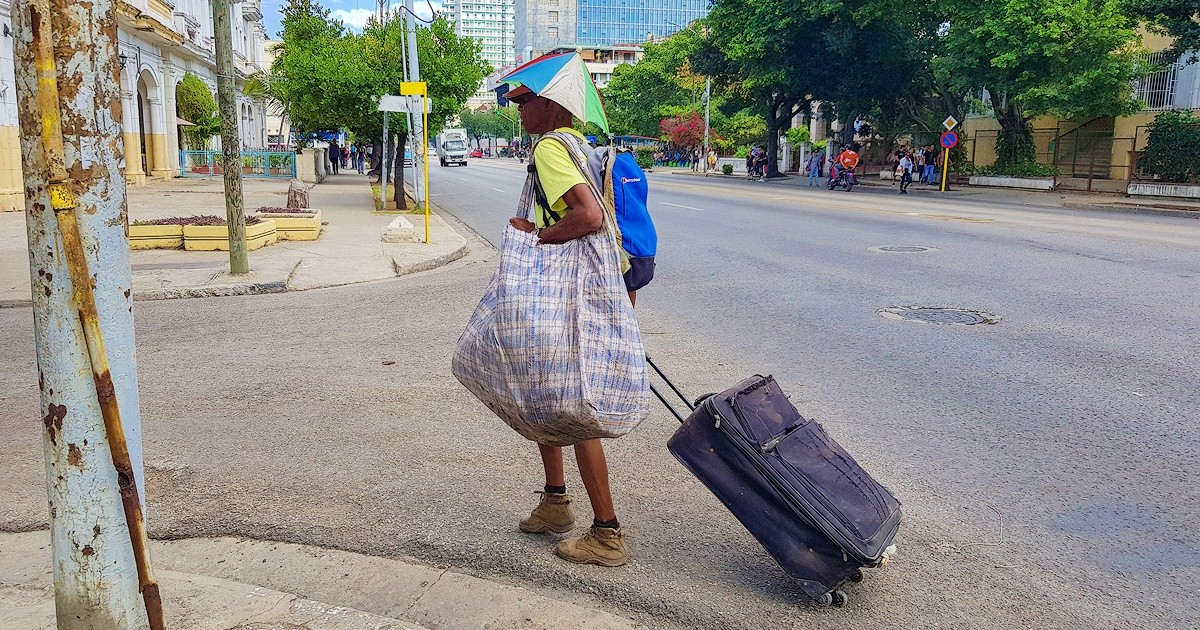
Maray Quesada, a Cuban citizen, has spoken out against the severe hardships faced by the people of Cuba, where the struggle to access basic necessities like food, water, medicine, and electricity has become an everyday battle. She questions the acceptance of such deprivations as a normal part of life.
In a heartfelt Facebook post on Sunday, Quesada highlighted the many challenges imposed by the Cuban regime, criticizing both the lack of material resources and the pressure to remain silent about these shortages.
"We are forced to endure thirst. We are forced to endure hunger. We are forced to bathe with a trickle of water or not at all. We are forced to eat just once a day," Quesada began her poignant message.
The Struggle for Basic Necessities
Quesada's criticisms extend beyond food shortages. She describes the difficulties of transportation, economic reliance on relatives who have emigrated, and the lack of access to basic hygiene and healthcare.
"We are forced to walk distances that wear down body and spirit. We are forced to beg from family abroad—or as they like to call them, 'worms'," she continued, referencing the derogatory term used by government supporters for Cuban emigrants or critics of the regime.
Her remarks underscore the contradiction between the stigmatization of emigrants and the dependence many families have on the financial support they provide from abroad.
Living in Degradation
Quesada paints a vivid picture of extreme conditions resulting from deteriorating basic services and a lack of domestic resources.
"We are forced to use plastic bags for sanitation. We are forced to cook with charcoal," she lamented.
She also discussed the challenges of obtaining medications and the fear of repercussions for voicing dissent.
"We are forced to endure pain without medicine and KEEP QUIET or else you know what’s coming…," she emphasized in capital letters to highlight her point.
Questioning Authority and Silence
Beyond material shortages, Quesada focused on the demand for understanding towards those in power, while citizens who protest are labeled aggressors.
"And they expect us to empathize with those who betray us, oppress us, and live better than us without an ounce of empathy for us," she stated.
Quesada argues that authorities and their supporters demand tolerance and understanding for those upholding the system, yet fail to reciprocate that empathy for those suffering under it.
"When you stop empathizing with the oppressor, you cease to be oppressed and become—by their logic—an aggressor," she concluded.
Normalizing Deprivation and Silence
The core of her message criticizes the normalization of poverty and the gradual loss of essential rights crucial for a dignified life.
"Accepting hunger as normal is making dignity a luxury. Accepting thirst means resigning to the fact that water is a privilege," she conveyed.
For Quesada, relying on external help to meet basic needs is a form of humiliation that should not be seen as inevitable.
"Normalizing the humiliation of begging is swallowing pride while others speak of solidarity," she asserted.
She connects silence with the acceptance of the very conditions she condemns.
"Normalizing silence is signing our own death warrant," she warned.
In her view, demanding compassion for those responsible for the country's situation while delegitimizing the outrage of those enduring it is another form of inequality.
Quesada rejects the notion that the hardships described can be justified as temporary sacrifices or an economic phase the population must endure.
Her critique targets what she sees as a systematic denial of basic needs and freedoms, from food and water to the ability to speak freely without fear.
"I'm talking about a state of affairs sustained by the systematic denial of the most basic needs: eating, drinking, hygiene, speaking," she wrote.
She also warns of the risk that extreme conditions could lose their ability to provoke outrage if they become part of the norm.
"And when something like this becomes the landscape, when it ceases to shock, when it becomes 'normal,' then there's no turning back," she reflected.
Her message concluded with a call to resist resignation and to continue expressing dissatisfaction with the country's situation.
"That's why we cannot remain silent. That's why we cannot get used to it. Because getting used to it is the quietest way to die," she wrote.
Quesada also defended the right to indignation in the face of injustice, distinguishing that feeling from violence or hatred.
"And because anger—when born from dignity and not hatred—is not aggression: it's proof that we are still alive and that we still know this is not just, humane, or normal," she concluded.
Social media has increasingly become a platform where Cubans voice their concerns about deteriorating living conditions and question the normalization of hardships deemed incompatible with a dignified life.
Last Thursday, Gloria María Sánchez, from her home in Havana, denounced hunger, power outages, censorship, and corruption after another night without electricity.
She compared the country's decline to a progressing disease and questioned why authorities continue to demand resilience from a population facing escalating challenges.
"I think my Cuba is a sore with growing dead tissue. Tissue dead from hunger, misery, censorship, corruption, painful exodus, prisons filled with young people," Sánchez expressed in her testimony.
In June, another Cuban, known online as LaSai DeLa Vida, questioned why citizens have become accustomed to living without adequate electricity, water, or food.
After enduring 20 hours without power in Havana, the content creator asked if it could be considered normal to go to bed without bathing, surrounded by trash, or facing a child's hunger without food.
"And do you think it's normal to go to bed and wake up every day sweating and unable to bathe because you don't even have water?" she questioned.
Her reflection echoed Quesada's central concern: the danger of accepting conditions as inevitable that should instead provoke rejection and indignation.
The struggle to ensure daily meals has been documented in numerous accounts from Cuban mothers.
In August, several women described the physical and emotional exhaustion of waking up each day unsure of what they could cook for their families.
One of them, identified as Mary Yllas, summed up this uncertainty as a cycle of anxiety and momentary relief, as solving one day's meal doesn't erase the worry for the next.
Another participant, Yhelsa Isabel Rodríguez, stated: "It simply means not living. This is pure survival."
The issue affects not only those unemployed. In August, young Cuban Lauren Daniela highlighted that working for years doesn't guarantee enough money to eat.
"Here, even if you work yourself to death, it's not enough to eat. Even a doctor's salary doesn't feed them," she expressed, detailing the economic struggles faced by multiple generations of her family.
The water scarcity, another deprivation highlighted by Quesada, has also led to accounts of exhaustion and frustration.
Understanding Cuba's Current Hardships
What are some of the basic necessities Cubans struggle to access?
Cubans face daily challenges in accessing food, water, medicine, electricity, and basic hygiene facilities. The scarcity of these essentials has become a significant part of their everyday life.
How does Maray Quesada describe the situation in Cuba?
Maray Quesada criticizes the Cuban regime for imposing severe deprivations on its citizens. She highlights the normalization of these conditions as a loss of dignity and emphasizes the contradiction of being asked to empathize with oppressors while suffering under their policies.
Why does Quesada believe silence is dangerous?
Quesada warns that normalizing silence in the face of oppression is akin to signing one's own death warrant. She argues that accepting such conditions without protest allows them to become part of the norm, reducing the chance for change.