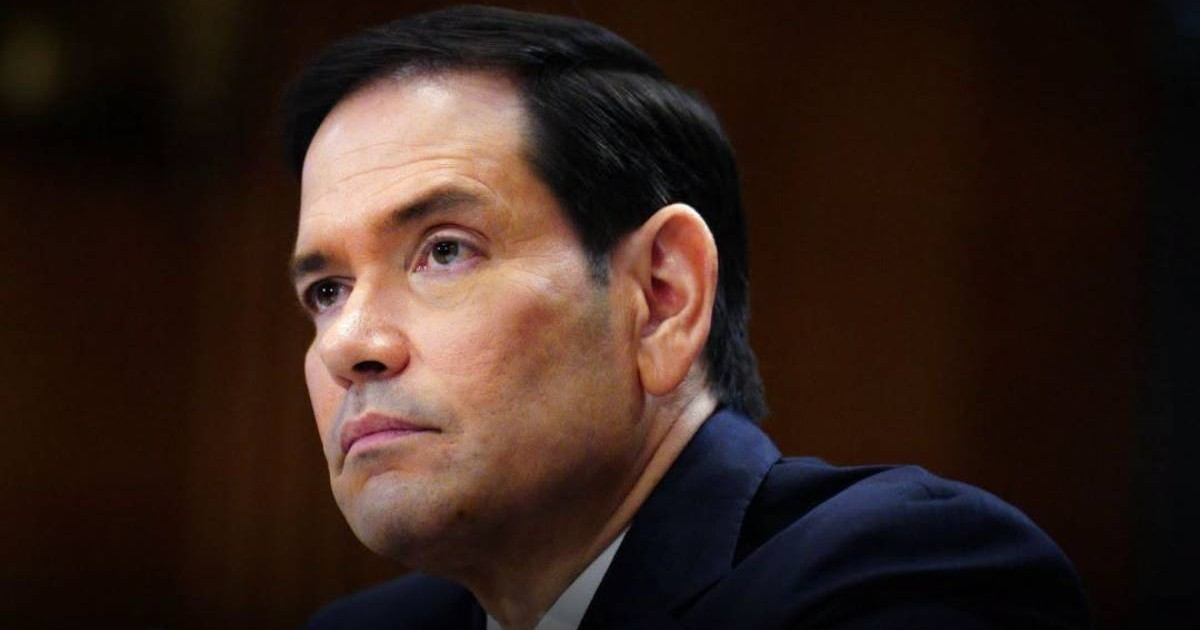
On Monday, U.S. Secretary of State Marco Rubio emphasized the need for a "very drastic change" in Cuba, asserting that the island's situation is "entirely different" from that of Venezuela. This statement came during a teleconference with journalists, where he addressed queries about his recent appeal to Cubans to collaborate with the CIA.
"We believe that Cuba requires a very drastic change, and it is a case entirely distinct from Venezuela. The circumstances are quite different, and I'll leave it at that," Rubio stated, not offering specifics on what sets them apart or any concrete measures Washington might have for the island.
Rubio's comments followed days after he posted on social media, urging those eager for change in Cuba to seize the opportunity amid "broken promises, corruption, and privileges of the few," by discreetly cooperating with the CIA.
When asked why he advocated for contact with the intelligence agency instead of promoting peaceful avenues, Rubio tersely replied, "I can't answer that," as reported by AFP and published by La Jornada.
Political Context and Comparisons with Venezuela
The reference to Venezuela carries specific political implications: that same Monday, Rubio confirmed that Washington had negotiated with Venezuelan government representative Delcy Rodríguez for the return of opposition leader María Corina Machado within a roadmap that includes elections for 2027.
In contrast, Rubio has not identified any equivalent interlocutors or outlined a structured negotiation process with the regime of Miguel Díaz-Canel in Cuba.
Monday's declaration is part of a sustained increase in U.S. pressure on Cuba throughout 2026, which intensified after the capture of Nicolás Maduro by U.S. forces on January 3rd, stripping Havana of its key regional ally.
Sanctions and Strategic Moves
Just last Friday, President Donald Trump announced at a rally in Fort Myers, Florida, that the United States would "deal with Cuba" upon his return from Iran and that he would send Rubio to "seal the deal."
Shortly after Rubio's social media message, the CIA released guidelines for Cubans to contact them securely, and the Southern Command issued its own call: "Seize the moment and build the change you wish to see."
In mid-October, Rubio announced sanctions against the Cuban bank BICSA, citing Cuba's hosting of Iranian military and intelligence operations less than 100 miles from U.S. territory. On October 5th, he warned regime leaders to change course or "learn the hard way."
Back in August, Rubio acknowledged the impracticality of dismantling a system entrenched for seven decades in a short time but set a goal for Cuba to be on an "irreversible trajectory towards a different future" by the end of Trump's term. His statement on Monday does not alter that position or announce specific measures; it is a political assertion highlighting the distinction between the two cases without elaboration, which Rubio chose not to expand upon to the press.
Understanding the U.S. Stance on Cuba and Venezuela
Why does Marco Rubio believe Cuba requires a drastic change?
Rubio asserts that Cuba's situation is entirely distinct from Venezuela's and believes a significant transformation is necessary, although he hasn't provided specific details publicly.
What is the U.S. strategy towards Venezuela compared to Cuba?
The U.S. has engaged in negotiations with the Venezuelan government for a roadmap towards elections, while no similar structured dialogue with Cuba's regime has been outlined.
What actions has the U.S. taken against Cuba recently?
Recent actions include sanctions against the Cuban bank BICSA and public statements urging Cubans to collaborate with the CIA for change.