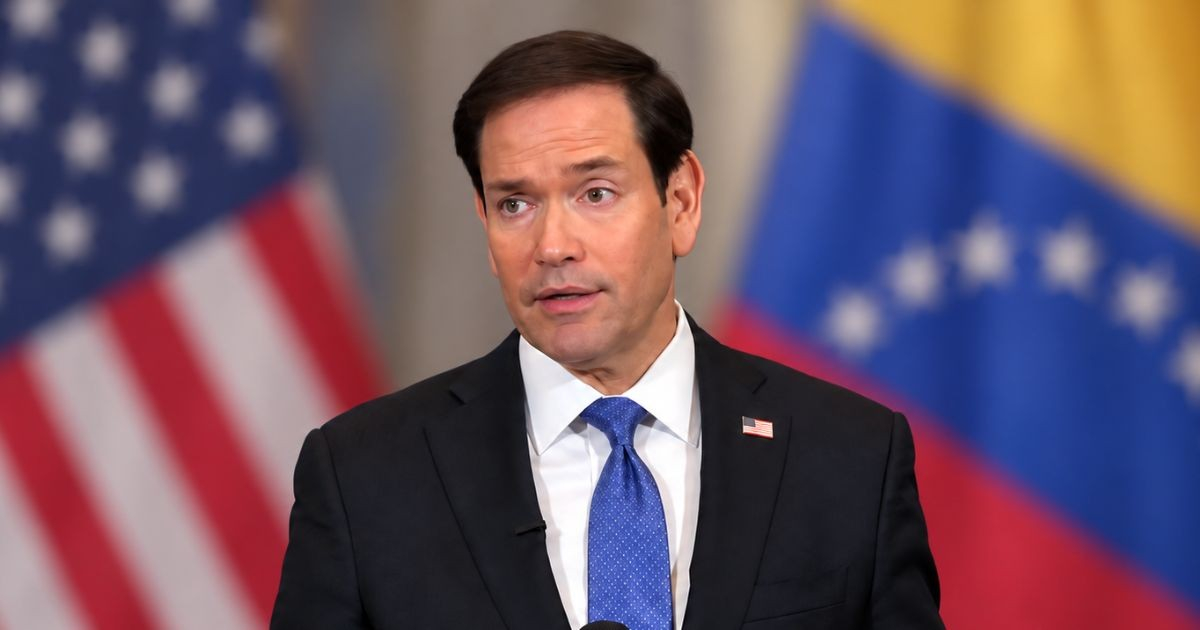
U.S. Secretary of State, Marco Rubio, declared on Monday that Venezuela's electoral system was deliberately crafted by Nicolás Maduro's government to manipulate election outcomes. He emphasized that this infrastructure must be replaced before any new legitimate voting can occur in the nation.
Rubio's remarks come amid ongoing discussions between Delcy Rodríguez's interim government and opposition factions aimed at reforming Venezuela's institutional framework.
According to Reuters, Rubio made these comments during a phone call with journalists, just a day after opposition leader María Corina Machado returned to Venezuela.
Rubio criticized the electoral system, a holdover from the chavismo era, for lacking the necessary safeguards to ensure credible elections, insisting that a swift overhaul is essential.
The Need for Institutional Reform in Venezuela
Washington's stance extends beyond merely changing electoral authorities; it also involves overhauling the Supreme Court of Justice (TSJ), which is seen as crucial to preventing future electoral outcomes from being nullified or manipulated through judicial decisions.
A senior State Department official informed Reuters that the U.S. anticipates these talks will lead to establishing a new Supreme Court by the end of 2026, with a revamped National Electoral Council following shortly thereafter.
"I believe we are making real progress in this area. But if anyone attempts to derail the process, they will be causing significant harm to Venezuela," Rubio stated.
Timeline and Expectations for Venezuela's Elections
While no specific date for presidential elections has been set, there's pressure to expedite institutional changes. The Trump administration envisions Delcy Rodríguez stepping down from her interim presidency by 2027.
The U.S. government, as revealed by EFE, believes once the Supreme Court and National Electoral Council are reformed, Rodríguez should declare the presidency vacant, activating a legal mechanism to call elections within six months.
The proposed sequence suggests that elections would be held only after modifying the bodies responsible for overseeing and resolving electoral disputes.
The aim, as outlined by a U.S. official, is "to achieve elections where, once completed, the losing side acknowledges the fairness of the process."
Machado's Return and Political Negotiations
This Monday, Rubio provided new insights into U.S. efforts with Venezuelan interim authorities, confirming past communications with Rodríguez's government ensuring Machado's unobstructed return.
Despite Machado's return, she is not formally involved in the current U.S.-backed political negotiations. Her party, Vente Venezuela, remains outside the official talks, although she has advocated for elections by 2027.
The situation intensified following the U.S. capture of Nicolás Maduro in early January 2026 during a military operation, with Delcy Rodríguez assuming leadership and initiating cooperation with Washington.
Political negotiations now involve the interim government and opposition representatives, including the 2015-elected National Assembly delegation led by Dinorah Figuera.
As political factions call for expedited transition and participation assurances, the U.S. continues to expect Rodríguez's resignation by 2027, contingent on necessary institutional reforms.
Machado's return from nearly ten months abroad, after leaving Venezuela secretly in December 2025 to receive the Nobel Peace Prize in Norway, adds a new dimension to the unfolding events.
Rubio attributed her return to the U.S.-supported reconciliation talks, viewing it as an opportunity for advancing toward free elections. Machado expressed willingness to engage with current authorities, provided discussions lead to tangible political agreements for Venezuela's future.
In response, Rodríguez publicly criticized Machado's media presence, dismissing her return as a "show" and questioning her previous support for international sanctions and U.S. intervention.
Key Questions About Venezuela's Electoral Changes
What changes are proposed for Venezuela's electoral system?
The proposed changes involve overhauling both the National Electoral Council and the Supreme Court of Justice to ensure fair and credible elections.
Why is the U.S. involved in Venezuela's electoral reform?
The U.S. is involved to support the establishment of a fair electoral process and prevent manipulation in future Venezuelan elections.
When are the anticipated reforms expected to be completed?
Reforms are expected to establish a new Supreme Court by the end of 2026 and a renewed National Electoral Council shortly thereafter.
What is María Corina Machado's role in the current political climate?
While not part of the official negotiations, Machado remains a significant opposition figure advocating for elections by 2027 and engaging in dialogues about Venezuela's political future.