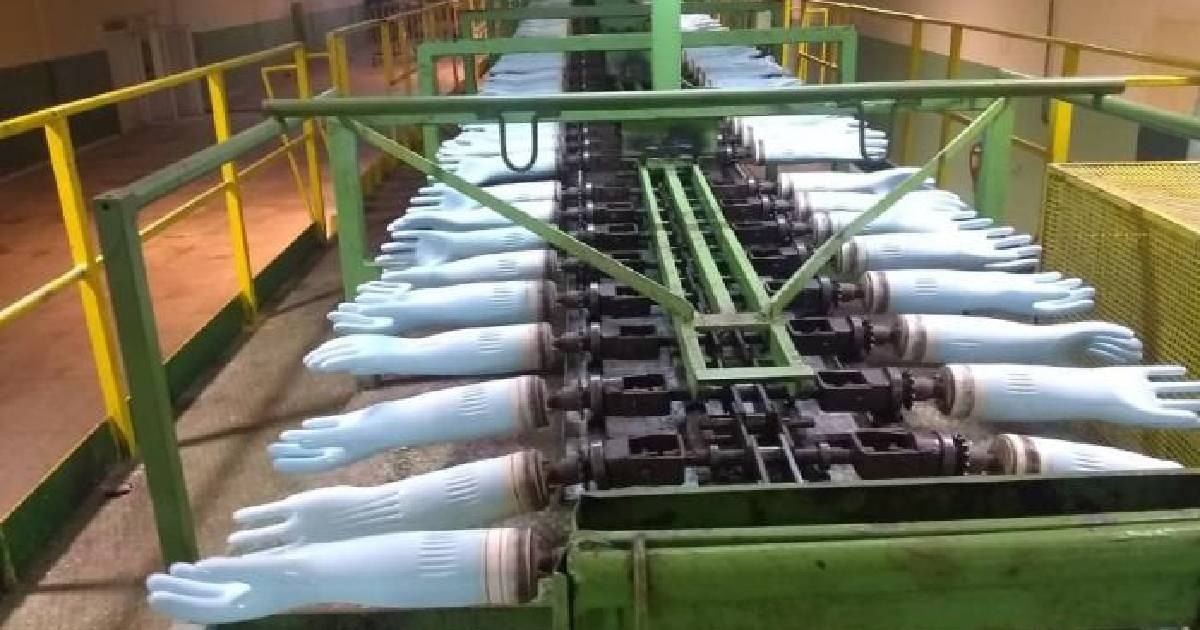
The sole factory in Cuba producing latex goods has not manufactured sterile surgical gloves for the past nine years, as reported by Yenima Díaz in an article for the state-run newspaper Granma, published last Sunday.
Situated in Las Tunas and part of the Thaba Base Business Unit under the National Saddlery Company, the plant achieved its highest production record in 2016, producing six million pairs of sterile surgical gloves in that year alone.
“Back in 2016, our facility set a production record with six million pairs of sterile surgical gloves, significantly supporting healthcare across the nation. Today, that is no longer feasible," stated Antonio Elio Nuñez Nojas, the factory head, in an interview with the state media.
One year after this peak, in 2017, the production of surgical gloves ceased and has yet to resume.
Production specialist Milaydys García Aguilar highlighted that the plant is missing essential supplies such as potassium oleate, the accelerator ZDBC, and liquid pigments. The original supplier of natural latex, Guatemala, stopped providing to Cuba; now, the island imports the material from an Asian country—identified as India by the World Bank, which sold nearly 30,000 kilograms in 2024 for $55,600—raising transportation costs and risking expired materials upon arrival.
“It’s not just about paying a higher price for the product. Transportation fees and tariffs also increase. Moreover, delays in the arrival of raw materials can result in expired or defective goods,” García Aguilar noted.
Another significant issue is the plant's sterilizer, with a 10-cubic-meter capacity, one of the largest in the country. It remains inactive because it requires 34-kilogram cylinders of ethylene oxide, which need to be imported and are currently unavailable.
“If we could utilize it, it would greatly benefit the entire public health system by allowing us to sterilize gloves and a wide range of medical equipment. Today, that is not possible,” said George Cruz Ramayo, director of the Thaba Las Tunas UEB.
Adding to the supply challenges, there are machinery failures: the conveyor belt needs nine U.S.-made frequency converters, but only two are operational. There is also a lack of laboratory equipment—such as elongometers, peachimeters, and reagents—which are crucial for ensuring product quality.
The auxiliary lines, which previously produced household gloves, membranes for bee venom collection, and cones for bovine insemination, are also out of service.
Amidst these challenges, the factory has turned to alternative productions to keep its workforce active. “We are manually producing household gloves, using a timer to ensure processes last the required time. They aren’t perfect but serve hygiene, cleaning, and even hairdressing purposes,” Nuñez Nojas explained.
The plant also makes balls from latex waste for baseball teams and has set up a saddlery workshop and a sewing room.
The state media report blames the situation on the U.S. embargo. However, it does not clarify why Guatemala stopped selling latex to Cuba, an issue linked to the regime's payment problems in other sectors, nor why closer suppliers like Brazil or Mexico are not used.
This factory's crisis is part of a broader decline. According to the National Office of Statistics and Information, Cuba's manufacturing industry fell across nearly all areas in 2025, and the healthcare sector faces a severe shortage: over 100,000 patients were waiting for surgery in Cuba in 2026, including more than 10,000 children, based on official figures.
Key Questions About Cuba's Latex Production Challenges
Why did the Las Tunas factory stop producing sterile surgical gloves?
The production halted due to a lack of essential supplies, machinery failures, and inactive sterilization equipment.
Where does Cuba currently import latex from?
Cuba imports latex from an Asian country, identified as India by the World Bank.
What alternative productions has the factory turned to?
The factory now produces household gloves manually, latex waste balls for baseball, and has opened a saddlery workshop and sewing room.