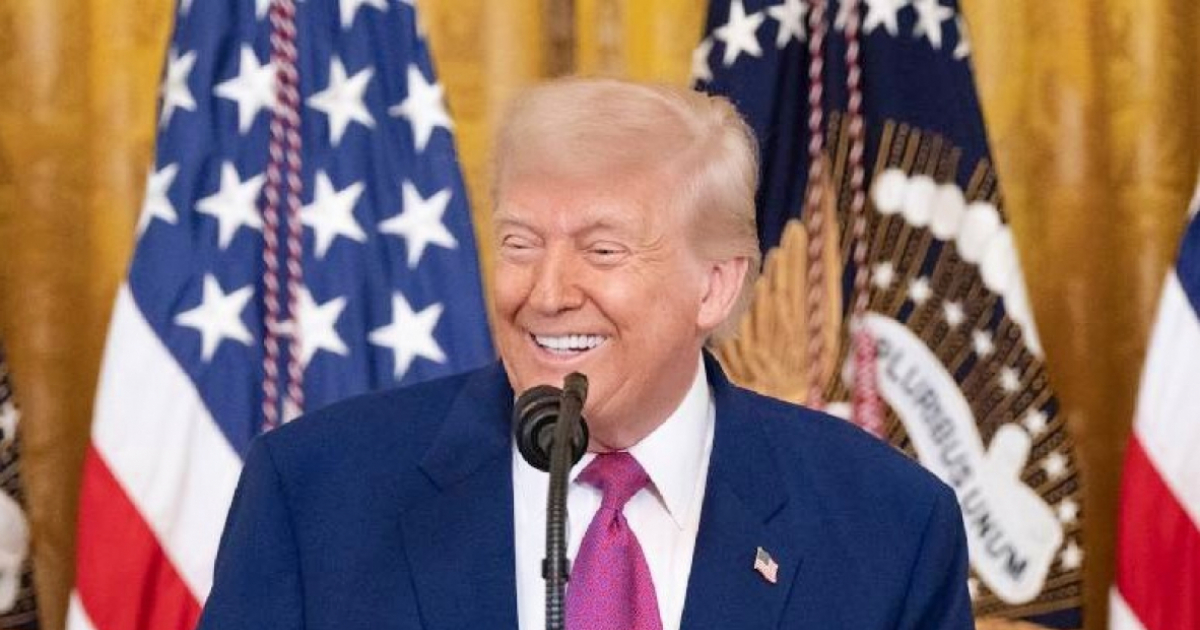
On Monday, President Donald Trump expressed skepticism about Brazil's presidential election, asserting that it appeared "rigged" following Luiz Inácio Lula da Silva's victory over Senator Flávio Bolsonaro.
These remarks were shared in a video on the Rapid Response 47 account, linked to the White House, and reported by Reuters and Brazilian outlet Poder360. "It seemed like another rigged election, frankly. I didn't take sides, but it was a terrible image for the world. Elections should be beyond question, and this one seemed very poor to me," the President told reporters.
Polarized Political Climate
The comments came soon after Brazilians cast their votes in a politically charged runoff between Lula of the Workers' Party (PT) and Flávio Bolsonaro of the Liberal Party (PL).
Despite his criticisms, Trump stated he maintains a positive relationship with Lula. "I like Lula, we get along well," he mentioned.
Electoral Integrity Under Scrutiny
Trump emphasized the importance of elections instilling trust and leaving no room for doubt, although he did not specify which aspects of Brazil's electoral system he found questionable.
His stance starkly contrasts with the official results from Brazil's Supreme Electoral Court (TSE), which declared Lula the winner following the vote count of the runoff held on Sunday.
According to the TSE, Lula secured 64,256,232 votes, representing 51.79% of valid ballots, while Flávio Bolsonaro received 59,826,041 votes, or 48.21%.
Significant Electoral Turnout
The turnout was notably high, with around 128.2 million Brazilians voting, and abstention rates at approximately 19.2%, lower than the 21.08% in the first round.
Lula's victory marked a significant electoral comeback, as Flávio Bolsonaro had led in the first round on October 4.
Controversy Over Voting Hours
A key controversy arose from a court decision to extend voting hours from 5:00 p.m. to 7:00 p.m. at polling stations that remained open, ordered by Supreme Court Justice Cristiano Zanin after public transportation issues were reported.
Both the PT and PL had requests regarding the voting extension. TSE President Kassio Nunes Marques acknowledged the technical and operational challenges this posed, as many electronic voting machines had already closed and couldn't be reopened.
Adjustments were made to continue counting and complete the election process.
Flávio Bolsonaro's Challenge
Trump's comments coincided with Flávio Bolsonaro's initial refusal to concede defeat. He questioned the election's outcome and announced plans to challenge it legally, arguing that the extended voting hours undermined the election's legitimacy.
Bolsonaro vowed to rally his supporters and opposition factions during Lula's upcoming term.
The electoral challenge will be reviewed by appropriate institutions, requiring evidence of irregularities with legal impacts on the results.
International Recognition and Diplomatic Relations
Lula's re-election was acknowledged by numerous foreign governments, including European and Latin American leaders. However, Trump had not publicly congratulated Lula at the time of his Monday remarks.
During the election day, Trump refrained from commenting on the candidates, merely stating that the U.S. was monitoring the electoral process. "I don’t want to get into it, but we are watching," he told reporters at the White House.
While Trump claimed neutrality, he has maintained political ties with the Bolsonaro family since former President Jair Bolsonaro's term. He hosted Flávio Bolsonaro at the White House in May and previously supported his political endeavors.
Trump and Lula's relationship has seen ups and downs, particularly over trade disagreements, tariffs, and international issues. However, they made diplomatic strides months before Brazil's election.
On May 7, Lula visited the White House, discussing trade, bilateral relations, and Cuba's situation with Trump. Following the meeting, Lula disclosed that Trump assured him of no military intervention plans in Cuba.
"If the translation is correct, he told me he doesn't plan to invade Cuba," Lula stated at a Washington press conference.
Lula viewed this assurance positively and reiterated his willingness to facilitate diplomatic dialogue between Washington and Havana. "If you need help discussing Cuba, I'm fully at your disposal," Lula expressed, according to Reuters.
Understanding the Implications of Brazil's Elections
Why did Trump question the Brazilian election results?
Trump expressed doubts about the integrity of Brazil's election, labeling it as "rigged," although he didn't specify what aspects of the electoral process he found problematic.
What was the outcome of the Brazilian elections?
Luiz Inácio Lula da Silva won the election with 51.79% of the votes, defeating Senator Flávio Bolsonaro, who garnered 48.21%.
How did international leaders react to Lula's victory?
Lula's re-election was recognized by numerous international governments, including leaders from Europe and Latin America, while Trump did not offer public congratulations.