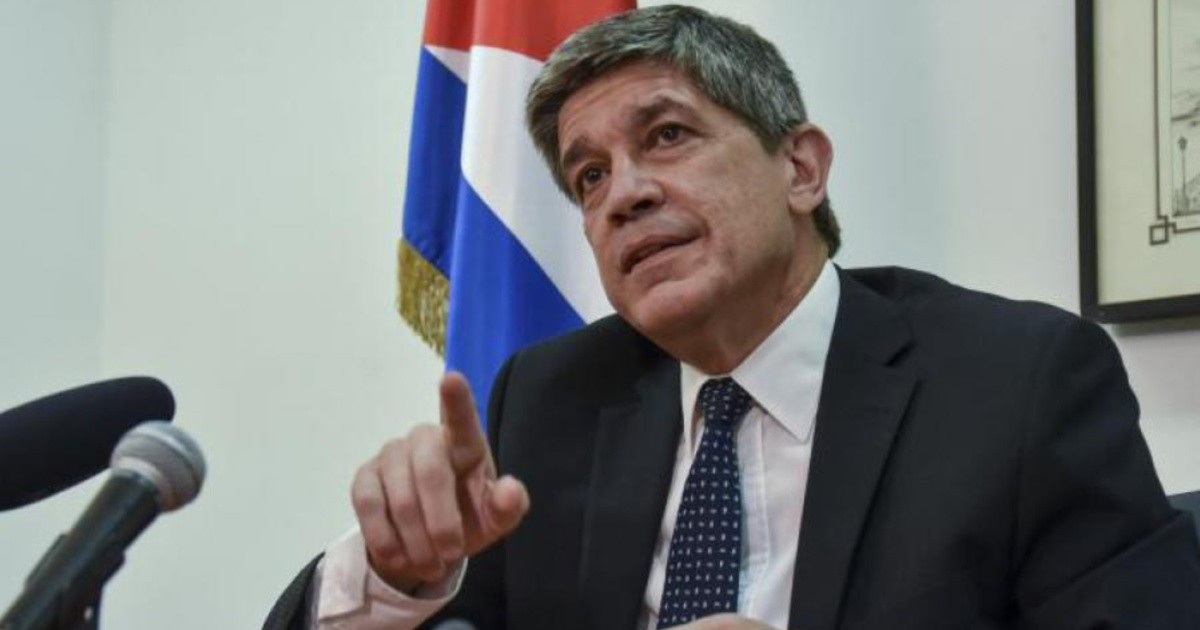
The Deputy Foreign Minister of Cuba, Carlos Fernández de Cossío, on Monday criticized the U.S. government, accusing it of using the alleged threat posed by Cuba to instill fear among its own citizens. This is part of a continuing denunciation of Washington's policies toward Havana.
In a Facebook post, Fernández de Cossío challenged the notion that Cuba is a threat to U.S. national security. He pointed out that the United States maintains an extensive military presence worldwide and possesses nuclear weapons.
"The U.S. has nuclear weapons and the experience of using them, yet it accuses Cuba of being a threat," he noted, alluding to America's military history.
He further emphasized, "The U.S. has established bases and conducts military operations across almost the entire hemisphere and other parts of the world, yet it intimidates its own populace with the alleged Cuban threat."
The deputy minister also placed blame on the U.S. for political and military interventions in various countries.
"The U.S. has promoted coups, political assassinations, terrorist acts, and economic and political subversion, interfering in the internal affairs of nearly every nation. Yet, it labels Cuba as threatening," he declared.
Additionally, Fernández de Cossío stated that the U.S. has been involved in numerous wars resulting in death and destruction while continuing to label Cuba as a danger.
He defended the Cuban regime's international conduct, asserting that the island is not a threat to other states.
"Cuba is a nation of peace. It does not threaten or interfere in the internal affairs of any country. Its foreign policy track record is one of cooperation and solidarity," he argued.
The diplomat claimed that this image of Cuba is acknowledged globally, again accusing Washington of misleading the American public.
These remarks come amid ongoing political tensions between Washington and Havana, particularly after the Trump administration officially declared Cuba's government a threat to U.S. national security.
On January 29, 2026, Trump signed Executive Order 14380, titled "Addressing the Threats Posed by the Government of Cuba," which declared a national emergency concerning the island.
The document claims that the Cuban authorities' policies and actions constitute an "unusual and extraordinary threat" to the national security and foreign policy of the United States.
Washington argued that the Cuban government maintains relationships and offers support to countries and organizations it considers hostile, including Russia, China, and Iran, while also accusing it of backing activities that compromise American security interests.
The order also established a mechanism to impose additional tariffs on imports from countries that sell or supply oil to Cuba, directly or indirectly, subject to the determinations provided in the document itself.
Fernández de Cossío's message is not his first response to Washington's claims.
In August, the deputy minister responded to a State Department report on the Cuban regime's activities, which he labeled as "voluminous and deceitful."
Back then, he accused U.S. authorities of attempting to "create fear among American citizens regarding a supposed threat from Cuba," closely mirroring the current language.
The State Department document included accusations of espionage, influence operations, and alleged links between the Cuban government and U.S. adversaries.
In May, Fernández de Cossío also asserted that Cuba had never threatened the United States, responding to comments made during a U.S. Congress hearing.
His stance contrasts with reports about intelligence facilities linked to China in Cuban territory, such as analyses published by the Center for Strategic and International Studies (CSIS), which has identified several sites associated with potential signal intelligence activities.
The existence and scope of these facilities are part of the security concerns expressed by analysts and U.S. authorities, while Havana denies that its military and cooperative relationships with other countries pose a threat to Washington.
The verbal confrontation has been escalating in recent days.
Last Saturday, Fernández de Cossío accused the Trump administration of acting like a "terrorist and rogue state" in a statement posted in English on the social platform X.
In that declaration, he described Washington's actions as "criminal and aggressive" and questioned whether they truly represented the interests of the majority of American citizens.
His comments followed Secretary of State Marco Rubio's public appeal to Cuban citizens interested in discreet collaboration with the Central Intelligence Agency (CIA).
The deputy minister mocked the CIA's appeal, suggesting that the agency seemed compelled to promote its offers "like toothpaste."
In an early October interview with the Mexican channel Milenio, the official also stated that Havana takes "very seriously" references to possible U.S. military aggression.
Fernández de Cossío then remarked that it would be "naive" and "irresponsible" to ignore such declarations, although he acknowledged that both countries maintain diplomatic channels and periodic contacts between officials.
In the same interview, he rejected any negotiation concerning Cuba's internal political system but expressed a willingness to address bilateral issues requiring cooperation between both governments.
Understanding the U.S.-Cuba Political Tensions
Why does the U.S. consider Cuba a threat?
The U.S. views Cuba as a threat due to its relationships and support for countries and organizations hostile to American interests, like Russia, China, and Iran.
What actions has the Trump administration taken against Cuba?
The Trump administration declared a national emergency concerning Cuba and imposed additional tariffs on imports from countries supplying oil to Cuba.
How has Cuba responded to U.S. accusations?
Cuba has denied being a threat to the U.S. and accused Washington of misleading the American public and behaving aggressively.