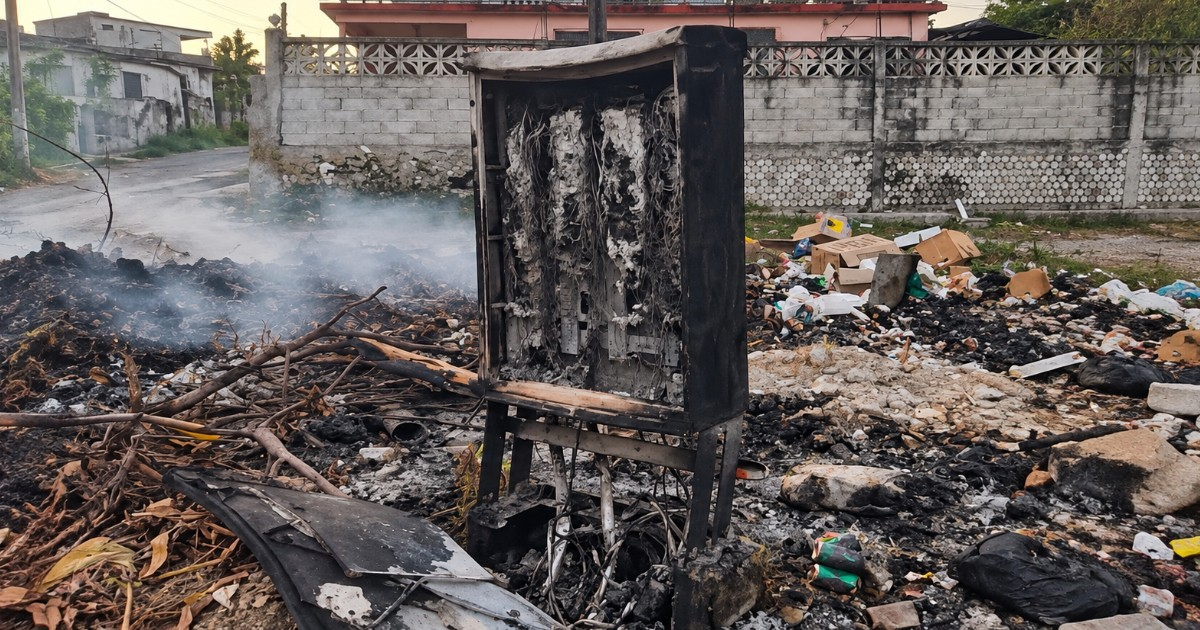
On Monday, ETECSA, the state-run telecommunications company in Cuba, made another plea to the public: refrain from burning trash close to telephone poles and cabinets. This announcement, posted on their Facebook page, notably ignores the underlying issue—the collapse of Cuba's waste collection system.
ETECSA warned that incidents of trash burning are "on the rise," justifying their appeal by highlighting that damaged resources are "expensive and hard to replace due to the outdated technology of the external network."
The message wraps up with a call to action: "Safeguarding telecommunications is everyone's duty. Avoid burning trash near telephone poles and cabinets. Protect the networks that connect you."
This is just one in a series of similar appeals from ETECSA throughout 2026. The Western Territorial Directorate issued an urgent notice back in February concerning the damage trash burning inflicts on telecom infrastructure, and reiterated this warning in September, cautioning that such actions "jeopardize the entire block's connectivity."
None of these announcements addressed the fact that burning trash is a direct result of the state's failure to collect waste.
Public reaction on social media has been a mix of irony and outrage. One user remarked, "But I can't eat the trash. The government needs to find solutions and provide answers so that the community doesn't resort to burning waste." Another commented more bluntly, "The people are always blamed for everything."
The Structural Issue Behind Trash Burning
The root of the problem lies in systemic failure. By February 2026, Havana's trash crisis had already caught international attention: only 44 out of 106 garbage trucks in the capital were operational, representing just 41.5% of the fleet, while the city generates between 24,000 and 30,000 cubic meters of waste daily.
Owing to the lack of collection services, many residents resort to burning accumulated trash outside their homes. These fires, whether deliberate or accidental, have repercussions that extend beyond damaging telecommunications. Smoke can exacerbate respiratory issues, flames can reach homes, vehicles, and electrical lines, risking the safety of residents and passersby.
Documented Damage and Ongoing Challenges
Incidents involving damage are well-documented and on the rise. In Santa Fe, a burned ETECSA cabinet left a residential area without landline service for nearly three months. In Tulipán and Mariano, a pole caught fire beside a trash heap, leaving the infrastructure dangling from tree branches—a problem reported since March 2026 with no resolution. More recently, Casino Deportivo residents reported being without phone service for almost a month after a fire damaged ETECSA cables.
ETECSA faces approximately 77,000 reports of interrupted fixed services and admits that 90% of its technologies are imported, with landline services not covering operational costs. The company attributes service disruptions to limitations in expanding the network, yet stops short of holding the state accountable for the trash crisis that exacerbates these limitations.
One user aptly summarized the situation: "ETECSA, you're part of that EVERYONE. How often have you demanded that the government, who bears ultimate responsibility, collect the garbage?"
Understanding ETECSA's Challenges and Public Reactions
Why does ETECSA urge people not to burn trash near their networks?
ETECSA requests this to prevent damage to their telecommunications infrastructure, which can be costly and difficult to repair due to the outdated technology of their external networks.
What is the main cause of the trash burning issue in Cuba?
The primary cause is the failure of the state's waste collection system, leaving residents with few options but to burn trash as it accumulates.
How has the public reacted to ETECSA's announcements?
Public reactions have been largely critical and ironic, pointing out that the responsibility for waste management lies with the government, not the citizens.