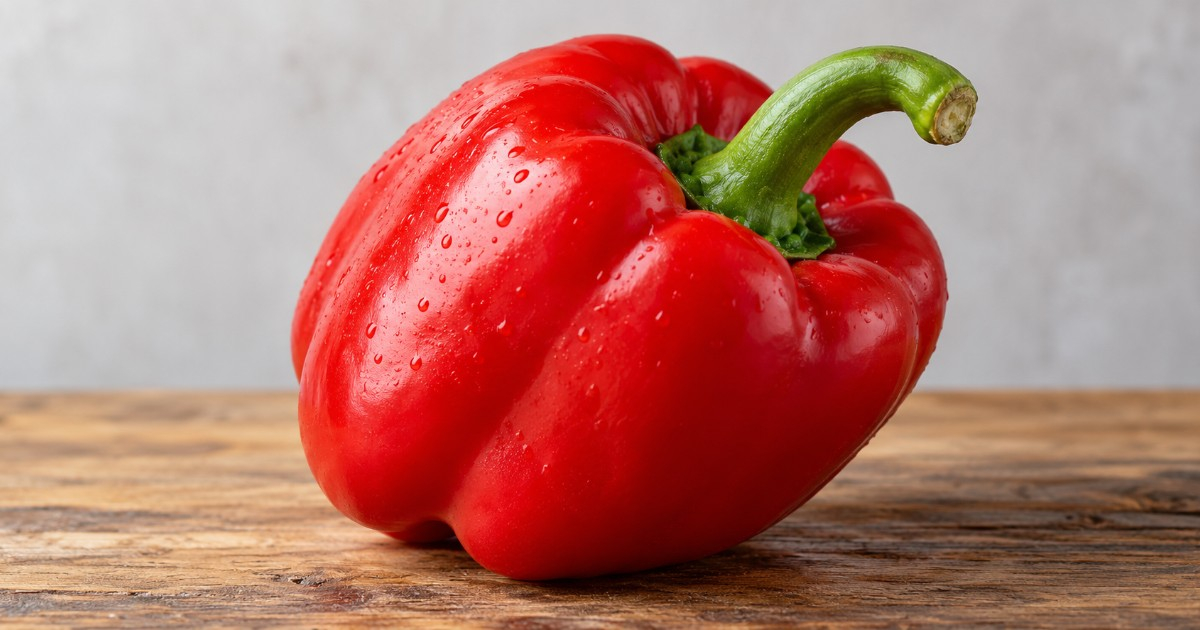
The exorbitant price of bell peppers in Cuba, reaching 600 Cuban pesos per pound, served as a catalyst for a profound reflection by José E. González Marín. His commentary, published on Sunday, delves into the soaring cost of food on the island and the struggles faced by those who labor all month long, only to find their earnings insufficient to meet their families' basic needs.
"In Cuba, even a bell pepper has become a luxury," González remarked in a Facebook post, where he scrutinized the growing gap between wages and the prices of everyday items that once were staples in Cuban households.
González expressed his frustration over the reality that after a month's worth of work, the salary earned barely covers a few days' worth of meals: "There is something deeply humiliating about working an entire month only to find that the money barely stretches to survive for a few days," he stated.
He clarified that his reflection was not about travel, vacations, or lofty economic dreams, but rather about a fundamental need: the ability to eat without each grocery trip becoming a source of anxiety.
The Humble Pepper: A Symbol of Economic Strain
Choosing bell pepper as his example, González highlighted a particularly painful situation, as this ingredient is closely tied to home cooking and dishes as common as sofrito and stews.
"Consider a simple yet painful example: a bell pepper priced at 600 pesos per pound," he pointed out.
"A bell pepper. That modest ingredient which has been a part of Cuban cooking for generations, enhancing a sofrito, adding flavor to a stew, or completing any meal without causing concern," he reminisced.
Wider Implications of Skyrocketing Prices
For González, the issue stretches beyond the price of a single vegetable; it symbolizes the challenges faced by those reliant on Cuban pesos for their income.
"Today, seeing it priced so absurdly high is more than just confronting a ridiculous number. It exemplifies the vast gap that has developed between the cost of living and what a Cuban can earn through hard work," he asserted.
His reflection also touched on the struggles of different societal groups, from state employees to pensioners and families with children.
González mentioned teachers who, after fulfilling their work hours, must calculate how much they can allocate for food, and workers returning home unsure of how they will provide the next meal.
He described retirees carefully comparing prices before deciding if they can afford a particular item, aware that such a purchase might mean sacrificing another necessity.
"And then there are the mothers and fathers who hide their anxieties from their children, even as they internally grapple with the desire to give them more than what they can afford," he wrote.
Challenging the New Normal
The author questioned how these hardships have been integrated into daily life, with families normalizing sacrifices that were once unnecessary.
In a particularly poignant passage, he summed up his critique of the diminishing purchasing power for those living off their wages: "But there is nothing normal about working and being unable to eat with dignity," he declared.
He emphasized that earning a salary does not ensure economic stability when prices force constant decisions between food and other essential expenses.
In this context, he stated: "There is no dignity in perpetually deciding which need to leave unmet. There is no peace in bringing home a paycheck and feeling it is already insufficient."
González concluded his post by stressing that the price of bell peppers signifies a broader economic challenge than just the purchase of a single item.
"The issue is not merely that a bell pepper costs 600 pesos. The issue is everything that price reveals about the lives of those who must pay it," he wrote.
He wrapped up his reflection with a comment on the repercussions of inflating basic goods: "When work no longer suffices to feed oneself, it's not just food that's become expensive; it's the cost of living itself."
González's concerns about rising food costs are echoed in other testimonials that have emerged in recent months.
In early October, architect and entrepreneur Yulieta Hernández Díaz displayed a small onion priced at 610 pesos in Havana.
She noted that a pound of this product was being sold for 1,700 CUP, sparking numerous reactions among Facebook users.
Days earlier, a Cuban living abroad shared her expenses on food purchases during a visit to the island.
The shopping list included viands, bread, avocados, detergent, bananas, and meats, totaling approximately 8,750 pesos.
Another account, published in August, highlighted that procuring food does not necessarily solve the problem for families who manage to pay for it.
Content creator Sisi Aguilera criticized the cost of items like sugar and rice, as well as the challenges of storing food during prolonged power outages.
Official statistics also illustrate the decline in purchasing power. According to the National Office of Statistics and Information (ONEI), Cuba's annual inflation rate reached 28.44% in September 2026, with prices having increased by 24.85% since the year's start.
Food and non-alcoholic beverages were the category with the highest contribution to the monthly rise in the Consumer Price Index, accounting for 73.39% of that variation.
Understanding the Economic Challenges in Cuba
Why are bell peppers so expensive in Cuba?
Bell peppers are priced exorbitantly due to inflation and the economic challenges within Cuba, reflecting the broader issue of high costs for basic necessities.
What impact does the high cost of food have on Cuban families?
The high cost of food severely affects Cuban families by stretching their limited incomes, forcing difficult choices between essential needs and leading to food insecurity.
How does inflation affect the purchasing power in Cuba?
Inflation diminishes purchasing power in Cuba, making it increasingly difficult for citizens to afford basic goods and services, thereby impacting their quality of life.