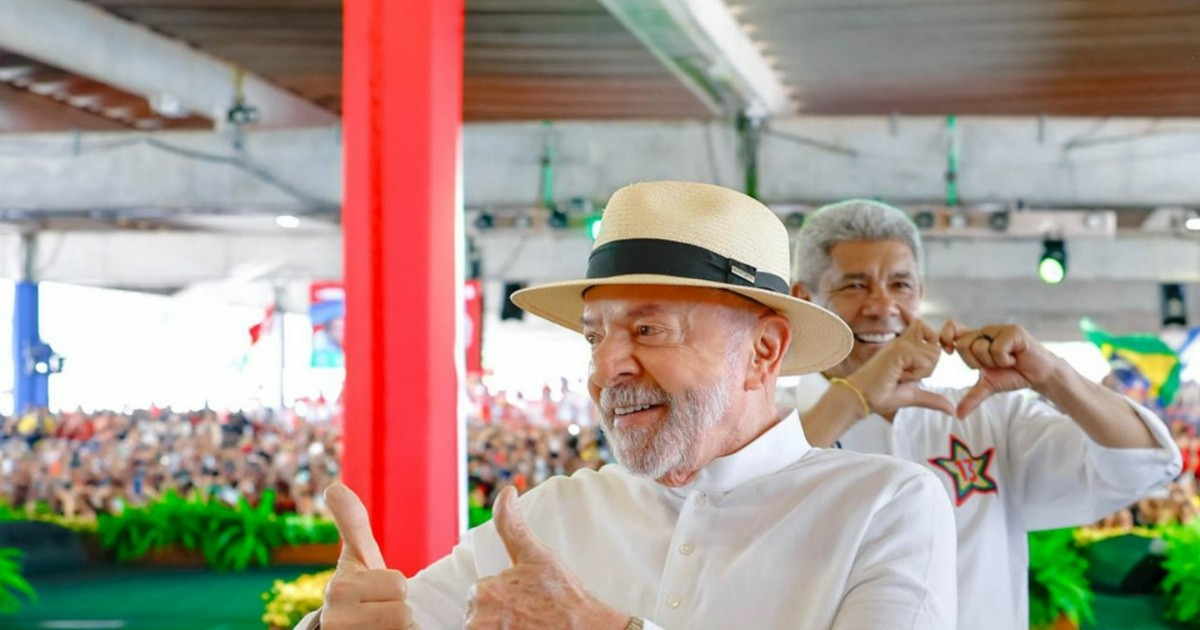
On Sunday, Luiz Inácio Lula da Silva accomplished an unprecedented comeback in Brazil's electoral history, securing victory in the presidential runoff with 51.78% of the vote against the far-right senator Flávio Bolsonaro, who garnered 48.22%. These results were confirmed by Brazil’s Superior Electoral Court with 99.98% of votes counted.
The margin between the candidates exceeded four million votes: Lula received 64,241,049 votes, while Bolsonaro obtained 59,818,719. This victory marks the 80-year-old leftist's fourth term as Brazil’s leader, which has been described as a "breath of fresh air for the global left" by El País.
This achievement is unprecedented since the 1988 constitutional reform introduced the two-round voting system. No candidate who lost in the initial round had ever overturned the result in the runoff. In the first round on October 4, Lula trailed Bolsonaro by about 2 percentage points—45.13% to 47.06%—with a deficit of roughly 2.3 million votes. In the runoff, he not only closed this gap but also won by more than 3.5 percentage points.
A key factor in Lula’s comeback was his victory in Minas Gerais, Brazil's second-largest electoral region. Initially, he secured 43.33% there compared to Bolsonaro's 48.24%, but in the runoff, he triumphed with over 50% against Bolsonaro's 49%. Historically, since 1988, no candidate who has won in this state has lost the national election. Lula also managed to reduce voter abstention from 21.08% to 19.21%, despite runoffs typically seeing higher absenteeism.
The election day was not without its tensions. A judge extended the polling hours by two hours at Lula's campaign request due to reported transportation issues in various parts of the country. Meanwhile, at Bolsonaro’s headquarters in Brasília, the atmosphere was somber; key figures of bolsonarismo remained confined in a tent without making statements. According to El País, some supporters left the headquarters "amid shouts and curses."
In stark contrast, thousands celebrated in Cinelandia Square in downtown Rio de Janeiro with fireworks and music. Former Colombian President Gustavo Petro was among the first to respond, tweeting, "Fascism has been stopped in Latin America in Brazil."
Lula's win carries significant implications for Cuba. Under his leadership, Brazil has emerged as a major South American ally to the Cuban regime: in July, 48 tons of powdered milk were sent, a 20,000-ton food package was announced in March, and medications to treat around 1,000 patients were donated in May.
A victory for Flávio Bolsonaro would have marked a return to his father's policies, who, during his term (2019-2022), broke the tradition of voting against the embargo on Cuba at the United Nations.
However, the bilateral relationship is not without its hiccups. Cuba owes Brazil $676 million related to loans for the construction of the Port of Mariel, with payments delinquent since May 2018. Additionally, nearly 17,000 Cubans applied for asylum in Brazil between January and May 2026, a reflection of the structural crisis prompted by the dictatorship.
In Washington, President Donald Trump simply remarked on Sunday, "I don't want to get into that matter, but we’re watching." Lula's victory concludes a campaign overshadowed by the former president Jair Bolsonaro, who in September 2025 was sentenced to 27 years and three months in prison by the Supreme Federal Court for leading a coup attempt, designating his son Flávio as a candidate from house arrest.
Impact of Lula's Victory on Brazil-Cuba Relations
How did Lula manage to secure victory in the runoff elections?
Lula achieved victory by overturning a deficit from the first round, capitalizing on a strong performance in Minas Gerais, and reducing voter abstention rates.
What are the implications of Lula's win for Cuba?
Lula's victory strengthens Brazil's alliance with Cuba, highlighted by recent aid and support, including shipments of food and medicine.
How did Lula's campaign address logistical issues on election day?
Lula's campaign successfully petitioned a judge to extend polling hours due to reported transportation issues, ensuring broader voter access.