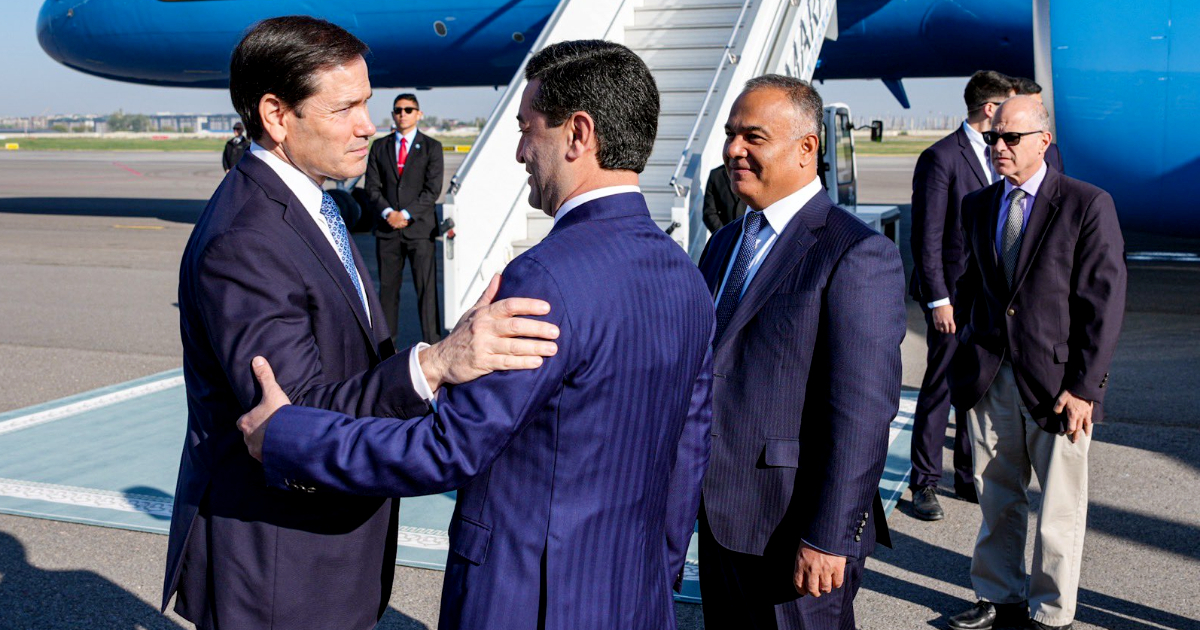
The recent public invitation by Secretary of State Marco Rubio urging Cubans to form a "discreet partnership with the CIA" to facilitate change on the island has sparked a wave of skepticism across social media platforms.
Critics have pointed out a disturbing similarity between Rubio's plea and the unfulfilled promises made by the Trump administration to the Iranian people. These promises ultimately led to thousands of deaths, executions, imprisonments, and left the ayatollahs' regime unscathed.
Last Thursday, Rubio took to his official account on X to declare: "To those seeking positive change in Cuba: now is the time. Disillusionment from broken promises, corruption, and the privileged lives of a few—take this opportunity to create the change you desire through a discreet partnership with the CIA."
One of the most talked-about responses came from user @BanditTradez, who directly questioned the Secretary of State: "Where have I heard this before? Oh, right, the poor Persian people. How did that work out for them? I think they're still waiting."
The comment was accompanied by a post from Trump where the former president had addressed the Iranians in January, stating: "Iranian patriots, KEEP PROTESTING! [...] HELP IS ON THE WAY. #MIGA!"
Trump's call to Iranian protesters—coupled with the slogan "Make Iran Great Again"—came during a time of heightened unrest in late December 2025. The outcome was disastrous: according to the human rights organization HRANA, by January 14, 2026, at least 2,571 people had died, including 12 minors, and nearly 16,784 individuals were detained. The clerical regime's security forces showed no cracks, and Trump never clarified what "help is on the way" actually entailed.
The parallel didn't go unnoticed among Cubans. Social media reactions were a mix of exasperation, irony, and distrust: "What season is this?", "After Iran, which means never", "The same old story" and "blah, blah, blah" were some of the phrases circulating among Cuban users in response to Washington's latest call.
This skepticism is grounded in tangible reasons. Since May 2026, Trump has repeatedly mentioned the deployment of the USS Abraham Lincoln aircraft carrier close to Cuban shores—first at 100 yards, then at 50—in July, he promised that "many things" would happen in Cuba within two months, and in September he reiterated threats of military ships during the "Shield of the Americas" summit in New York. None of these declarations materialized into verifiable actions.
The Cuban regime responded with institutional mockery. Foreign Minister Bruno Rodríguez Parrilla warned that Cuban shores have "dog teeth," while Deputy Minister Carlos Fernández de Cossío ridiculed Rubio's call, likening it to a toothpaste advertisement.
The pattern highlighted by @BanditTradez—pledges of support to people living under dictatorships without follow-through or repercussions for the regimes—is precisely what fuels the despair of those who have awaited for decades for Washington's words to turn into action.
For many Cubans, Rubio's message feels all too familiar: "After Iran, which means never."
Key Questions on Rubio's Call to Cubans
What did Marco Rubio say to Cubans?
Marco Rubio encouraged Cubans to form a "discreet partnership with the CIA" to promote change in Cuba.
Why are some people skeptical of Rubio's message?
Skepticism arises due to past experiences, such as the unfulfilled promises made by the Trump administration to Iran, which led to tragic outcomes without any significant change.
What was the reaction on social media to Rubio's call?
Social media reactions included a mix of sarcasm, disbelief, and criticism, with many users drawing parallels to previous unfulfilled promises to other nations.