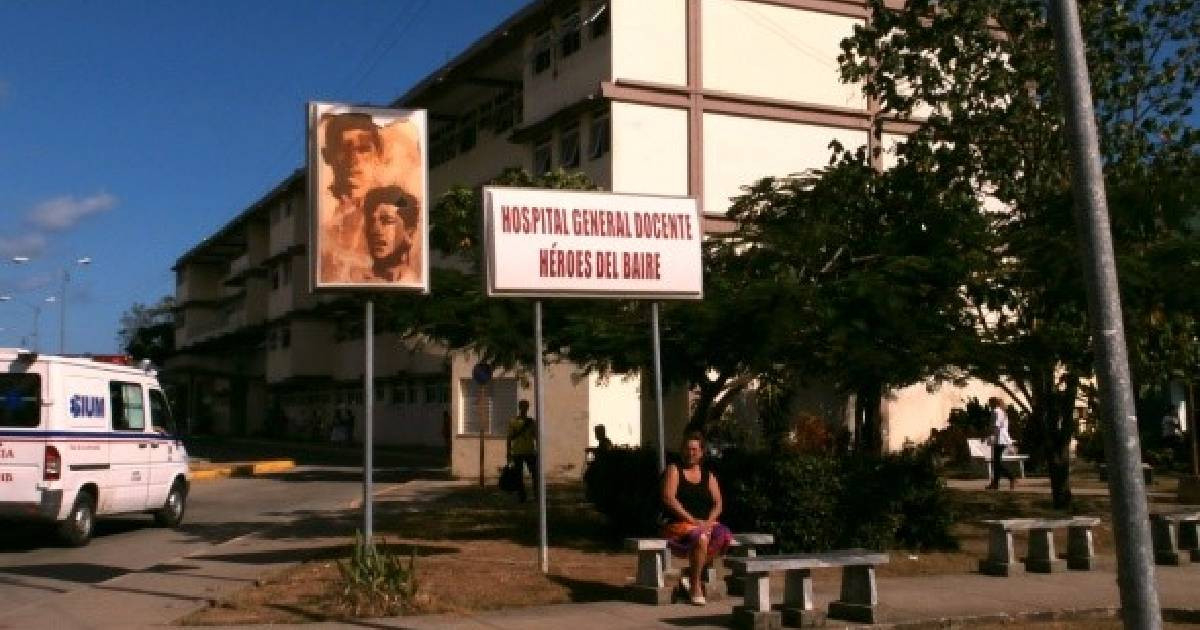
A woman had to return home without treatment after visiting the Héroes del Baire Hospital in Isla de la Juventud in the early hours. Her son reported that the attending physician admitted he was unsure of what to prescribe due to a lack of resources.
Ángel Orlando Baños Adela shared the incident on Facebook, explaining that his mother began experiencing persistent vomiting and diarrhea early Friday morning. Without access to an ambulance, a neighbor volunteered to accompany her to the hospital, arriving around 3:00 a.m.
The complaint highlighted that power cuts disrupted phone service and uncertainty over fuel availability complicated access to emergency transportation.
In the hospital's emergency room, the doctor suggested administering an IV. However, according to Baños, the solution provided was merely "water," and no effective treatment was given for her symptoms.
"How can someone arrive at an emergency room with severe symptoms and leave without a solution because resources are supposedly lacking?" questioned Baños. He noted that his mother managed to recover at home, but warned that others might not be as fortunate.
The post attracted numerous comments, with others sharing similar experiences with Cuba's healthcare system. One commenter mentioned their father died in intensive care at the same hospital due to a lack of IV fluids, while another recounted an aunt's death from a heart attack after waiting three hours for an ambulance in La Fe.
A Havana resident shared an incident where, after seeking emergency care for severe skin poisoning, the doctor remarked that "no one dies from something on the skin" and mentioned the absence of hydrocortisone.
"It's as if falling ill is forbidden in Cuba, yet we continue to endure it," wrote one user. Another blamed the healthcare system rather than the doctors and nurses working under scarce conditions.
Baños encapsulated his grievance with a pointed critique of the challenges faced by patients seeking medical help. "The health of a nation shouldn't rely on chance, fuel availability to reach the hospital, or hoping for divine intervention due to lack of resources," he wrote.
In February, Health Minister José Ángel Portal Miranda told the AP that Cuba's healthcare system was on the brink of collapse, with no short-term solutions in sight.
President Miguel Díaz-Canel acknowledged in August that only 30% of essential medication inventory was accessible.
The Héroes del Baire Hospital has been embroiled in previous controversies. In August, María Luisa Mendoza, 27, and sister of Cuban pitcher Héctor Mendoza, died there after being admitted with hemorrhagic dengue. Reports indicated a lack of IV fluids, forcing her family to seek them externally. Tragically, she suffered cardiac arrest before they returned.
In October, inadequate emergency transportation was again criticized when an elderly man died after waiting eight hours for a Medical Emergency Integrated System (SIUM) ambulance at La Demajagua. The official explanation cited insufficient fuel to complete the journey.
In September, the municipal health director admitted the hospital faced a shortage of specialists in ten areas, equipment deterioration, and low availability of medications and supplies.
Critical Challenges in Cuba's Healthcare System
Why did the woman return home without treatment from the hospital?
The attending physician was unsure of what to prescribe due to a lack of resources, leading to her discharge without effective treatment.
What challenges did the patient face in reaching the hospital?
Power cuts disrupted phone service, and uncertainty over fuel availability made accessing emergency transportation difficult.
How has the public reacted to the healthcare system's shortcomings?
The public has shared numerous similar experiences, expressing frustration and blaming systemic issues rather than individual healthcare workers.