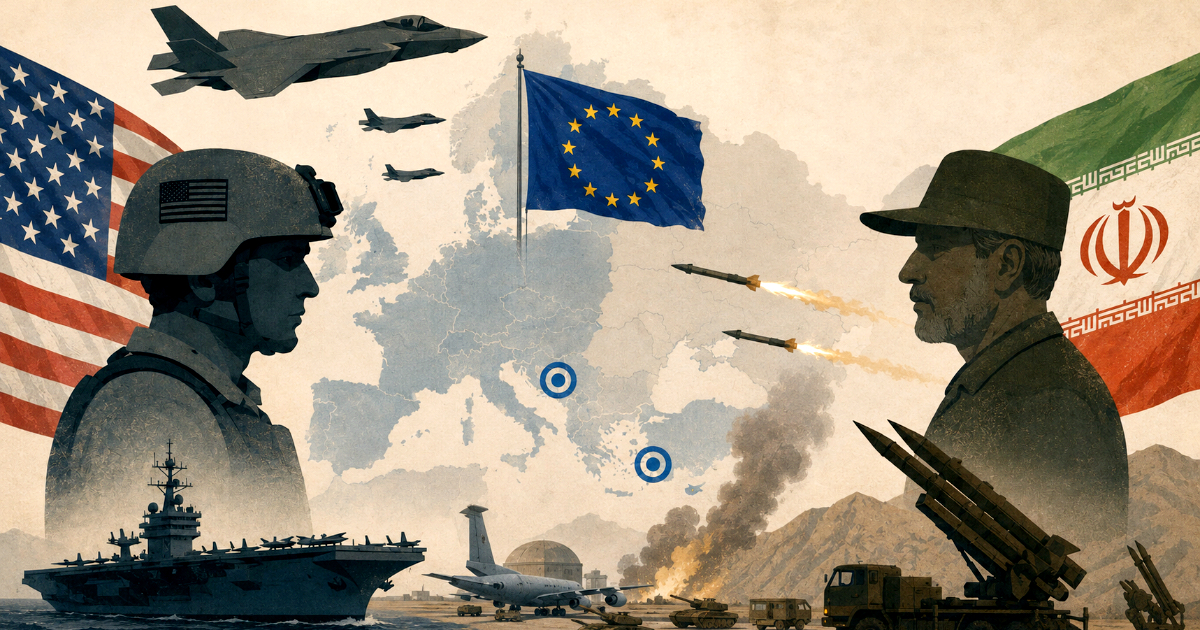
On Friday, U.S. Director of National Intelligence Jay Clayton sent an unclassified memorandum to Secretary of State Marco Rubio, highlighting Iran's significant escalation in efforts to target American personnel abroad. The memo warns of lethal plans in "advanced stages" in the Middle East and other unspecified countries.
Obtained by CBS News and also shared with CIA Director John Ratcliffe, the document does not specify particular targets or methods, nor does it suggest that the attacks are imminent. Clayton explained that declassifying the memo was necessary to inform a broader audience, aiming to alert potential targets among U.S. diplomatic and security personnel in the region.
This warning coincided with discreet actions by the State Department: between October 21 and 22, it ordered the evacuation of non-essential staff and family members from the embassy in Riyadh and the consulates in Jeddah and Dhahran, Saudi Arabia.
Following these steps, Washington also scaled back its presence in embassies in Jordan, Lebanon, Qatar, and the United Arab Emirates, which are now operating under "restricted operations" mode. State Department spokesman Tommy Pigott clarified that the formal evacuation order applied only to Saudi Arabia, dismissing some reports of a broader regional evacuation as inaccurate.
Meanwhile, the Pentagon quietly repositioned troops and military assets from various locations in the Middle East in response to direct threats from Iran and the Iran-backed Houthi movement in Yemen. This is all part of an ongoing conflict between Washington and Tehran that began on February 28, 2026, when U.S. and Israeli forces attacked Iranian military and nuclear sites in an operation called "Epic Fury."
In retaliation, Iran launched attacks against Israel and U.S. bases in the Persian Gulf, and tensions have remained high ever since. The Houthis have escalated their attacks on Saudi Arabia, with the deadliest assault occurring on October 10 against Riyadh's airport, resulting in 12 deaths and 309 injuries, including one American citizen. Another attack on Dammam airport on October 21 claimed at least two more lives.
Iranian General Ali Abdolahi declared on Saturday that Iran would not allow U.S. military ships to return to the Persian Gulf "under any circumstances." Iranian security officials, as reported by Reuters, stated that Tehran has plans to target up to seven undersea communication cables in the Strait of Hormuz should Washington resume bombing campaigns.
Iran has a documented history of plotting against U.S. officials: in 2022, it attempted to hire hitmen to eliminate former National Security Advisor John Bolton, and a plan to target Donald Trump was foiled in 2024 before the presidential election. In July 2026, Israel warned the U.S. of a new alleged Iranian plot to assassinate the president.
Former President Trump, speaking at a rally in Fort Myers, Florida, on Thursday, suggested that the U.S. "might do another little Epic Fury" if a negotiated agreement with Tehran isn't reached, indicating that military pressure remains an option as the intelligence community raises the alert level.
Understanding Iran's International Threats
What is the current status of Iran's plans against U.S. personnel?
U.S. intelligence reports that Iran's plans to target American personnel abroad are in "advanced stages," particularly in the Middle East and other unspecified locations. However, specific targets and methods have not been disclosed, and the attacks are not considered imminent.
How has the U.S. responded to these threats?
In response, the U.S. State Department has evacuated non-essential personnel from certain embassies and consulates in the Middle East, while the Pentagon has repositioned military assets in the region. These actions are part of broader efforts to mitigate the risks posed by Iranian threats.
What historical context led to the current tensions between the U.S. and Iran?
The ongoing conflict stems from an operation on February 28, 2026, when U.S. and Israeli forces targeted Iranian military and nuclear facilities. In retaliation, Iran attacked Israeli and U.S. positions, leading to heightened tensions that persist today.