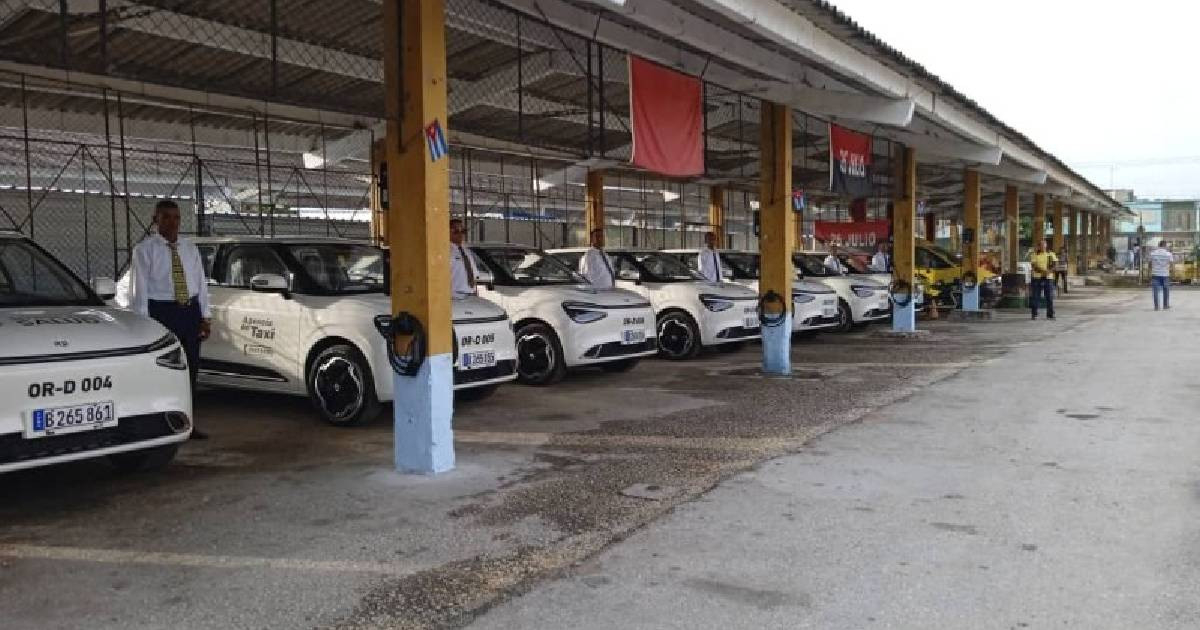
Holguín's push towards electric mobility is encountering significant obstacles due to an incomplete infrastructure. Of the four charging stations installed in the province, only one remains operational, as the others lack the necessary solar backup and energy storage systems.
The issue was highlighted during a working visit by Marcos Bermúdez de la Torre, the vice minister of Transport, who assessed the transport sector in an area plagued by fuel shortages and a deteriorating vehicle fleet, according to the official newspaper ¡Ahora! reported on Saturday.
René Rodríguez Morales, the provincial delegate of Transport, acknowledged the "continuing challenges preventing perfect service delivery to the public," but he assured that alternatives being explored have received "great acceptance."
The province boasts 2,535 electric tricycles. Of these, 30 are owned by the Agencia de Taxis Cuba, and five belong to the Provincial Transport Company, while the remaining 2,500 are privately owned, operating under special licenses and permits.
The Provincial Transport Company currently supports 33 routes using rented vehicles that purchase fuel in foreign currency, with plans to expand coverage to 40 routes. Additionally, they are constructing 10 Ecomobiles in collaboration with the KTP Factory, although only one has been completed and is undergoing testing.
During the meeting, Bermúdez introduced three national measures aimed at easing vehicle acquisition, expanding import possibilities for electric vehicles, and facilitating both state and private enterprise participation in the sector. These measures are part of the 176 economic and social policies approved in June by the National Assembly of People's Power.
Measure 146 removes the restriction limiting individuals to purchasing six vehicles over five years, while measure 147 allows for the direct import of electric cars by individuals, a possibility previously restricted to electric motorcycles.
Meanwhile, measure 148 enables legal entities, both state and private, to assemble, import parts, and commercialize electric vehicles, including tricycles and motorcycles. However, only 12 vehicles have been approved under this modality nationwide, in Villa Clara, Mayabeque, and Pinar del Río. Holguín has yet to receive approval for any.
The province’s energy landscape further complicates the expansion of this alternative. Holguín has access to a mere 70 MW compared to a demand of 225 to 240 MW, with some neighborhoods experiencing blackouts lasting up to 51 hours. Additionally, interprovincial transport has been nearly halted since the beginning of the year due to fuel shortages.
In August, the province acquired 10 electric Dongfeng cars, each costing over 19,000 euros, to provide free transportation for patients undergoing hemodialysis treatment.
Earlier, in February, authorities began issuing temporary permits for tricycles and motorbikes as a response to the challenges of conventional transportation.
The visit concluded with a call for provincial companies to update their internal procedures and capitalize on the new measures.
However, as long as three charging stations remain non-operational and electricity generation falls significantly short of demand, the expansion of electric mobility will continue to be hampered by infrastructural problems that the announced initiatives have yet to resolve.
On June 15, the solar charging station El Girasol, Holguín's first "solinera," was inaugurated, operated by the private micro-enterprise Frenas Conmigo. It generates 30 kilowatts through inverters and 60 through batteries, operates 12 hours daily, and provides 10 jobs.
Challenges and Opportunities in Holguín's Electric Mobility
What are the main obstacles to electric mobility in Holguín?
The primary obstacles include an incomplete charging infrastructure, with three out of four stations non-operational, and a significant shortfall in electricity generation compared to demand.
What measures have been introduced to support electric vehicle adoption?
Three national measures have been introduced: easing vehicle acquisition restrictions, allowing direct import of electric cars by individuals, and enabling both state and private entities to assemble and commercialize electric vehicles.
How is Holguín addressing the energy shortfall?
The province is struggling with an energy shortfall, having only 70 MW available against a demand of 225 to 240 MW. This has resulted in extended blackouts in some areas, further complicating the electric mobility expansion.