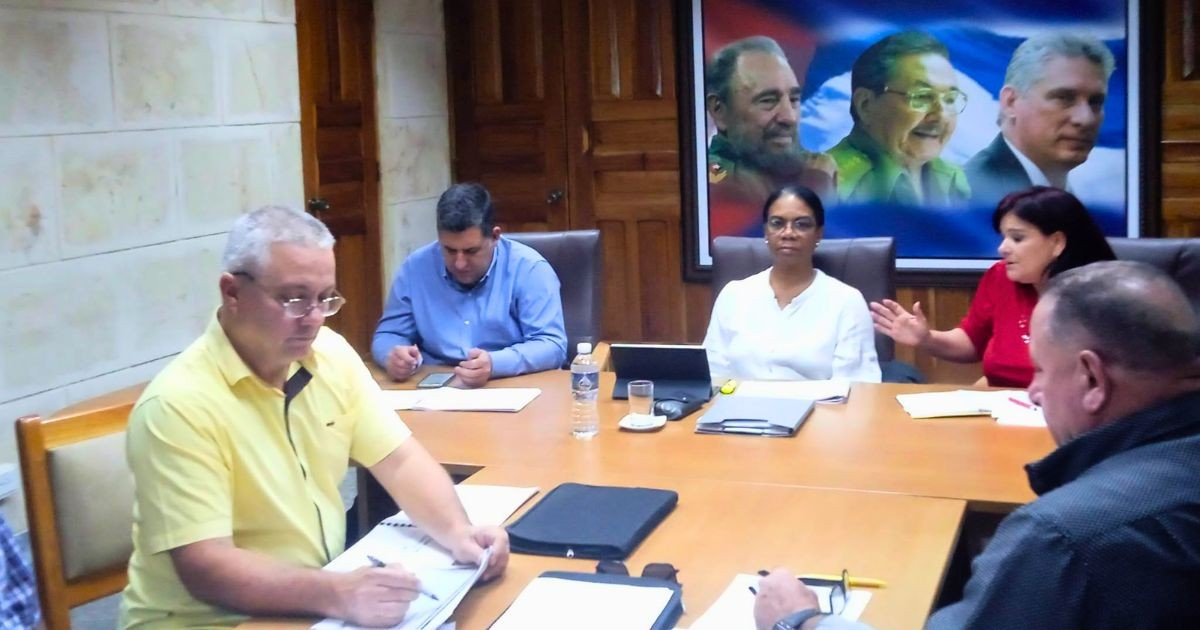
Over 169,700 residents of Pinar del Río have endured weeks—and in some instances, months—without consistent access to clean drinking water. The Cuban regime, true to form, has opted for more meetings and proposed programs as a response.
This past Saturday, the Provincial Government of Pinar del Río announced that Deputy Prime Minister Inés María Chapman Waugh conducted a follow-up visit to Vueltabajo. She was joined by Rubén Campos Olmos, the General Director of the Electric Union, and Junior Alexis Pérez from the National Institute of Hydraulic Resources.
According to the official publication, Chapman emphasized the need to prioritize water supply, suggesting the implementation of an integrated water-energy program. Despite being labeled a "priority," the urgency seems questionable given the prolonged time it has taken to address the issue.
Underlying Causes of the Water Crisis
The government has identified two primary factors for the crisis: the malfunction of 46 pumping units and six repumping systems, coupled with a national energy crisis that leaves pumping stations without power for over 16 hours daily. However, the official statement fails to acknowledge the full extent of the accumulated disaster. By mid-month, some communities in the province had been without this vital supply for 67 days to more than three months, and the 30-inch pipeline supplying over 60% of the capital’s population was operating with only half its equipment.
The human impact of these technical issues is devastating. Residents of La Estrella, in San Juan y Martínez, reported over four months without household water supply, resorting to boiling rainwater for drinking and cooking. On Calle Real, the main street of the Pinar del Río city, residents had been without water for more than 50 days, with areas near the pediatric hospital facing even longer delays.
Health and Economic Implications
In Herradura Junction, home to approximately 12,000 people, there was a distressing record of over two years without regular water service reported in April.
By the end of August, there were three active hepatitis outbreaks in municipalities across the province, linked to the collapse of the water purification system. In September, the provincial government admitted to spending over 100 million pesos without resolving the issue, while the Provincial Communist Party Bureau continued to discuss the same longstanding complaints without any service improvement.
This crisis is not unique to Pinar del Río. The regime recently admitted that approximately 2.5 million Cubans were experiencing disrupted or inadequate water service, with over 80% of national incidences attributed to power outages and pumping failures.
Public Reaction: Skepticism and Frustration
The public's reaction to the latest official announcement was one of skepticism, barely concealing their exasperation. "Hahaha, now it's like the third one coming for the same thing, the only thing not coming is the water hahaha," an internet user commented. Another was more vivid: "I only see a lot of officials gathered with plenty of light, trying to solve what many others in meetings with air conditioning and water bottles have tried to resolve, and it almost always ends with a good lunch and see you next time."
Responses ranged from irony to desperation. "They discovered lukewarm water..." remarked one user. "Give us hopeful news, the people don't care about those kinds of lies, the people need a solution to the problem," another voice demanded. "In Cuba, we are experts at describing problems; I would like, before I die, to see in my country a leader of any kind explaining, proposing, devising, and implementing a strategic, logical plan to solve at least one problem, of the many that plague us," lamented another individual.
Capturing the collective sentiment, one internet user humorously but resignedly remarked: "They'll have to call NASA."
Understanding the Water Crisis in Cuba: Key Questions Answered
What are the primary causes of the water shortage in Pinar del Río?
The main causes include the breakdown of pumping and repumping equipment, along with a national energy crisis that leaves these stations without power for extended periods.
How is the government addressing the water crisis?
The government has responded by holding meetings and suggesting integrated water-energy programs, but these actions have yet to yield significant improvements.
What has been the public's response to the government's handling of the crisis?
Many citizens have expressed skepticism and frustration, pointing out the lack of tangible solutions and the repeated nature of government responses.