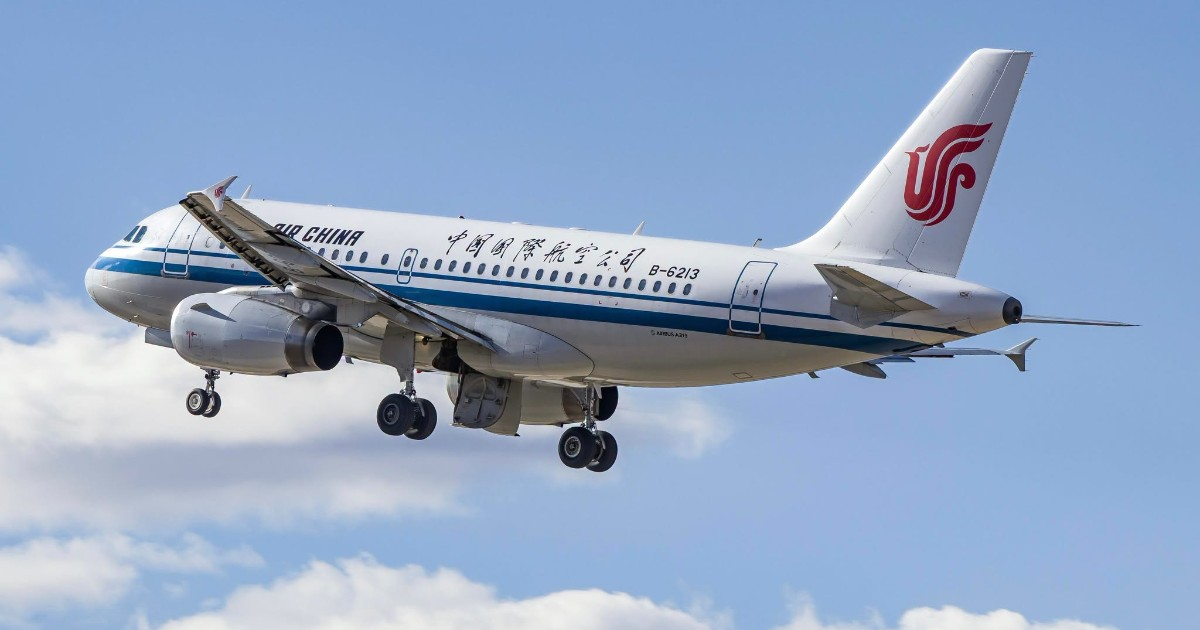
The Air China Boeing 787-9 Dreamliner, identified by its registration B-1368, successfully completed flight CA865 from Madrid to Havana on Wednesday. The following day, it returned on flight CA866, taking the Havana–Nassau–Madrid route, as noted in the flight tracking records from Flightradar24 reviewed this past Saturday.
Both flights were officially recorded as landed, indicating the successful completion of two regular rotations following a series of cancellations in the early weeks of October.
Flight CA865 departed Madrid at 21:14 UTC on Wednesday and touched down in Havana after a journey lasting nine hours and four minutes. The return flight, CA866, left Havana on Thursday, stopping for 50 minutes in Nassau, Bahamas, before reaching Madrid later that day after nearly eight hours in the air. This aircraft had previously completed a similar rotation on October 18, also stopping in Nassau.
These operations differ from the special flight CA590, which was arranged on October 19 to transport passengers stranded by cancellations before October 10. That special service was organized at the request of the Chinese Embassy in Cuba, which explained that while the boarding was complimentary, seating was limited.
The backdrop to this situation is Cuba's shortage of Jet A-1 aviation fuel. The Cuban Air Navigation Company issued NOTAMs (Notices to Airmen) declaring the unavailability of fuel at ten international airports—among them Havana, Varadero, Holguín, and Santiago de Cuba—effective until November 1. This has forced airlines to refuel in third countries, hence Air China's stopover in Nassau on return flights.
The Chinese Embassy attributed the cancellations of flights CA865 and CA866 to "technical reasons," without detailing their nature or confirming any connection to the ongoing fuel scarcity affecting the island since early this year.
The October cancellations caused significant inconvenience for hundreds of Cubans living in Spain. Passengers had to purchase alternative tickets, cover accommodation costs, and wait up to eight days for their luggage. The parcel service D'Nodarse acknowledged having pending shipments with no delivery date, and one passenger reported that her mother had paid 1,200 euros for a ticket on October 14 that was canceled, with the only option being to wait for up to 15 days.
The Madrid–Havana route of Air China typically operates twice a week—on Wednesdays and Saturdays—within the Beijing–Madrid–Havana itinerary. This connection remains important for the Cuban community in Spain, especially after Iberia suspended its direct route on June 1, extending the halt until June 30, 2027. Other airlines such as Air Canada, Turkish Airlines, and WestJet have also exited the market this year.
Flight records do not clarify whether Air China is selling new seats normally or is still focused on rebooking passengers affected by previous cancellations.
The published schedule includes CA865 departures from Madrid on October 28 and 31, and November 4 and 7. However, inclusion in the calendar does not ensure that all services will proceed as planned. Travelers with reservations should confirm their flight status directly with the airline before heading to the airport.
Air China and Flight Operations in Cuba
Why did Air China cancel its flights to Havana in October?
The cancellations were attributed to "technical reasons" by the Chinese Embassy in Cuba, though no specific details were provided. There are also ongoing issues related to the shortage of Jet A-1 aviation fuel in Cuba.
What should passengers do if they have reservations on Air China's Madrid–Havana route?
Passengers should verify the status of their flights directly with Air China before traveling to the airport, as scheduled flights may not always proceed as planned.
How is the fuel shortage in Cuba affecting international flights?
The fuel shortage has led to the unavailability of Jet A-1 aviation fuel at key airports in Cuba, prompting airlines to refuel in other countries, such as Nassau, during return flights.