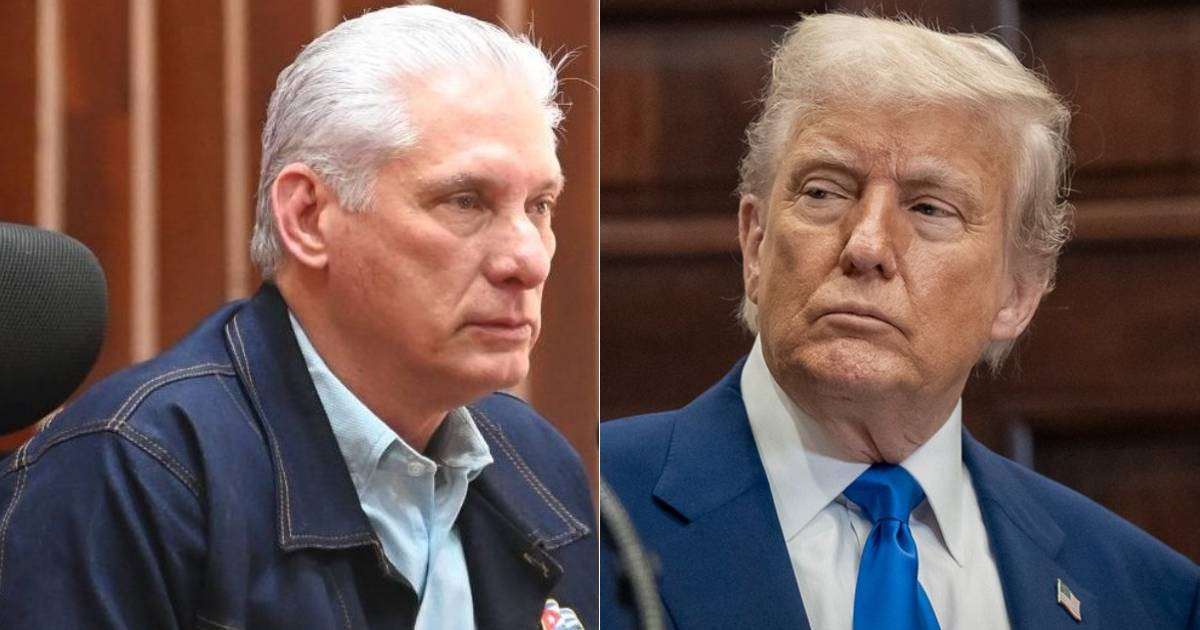
Miguel Díaz-Canel, the President of Cuba, took to Facebook on Friday to counter Donald Trump's statements about Cuba. In his post, Díaz-Canel accused the United States of harboring ambitions for domination and staunchly defended January 1, 1959, as the date marking Cuba's true independence.
"The U.S. government clearly does not abandon its ambitions of domination over Cuba," stated Díaz-Canel, affirming that the Cuban people are resolute in defending the independence they achieved with the revolution's victory. The post included hashtags such as #CubaNoEsUnaAmenaza and the phrase "the blockade is."
The Cuban leader's response came shortly after Trump, during a rally in Fort Myers, Florida, joked about halting a U.S. warship 50 yards off the Cuban coast as it returned from operations in Iran. Trump also mentioned sending Secretary of State Marco Rubio to "seal the deal."
Historical Context and Recent Reactions
The claim that 1959 marked Cuba's independence is not new in Díaz-Canel's rhetoric. Following Trump's description of Cuba as a "completely failed state" during the U.N. General Assembly in September, Díaz-Canel asserted that the island's freedom was secured by the revolution and vowed that his government would not allow it to be lost.
Additionally, Cuban Foreign Minister Bruno Rodríguez Parrilla responded to U.S. declarations with a message on X, rejecting any threats against Cuba and warning that its coasts, beyond their beaches, are "inhospitable for those with hostile intentions and domination desires."
U.S. Political Maneuvers and Cuban Response
Meanwhile, Rubio issued a call on Friday urging Cubans to "discreetly cooperate with the CIA" and aid in bringing about change on the island. He described the current situation as an opportunity, pointing to broken promises, corruption, and the privileges enjoyed by a minority.
These exchanges occur amid stalled indirect communications between Washington and Havana. According to The Atlantic, the Trump administration demanded Díaz-Canel's removal as a precondition for progress, while the Cuban chargé d'affaires in Washington recently dismissed the notion of formal negotiations.
Implications for U.N. Embargo Vote
The rising tensions also set the stage for the upcoming annual U.N. General Assembly vote on a resolution calling for the end of the U.S. embargo, scheduled for October 28. Díaz-Canel predicted that Cuba would receive less backing than in previous years. In 2025, the resolution garnered 165 favorable votes, compared to 187 in 2024.
Key Questions About U.S.-Cuba Relations
What does Díaz-Canel claim about Cuba's independence?
Díaz-Canel claims that Cuba achieved its independence on January 1, 1959, with the triumph of the revolution.
How did Trump react to the situation with Cuba?
Trump joked about positioning a U.S. warship near Cuban waters and mentioned sending Marco Rubio to "seal the deal" with Cuba.
What is the significance of the U.N. General Assembly vote for Cuba?
The vote is significant as it addresses the resolution to end the U.S. embargo on Cuba. Cuba's support has been declining over the years.