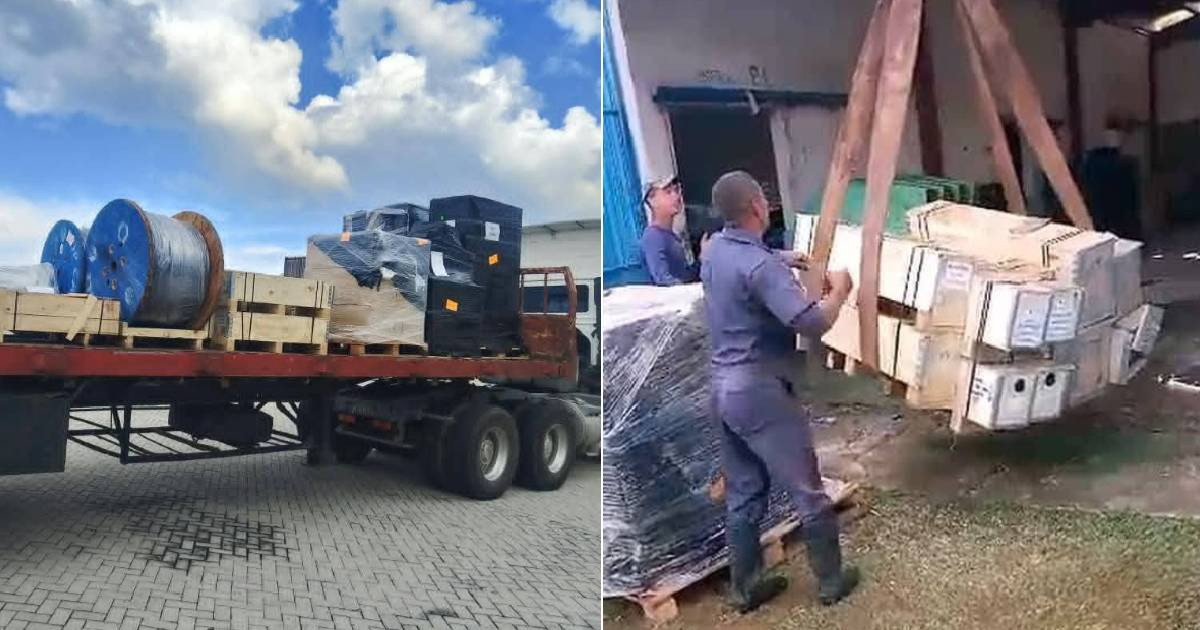
In a bid to enhance water distribution to approximately 105,000 residents in Manzanillo, Granma, the United Nations Children's Fund, or UNICEF, has donated seven hydraulic units. This effort targets a city where certain districts have endured over a year without adequate water service.
Yudelkis Ortiz Barceló, the Communist Party's First Secretary in the eastern province, shared the news on Facebook on Thursday. She clarified that two of the larger units are designated for the city's upper area, while the remaining five will serve the lower region, known as the City of Guacanayabo's Gulf.
According to Ortiz Barceló, the equipment is expected to contribute approximately 396 liters per second to the water network. Despite this, residents remain skeptical due to their prolonged hardships with water supply interruptions.
In response to the announcement, one local from Manzanillo commented that the city's upper sector has been without water for "a year and 10 months." Another resident voiced skepticism, saying, "I'll believe it when I see the water."
Reflecting the sentiment of many, a resident highlighted the "significant political will but insufficient funding to address a critical need of our people."
Manzanillo's water crisis stems from inadequacies in well fields, storage sites, and distribution infrastructures. Radio Bayamo, a local broadcasting station, acknowledged that some hydrometric sectors have gone over a year without water.
The dire state of the water supply was further highlighted in September when a group manually drilled a 36-meter-deep well, sparking discussions on social media about working conditions and the hardships of accessing water in the area.
This donation from UNICEF is part of broader initiatives in eastern Cuba. Following Hurricane Melissa in November 2025, the UN agency set up water purification plants in Granma to provide daily access to over 21,000 people.
Additionally, a program announced last August aims to improve water and sanitation facilities in 30 schools across Guantánamo, Granma, and Santiago de Cuba, funded by Japan with close to one million dollars.
Manzanillo's challenges are part of a larger national crisis acknowledged by Cuban authorities. Official data reveals that around 2.7 million Cubans, or about 35% of those receiving water through networks, either lack water at home or receive an inadequate supply.
Moreover, the water system's reliance on electricity further complicates the situation, as 87% of the country's water systems depend on power, making supply vulnerable to frequent power outages.
While the seven donated units provide some relief to Manzanillo's water woes, they do not address the underlying structural issues that leave many residents without consistent access to water for months.
Understanding Manzanillo's Water Crisis
What is the main cause of Manzanillo's water shortage?
Manzanillo's water shortage is primarily due to deficiencies in well fields, storage facilities, and distribution networks.
How does the electrical system affect water supply in Cuba?
Since 87% of Cuba's water systems rely on electricity, power outages significantly disrupt water distribution.
What actions has UNICEF taken to address water issues in eastern Cuba?
UNICEF has installed water purification plants and launched programs to improve water and sanitation in schools across the region.