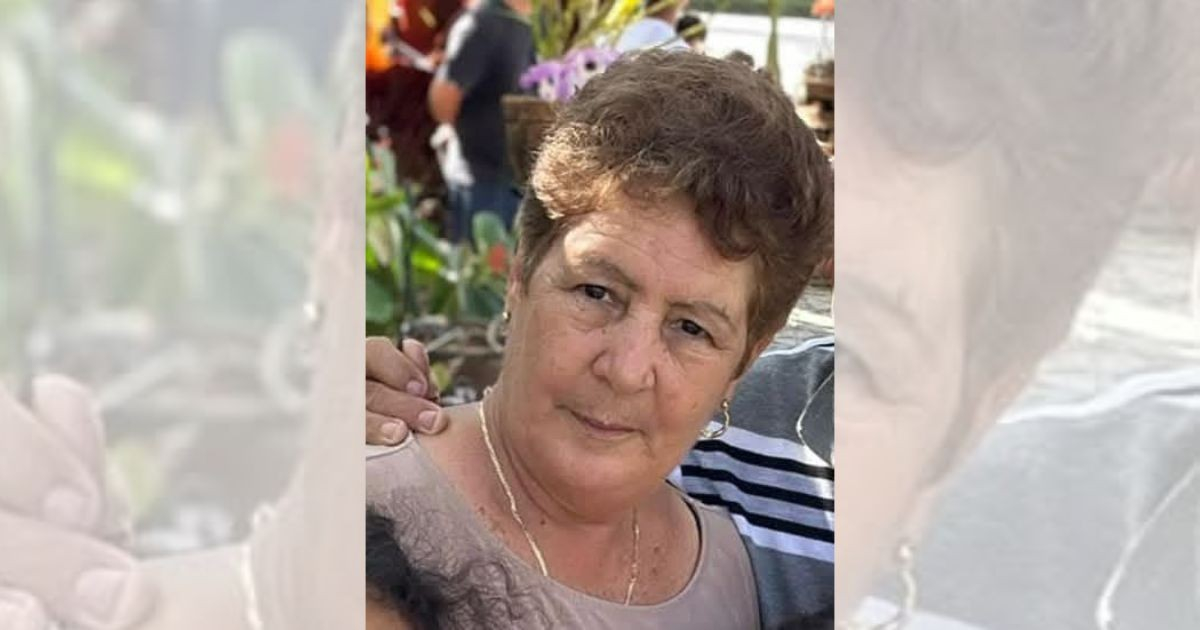
The University of Pinar del Río "Hermanos Saíz Montes de Oca" (UPR) announced the passing of Juana María Sánchez Pérez, a distinguished educator from their Preschool Education Department, igniting a wave of condolences from colleagues, former students, and friends through a statement on their official Facebook page.
"With deep sorrow, the university community mourns the passing of Juana María Sánchez Pérez, an exceptional educator whose life was devoted to the noble mission of teaching and shaping generations," the institution expressed in their message.
UPR highlighted Sánchez Pérez's extensive dedication to early childhood education, noting her leadership in children's institutions and her continued influence in higher education through sharing her expertise and shaping future professionals.
The statement emphasized that throughout her academic career, she was recognized for her scientific rigor, methodological approach, commitment to her work, and loyalty to the principles guiding her life. Details regarding the cause or exact date of her death, as well as funeral arrangements, were not disclosed by the institution.
The announcement shocked those who knew her. A colleague commented, "I am stunned by this news; I never knew she was ill. She was a great companion, friendly, sociable, and a true professional. My deepest condolences to her family, friends, and especially her colleagues in the Preschool Education Department."
Another online tribute remembered her as an "excellent mother, wife, grandmother, and a peer of exceptional value," while someone else remarked, "I can't believe Juana is gone. She was an extraordinary person and friend, and I fondly remember her in my team."
This loss adds to a series of deaths that have heavily impacted UPR's faculty throughout 2026. On October 13, engineer Elio Antonio Govea Rodríguez, a pioneer of the Industrial Engineering program in Pinar del Río, died in a traffic accident. Just days later, on October 15, Dr. Jorge Candelario Milián Domínguez, a Chemistry professor, passed away. Earlier in May, the university mourned the death of Dr. Mayra Carmona González, former dean of Economic Sciences.
Sánchez Pérez's passing occurs amid a severe structural crisis facing Cuban education. The 2026-2027 academic year began on September 1 with a shortfall of over 20,000 teachers nationwide. Teacher salaries, dictated by Resolution 18/2026 effective July 1, range from 6,130 to 7,735 Cuban pesos per month, equivalent to less than 10 dollars on the informal exchange market, far below the estimated basic basket costing over 50,000 pesos.
To address this shortfall, the Ministry of Education has turned to university students, retired teachers rejoining the workforce, and professionals from other sectors, a move highlighting the exhaustion of a system losing its most experienced educators—whether through emigration, abandonment of the profession, or, as in this case, death—without a viable replacement strategy.
UPR concluded its message with a sentiment capturing the magnitude of the loss: "Today, we do not just say goodbye to a professor; we bid farewell to a woman who made education her life's project, leaving a piece of her soul in every task, every generation, and every heart she touched with her work."
Our heartfelt condolences go out to her family, colleagues, friends, and students.
Impact of Teacher Shortage on Cuban Education
What is causing the teacher shortage in Cuba?
The teacher shortage in Cuba is primarily due to low salaries, leading to emigration and career abandonment. Additionally, the current educational system struggles to replace experienced educators who leave or pass away.
How is the Ministry of Education addressing the teacher deficit?
The Ministry is employing university students, re-engaging retired teachers, and recruiting professionals from other sectors to fill the gap, although these measures reflect the systemic exhaustion.
What are the implications of low teacher salaries in Cuba?
Low salaries lead to financial hardships for teachers, contributing to a high turnover rate, loss of experienced educators, and an inability to meet the basic cost of living.