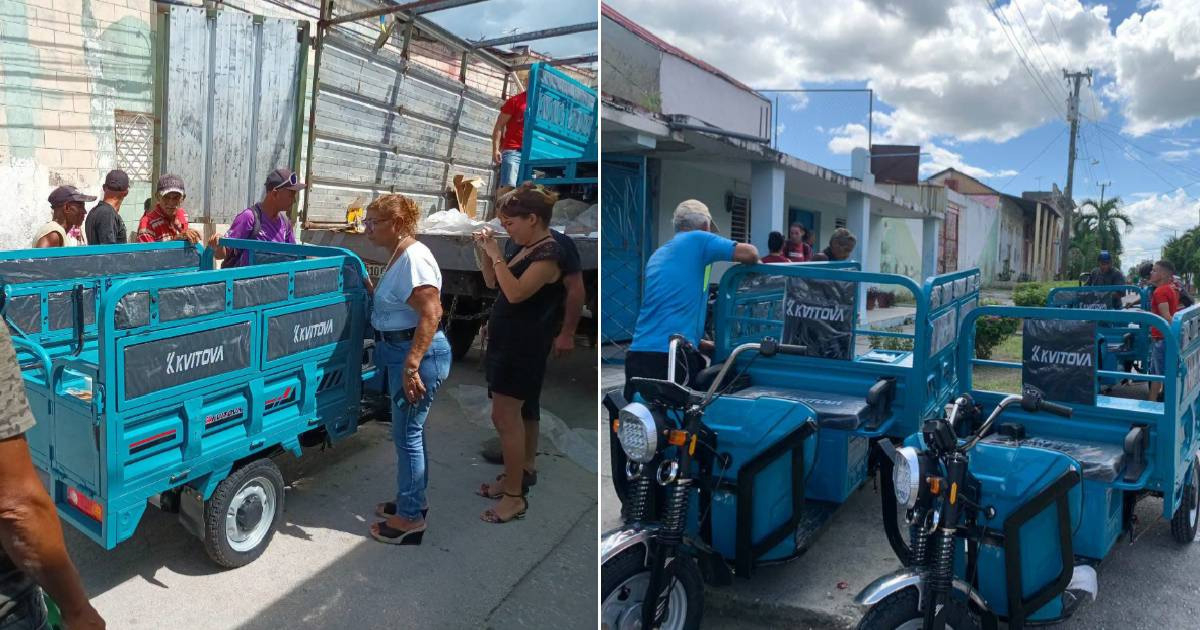
The Guantánamo Communal Services Company has introduced five new electric tricycles to aid in collecting solid waste across the city center, as part of what authorities are calling the "My Ecological City" initiative.
On its official Facebook page, Mi Guantánamo, the Municipal Assembly of People's Power in the eastern region announced the delivery. Photos posted on Monday showed the vehicles being unloaded from a truck at the Valparaíso Basic Unit headquarters of the Municipal Sanitation and Recreation Company.
Officials have praised the initiative as "a step toward a cleaner, more organized, and sustainable city," though this move comes amid an ongoing waste management crisis that remains unresolved.
In 2023, Guantánamo was generating approximately 1,200 cubic meters of waste daily, yet only 400 to 600 cubic meters were being collected, according to official data. This shortfall has left a substantial amount of garbage uncollected, contributing to the persistence of makeshift dumps.
While the announcement of the new vehicles was met with some optimism, many residents also expressed skepticism about their effectiveness. "I hope this is true," commented one resident, capturing the general public's doubt over promises of urban cleanliness improvements.
Another individual questioned the initiative's scope, stating, "Five tricycles won't solve anything in a city that produces over 1,000 cubic meters of garbage daily."
Although the introduction of the tricycles expands the resources available for waste collection in Guantánamo's center, there is no clear information on when they will start operating, how much waste they can transport, or how they will integrate into the current municipal service. Additionally, there is no outlined plan to ensure their sustained impact on the sanitation crisis.
The lack of fuel has sidelined specialized garbage trucks, forcing authorities to resort to emergency solutions such as using wheelbarrow pushers and animal-drawn carts in June, as well as calling for citizen participation.
Recently, Governor Alis Azahares publicly criticized the municipal capital's mayor and the Communal Services Company over the proliferation of illegal dumps and neglecting tree trimming and gardening.
The waste accumulation has direct health implications. In September, three municipalities within the province—Imías, Baracoa, and Guantánamo—were experiencing active dengue transmission with simultaneous circulation of serotypes two, three, and four.
In April, the Alternative Energy Local Development Project, managed by the SME R&R Soltec, was announced. It proposed electric vehicles with solar panels capable of generating 10 kilowatts.
Past efforts in other provinces have not been encouraging. In Havana, a project involving 30 tricycles for the Rampa Popular Council failed because the solar charging station was incomplete by August, with only five units in operation.
In February, Prime Minister Manuel Marrero called for a massive cleanup campaign amid solid waste accumulation, deteriorating communal services, and increasing health concerns in the capital.
The following month, the Ministry of Labor and Social Security announced the redeployment of workers on job interruptions to sanitation tasks, measures considered insufficient by experts given the structural deterioration of the system.
Key Questions about Guantánamo's Waste Management Initiative
What is the "My Ecological City" initiative in Guantánamo?
The "My Ecological City" initiative involves introducing electric tricycles to aid in the collection of solid waste, aiming for a cleaner and more sustainable city.
How much waste does Guantánamo produce daily, and how much is collected?
Guantánamo generates around 1,200 cubic meters of waste daily, but only 400 to 600 cubic meters are collected, leaving a significant portion uncollected.
What challenges are faced by the new waste management efforts in Guantánamo?
Challenges include skepticism about the effectiveness of the tricycles, a lack of detailed operational plans, fuel shortages affecting garbage trucks, and health risks from waste accumulation.