A federal judge in California has issued a ruling to restrict certain operations by the U.S. Department of Homeland Security (DHS) across nine states. The decision stems from concerns that investigations into alleged non-citizen voters are based on unreliable data, potentially intimidating citizens participating in the electoral process.
On Wednesday, Judge Araceli Martínez-Olguín of the U.S. District Court for the Northern District of California delivered the ruling. This decision, as reported by NPR, comes just under two weeks before the legislative elections set for November 3.
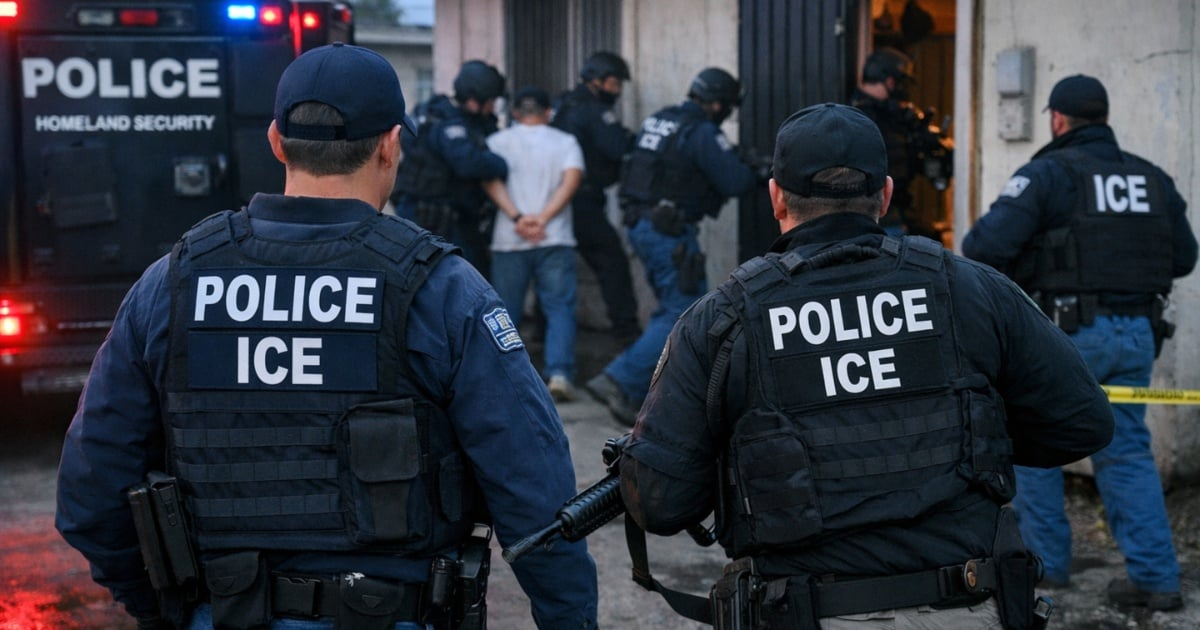
Recently, armed agents from the Homeland Security Investigations (HSI), the investigative branch of Immigration and Customs Enforcement (ICE), have conducted field operations and home visits. They were interrogating individuals suspected of registering or voting illegally without holding U.S. citizenship.
These investigations have also targeted individuals who are now naturalized citizens but are suspected of having engaged in voting activities before acquiring citizenship.
Impact on Voting Rights
Judge Martínez-Olguín preliminarily determined that these federal actions likely infringe upon the Voting Rights Act, which prohibits voter intimidation, threats, and coercion. The 19-page court order specifically questions the quality of records used by authorities to identify individuals allegedly ineligible to vote.
According to NPR, the judge highlighted that the initiative relies on flawed data, and publicized arrests could instill fear among American citizens engaged in voter mobilization efforts or assisting others in exercising their voting rights.
The ruling affects states including California, Connecticut, Georgia, Missouri, Nevada, New York, Pennsylvania, Washington, and Wisconsin. In these areas, the judge has prohibited certain field operations and election-related interrogations when agents know, suspect, or should reasonably suspect that the individuals involved are U.S. citizens.
Controversial Data Usage
Judge Martínez-Olguín also restricted actions based solely on data obtained through U.S. Citizenship and Immigration Services (USCIS) record-matching procedures, without further investigation to verify its reliability. This does not amount to a blanket ban on probing potential electoral crimes. Federal authorities retain the legal authority to investigate cases of illegal registration or voting, provided their actions comply with applicable judicial limitations.
The implementation of the judge's order is temporarily on hold until 5:00 p.m. Pacific Time on Friday, October 23, allowing the federal government to seek a higher court's review.
A significant issue in the case is how the U.S. government compiled lists of individuals suspected of registering to vote without citizenship. The judge cited information from a whistleblower linked to USCIS, who in September warned of expedited database comparisons that could wrongfully include U.S. citizens among alleged offenders.
Government's Response and Legal Actions
The DHS has publicly defended its actions, asserting its mission to identify, prosecute, and deport non-citizens who have voted illegally, while safeguarding the votes of American citizens. The agency stated it does not intend to interrogate or investigate individuals deemed U.S. citizens.
The lawsuit prompting the ruling was filed in September by a coalition that includes the California Nurses Association, National Nurses United, and Voto Latino Foundation, alongside local authorities from San Francisco and Santa Clara County. Plaintiffs argued that federal operations were instilling fear among citizens and organizations promoting voter participation.
In court documents, some members of the plaintiff unions, who obtained U.S. citizenship through naturalization, expressed feeling unsafe attending political events, volunteering as election workers, or voting in person.
Protect Democracy, a legal organization representing the plaintiffs, praised the judge's decision, emphasizing it protects the right of both native-born and naturalized U.S. citizens to participate in elections without intimidation. Attorney Beau Tremitiere accused the DHS of using incorrect data and deploying agents to homes without adequately verifying record accuracy.
Meanwhile, the Department of Justice has taken steps concerning electoral eligibility. NPR reports that it has asked California to segregate 20,000 ballots from individuals presumed non-citizens by federal authorities. Yet, a preliminary review by Los Angeles County election officials found many records on this list were canceled, inactive, or lacked voting history, with some belonging to individuals claiming U.S. birth.
The Justice Department also announced charges on October 19 against 28 California permanent residents accused of registering or voting illegally, which will be resolved through judicial proceedings.
U.S. law reserves participation in federal elections for citizens, with various state audits indicating that proven cases of non-citizen voting are rare.
This judicial order comes amid a period of intense electoral mobilization in the United States, with millions already casting their votes ahead of the November 3 election. As of Thursday, more than 18 million Americans had voted early, with high turnout in states like California, Georgia, Texas, and Florida.
Understanding the DHS Ruling and Its Implications
What prompted the judge to restrict DHS operations?
The judge found that the investigations into alleged non-citizen voters were based on unreliable data, potentially leading to voter intimidation, which violates the Voting Rights Act.
Which states are affected by the ruling?
The ruling impacts California, Connecticut, Georgia, Missouri, Nevada, New York, Pennsylvania, Washington, and Wisconsin.
How has DHS responded to the judge's decision?
DHS defended its actions, emphasizing its role in identifying and prosecuting non-citizens who vote illegally and stated it has no plans to interrogate individuals it considers U.S. citizens.
What concerns did the whistleblower raise regarding USCIS data?
A whistleblower warned about expedited database comparisons potentially misidentifying U.S. citizens as non-citizens, leading to incorrect inclusions in investigations.
What is Protect Democracy's stance on the ruling?
Protect Democracy welcomed the decision, stating it safeguards the electoral rights of American citizens, both native-born and naturalized, from intimidation.