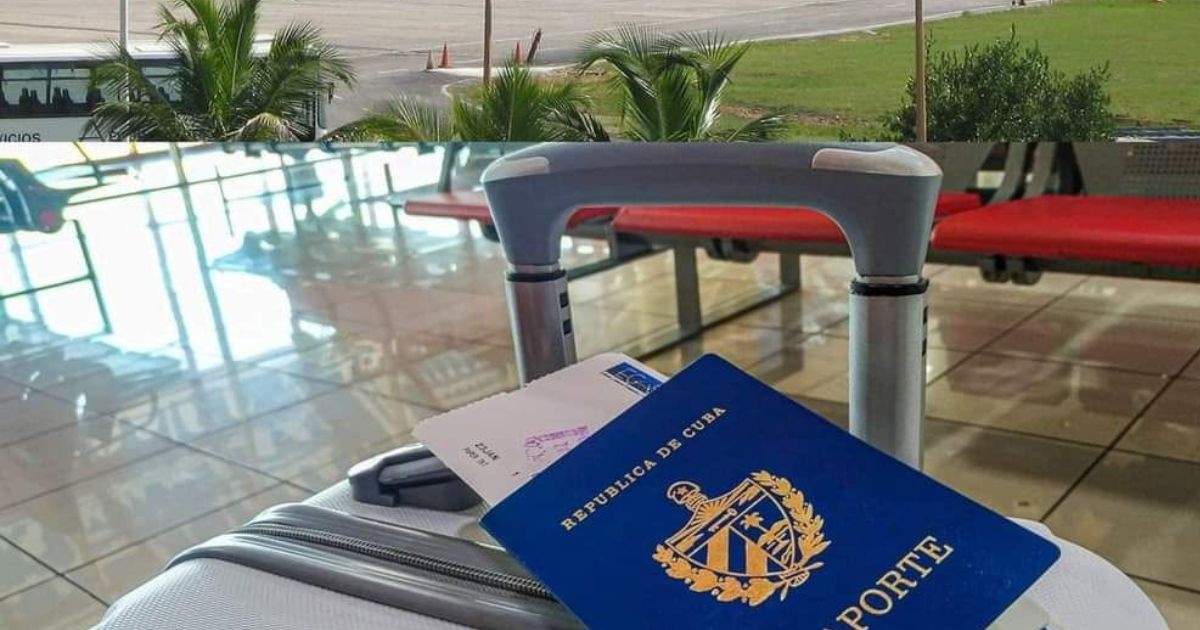
Pinar del Río-based photographer and entrepreneur Mikely Arencibia Pantoja recently took to Facebook to share a thought-provoking piece titled "The Other Shore." In his post, he highlights a growing trend in Cuba: the dependence of locals on payments from abroad for goods and services available within the island.
"In Cuba, a paradox is becoming commonplace: those in need of a product or service are here, but the payment often comes from across the sea," Arencibia wrote. Throughout 2026, he has garnered attention on social media for his insights into the country's ongoing crisis.
To illustrate this issue, Arencibia provides two striking examples. First, he mentions that ETECSA, the state telecommunications company, offers data packages that can only be purchased through international vendors, bypassing traditional Cuban peso transactions. Secondly, many online stores sell products that can solely be bought from abroad, intended for delivery to recipients in Cuba.
Arencibia concludes that "the consumer is here in Cuba, yet their purchasing power relies on a relative who has emigrated." He clarifies that his critique is not aimed at those who have left and support their families, but rather at the systemic distortion that requires Cubans, even with access to USD, to depend on someone overseas for certain purchases.
This distortion is supported by numbers. Remittances are a crucial income source for many Cuban families. A 2023 analysis by OnCuba noted that approximately 38% of Cuban households have close family members living abroad.
The scale of emigration is also notable. A study by the Council on Foreign Relations in September 2026 estimated between 1.6 and 2.75 million Cubans have left the island since 2020. This exodus is compounded by demographic impacts: according to the University of Havana's Center for Demographic Studies, half of those who emigrated by the end of 2024 were under 35.
Arencibia's post appears amidst a severe economic crisis. The informal market sees the dollar at over 800 Cuban pesos, while the minimum wage stands at a meager 3,210 pesos per month. The Economic Commission for Latin America and the Caribbean (ECLAC) predicts a 10.3% contraction in Cuba's GDP for 2026, with more than 90% of families experiencing extreme poverty, according to recent independent studies.
This dynamic is institutionally supported: in 2020, the Cuban regime established stores that accept only freely convertible currency to attract diaspora funds, channeling remittances into state-controlled commerce. Fincimex, which handles some of these remittances, is part of the military conglomerate GAESA. Thus, external dependency not only sustains Cuban families but also finances the state.
"The Other Shore" adds an economic dimension to Arencibia's ongoing critiques throughout 2026. In July, he described Cubans as "professional scarcity managers," warning that mere survival isn't truly living. In August, he condemned the "business of misery" that thrives on those with no other options. By July, he noted that "in Cuba today, life is better than tomorrow," referencing the loss of a future outlook.
With "The Other Shore," Arencibia encapsulates these observations with a poignant question, seemingly directed at the regime's leaders: "Are we building an economy that serves those living in Cuba, or one that increasingly requires looking outward to survive within?"
Understanding Cuba's Economic Challenges
Why do Cubans rely on payments from abroad?
Cubans often rely on payments from abroad due to the limited availability of goods and services within the country that require foreign currency, as well as systemic economic issues that necessitate external support.
How do remittances impact the Cuban economy?
Remittances are a vital source of income for Cuban families, helping to sustain their financial needs and inadvertently supporting the Cuban state through currency influx.
What role does ETECSA play in this economic dynamic?
ETECSA contributes to the economic challenges by offering services that require payment through international channels, thus reinforcing the need for foreign currency transactions.